
پرسشهای مروری و مسائل بالینی هستههای قاعدهای (عقدههای قاعدهای)


دعای مطالعه [ نمایش ]
بِسْمِ الله الرَّحْمنِ الرَّحیمِ
اَللّهُمَّ اَخْرِجْنى مِنْ ظُلُماتِ الْوَهْمِ
خدايا مرا بيرون آور از تاريكىهاى وهم،
وَ اَكْرِمْنى بِنُورِ الْفَهْمِ
و به نور فهم گرامى ام بدار،
اَللّهُمَّ افْتَحْ عَلَيْنا اَبْوابَ رَحْمَتِكَ
خدايا درهاى رحمتت را به روى ما بگشا،
وَانْشُرْ عَلَيْنا خَزائِنَ عُلُومِكَ بِرَحْمَتِكَ يا اَرْحَمَ الرّاحِمينَ
و خزانههاى علومت را بر ما باز كن به امید رحمتت اى مهربانترين مهربانان.
آیندهنگاران مغز: «ما مغز را میشناسیم، تا آینده را بسازیم.»
کتاب «نوروآناتومی بالینی اسنل» اثر دکتر ریچارد اس. اسنل، با ویرایش جدید دکتر رایان اسپلیتگربر، همچنان بهعنوان مرجع طلایی این حوزه شناخته میشود. این اثر با تلفیق تازهترین پژوهشها و کاربردهای بالینی، پلی استوار میان دانش پایه و عمل پزشکی بنا میکند.
تلاشهای علمی و سالها تدریس ارزشمند استاد گرانقدر آقای دکتر محمدتقی جغتایی الهامبخش ترجمه و گسترش این دانش در ایران بوده است.
ترجمه دقیق این کتاب توسط برند علمی آیندهنگاران مغز به مدیریت داریوش طاهری، امکان دسترسی فارسیزبانان به مرزهای نوین علوم اعصاب را فراهم کرده و رسالتی علمی در جهت شناخت عمیقتر مغز و ترسیم آیندهای روشنتر بر عهده گرفته است.
»» فصل ۱۰: هستههای قاعدهای (عقدههای قاعدهای)؛ بخش پرسشهای مروری و مسائل بالینی
»» Chapter 10: Basal Nuclei (Basal Ganglia)
? Clinical Problem Solving
1. A 10-year-old girl is seen by a neurologist because of the gradual development of involuntary movements. To begin with, the movements are regarded by her parents as general restlessness, but later, abnormal facial grimacing and jerking movements of the arms and legs occur. The child is now having difficulty in performing normal movements of the arms, and walking is becoming increasingly difficult. The abnormal movements appear to be worse in the upper limbs and are more exaggerated on the right side of the body. The movements are made worse when the child becomes excited but disappear completely when she sleeps. The child is recently treated for rheumatic fever. Is there any possible connection between this child’s symptoms and the basal nuclei in the cerebral hemispheres?
؟ حل مسئله بالینی
۱. دختری 10 ساله به دلیل رشد تدریجی حرکات غیرارادی توسط متخصص مغز و اعصاب ویزیت میشود. در ابتدا، والدین این حرکات را بیقراری عمومی میدانند، اما بعداً، حرکات غیرطبیعی صورت و حرکات تند و سریع دستها و پاها رخ میدهد. کودک اکنون در انجام حرکات طبیعی دستها مشکل دارد و راه رفتن به طور فزایندهای دشوار میشود. حرکات غیرطبیعی در اندام فوقانی بدتر و در سمت راست بدن شدیدتر به نظر میرسند. این حرکات وقتی کودک هیجانزده میشود بدتر میشوند اما وقتی میخوابد کاملاً از بین میروند. کودک اخیراً به دلیل تب روماتیسمی تحت درمان قرار گرفته است. آیا ارتباطی بین علائم این کودک و هستههای پایه در نیمکرههای مغزی وجود دارد؟
2. A 40-year-old man complaining of rapid and jerky involuntary movements involving the upper and lower limbs is seen by his physician. The condition started about 6 months ago and is getting progressively worse. He says that he is extremely worried about his health because his father had developed similar symptoms 20 years ago and had died in a mental institution. His wife tells the physician that her husband also suffers from episodes of extreme depression and that she has noticed that he has periods of irritability and impulsive behavior. The physician makes the diagnosis of Huntington chorea. Using your knowledge of neuroanatomy, explain how this disease involves the basal nuclei.
۲. مردی ۴۰ ساله که از حرکات سریع و تند و غیرارادی اندامهای فوقانی و تحتانی شکایت دارد، توسط پزشک معاینه میشود. این وضعیت حدود ۶ ماه پیش شروع شده و به تدریج بدتر میشود. او میگوید که به شدت نگران سلامتی خود است زیرا پدرش ۲۰ سال پیش علائم مشابهی داشته و در یک آسایشگاه روانی فوت کرده است. همسرش به پزشک میگوید که شوهرش نیز از دورههای افسردگی شدید رنج میبرد و او متوجه شده است که او دورههایی از تحریکپذیری و رفتار تکانشی دارد. پزشک تشخیص بیماری هانتینگتون کوریا را میدهد. با استفاده از دانش خود در مورد نوروآناتومی، توضیح دهید که چگونه این بیماری هستههای قاعدهای را درگیر میکند.
3. A 61-year-old man suddenly develops uncoordinated movements of the trunk and right arm. The right upper limb will suddenly, vigorously, and aimlessly be thrown about, knocking over anything in its path. The patient is recovering from a right-sided hemiplegia, secondary to a cerebral hemorrhage. What is the name given to this clinical sign? Does this condition involve the basal nuclei?
۳. مردی ۶۱ ساله ناگهان دچار حرکات ناهماهنگ تنه و بازوی راست میشود. اندام فوقانی راست ناگهان، با شدت و بیهدف به اطراف پرتاب میشود و هر چیزی را که در مسیرش باشد، واژگون میکند. بیمار در حال بهبودی از یک فلج ناقص سمت راست بدن، ناشی از خونریزی مغزی، است. نام این علامت بالینی چیست؟ آیا این وضعیت هستههای قاعدهای را درگیر میکند؟
√ Answers and Explanations to Clinical Problem Solving
1. This child is suffering from Sydenham chorea (see p. 315). This condition occurs, in the majority of cases, in female children between the ages of 5 and 15 years. It is characterized by the presence of rapid, irregular, involuntary movements that are purposeless. The disease is associated with rheumatic fever, and complete recovery is the rule.
√ پاسخها و توضیحات مربوط به حل مسئله بالینی
۱. این کودک از بیماری کره سیدنهام رنج میبرد (به صفحه ۳۱۵ مراجعه کنید). این بیماری در اکثر موارد در کودکان دختر بین ۵ تا ۱۵ سال رخ میدهد. این بیماری با حرکات سریع، نامنظم و غیرارادی بیهدف مشخص میشود. این بیماری با تب روماتیسمی همراه است و بهبودی کامل در آن امری عادی است.
2. Huntington chorea is a progressive inherited disease that usually appears between the ages of 30 and 45 years. The involuntary movements are usually more rapid and jerky than those seen in patients with Sydenham chorea. Progressive mental changes lead to dementia and death. The GABA-secreting, substance P-secreting, and acetylcholine-secreting neurons of the striatonigral pathway progressively degenerate. This results in the dopamine-secreting neurons of the substantia nigra becoming overactive; thus, the nigrostriatal pathway inhibits the caudate nucleus and the putamen. This causes the involuntary movements. Atrophy of the caudate nucleus and putamen occurs.
۲. کره هانتینگتون یک بیماری ارثی پیشرونده است که معمولاً بین سنین ۳۰ تا ۴۵ سالگی ظاهر میشود. حرکات غیرارادی معمولاً سریعتر و تندتر از حرکاتی است که در بیماران مبتلا به کره سیدنهام دیده میشود. تغییرات ذهنی پیشرونده منجر به زوال عقل و مرگ میشود. نورونهای ترشحکننده گابا، ترشحکننده ماده P و ترشحکننده استیل کولین در مسیر استریاتونیگرال به تدریج تخریب میشوند. این امر منجر به بیشفعال شدن نورونهای ترشحکننده دوپامین در جسم سیاه میشود. بنابراین، مسیر نیگرواستریاتال، هسته دمدار و پوتامن را مهار میکند. این امر باعث حرکات غیرارادی میشود. آتروفی هسته دمدار و پوتامن رخ میدهد.
3. The clinical sign is known as hemiballismus. The sudden onset is usually caused by vascular impairment due to hemorrhage or occlusion. Yes, hemiballismus does involve the basal nuclei; it is the result of destruction of the contralateral subthalamic nucleus or its neuronal connections, causing the violent, uncoordinated movements of the axial and proximal limb muscles.
۳. علامت بالینی آن همیبالیسموس (hemiballismus) نام دارد. شروع ناگهانی آن معمولاً ناشی از اختلال عروقی ناشی از خونریزی یا انسداد است. بله، همیبالیسموس هستههای قاعدهای را درگیر میکند؛ این بیماری نتیجه تخریب هسته سابتالاموس طرف مقابل یا اتصالات نورونی آن است که باعث حرکات شدید و ناهماهنگ عضلات اندامهای محوری و پروگزیمال میشود.
? Review Questions
Directions: Each of the numbered items in this section is followed by answers. Select the ONE lettered answer that is CORRECT.
؟ سوالات مروری
دستورالعمل: هر یک از موارد شمارهگذاری شده در این بخش با پاسخهایی دنبال میشوند. تنها پاسخ صحیح با یک حرف را انتخاب کنید.
1. The following statements concern the basal nuclei (ganglia):
(a) The caudate nucleus and the red nucleus form the neostriatum (striatum).
(b) The head of the caudate nucleus is connected to the putamen.
(c) The tegmentum of the midbrain forms part of the basal nuclei.
(d) The internal capsule lies lateral to the globus pallidus.
(e) The basal nuclei are formed of white matter.
۱. عبارات زیر مربوط به هستههای قاعدهای (گانگلیونها) هستند:
(الف) هسته دمدار و هسته قرمز، نئواستریاتوم (جسم مخطط) را تشکیل میدهند.
(ب) سر هسته دمدار به پوتامن متصل است.
(ج) تگمنتوم مغز میانی بخشی از هستههای قاعدهای را تشکیل میدهد.
(د) کپسول داخلی در کنار گلوبوس پالیدوس قرار دارد.
(ه) هستههای قاعدهای از ماده سفید تشکیل شدهاند.
2. The following statements concern the basal nuclei (ganglia):
(a) The amygdaloid nucleus is connected to the caudate nucleus.
(b) The lentiform nucleus is completely divided by the external capsule into the globus pallidus and the putamen.
(c) The claustrum does not form part of the basal nuclei.
(d) The corpus striatum lies medial to the thalamus.
(e) The function of the claustrum is well known.
۲. جملات زیر مربوط به هستههای قاعدهای (گانگلیونها) هستند:
(الف) هسته آمیگدالوئید به هسته دمدار متصل است.
(ب) هسته عدسی شکل توسط کپسول خارجی به طور کامل به گلوبوس پالیدوس و پوتامن تقسیم شده است.
(ج) کلاستروم بخشی از هستههای قاعدهای نیست.
(د) جسم مخطط در قسمت میانی تالاموس قرار دارد.
(ه) عملکرد کلاستروم به خوبی شناخته شده است.
(b) The head of the caudate nucleus lies lateral to the internal capsule.
(c) The insula forms part of the basal nuclei.
(d) The tail of the caudate nucleus lies in the roof of the lateral ventricle.
(e) The subthalamic nuclei are functionally closely related to the basal nuclei and are considered to be part of them.
۳. جملات زیر مربوط به هستههای قاعدهای (گانگلیونها) هستند:
(الف) جسم مخطط از هسته دمدار و هسته آمیگدالوئید تشکیل شده است.
(ب) سر هسته دمدار در کنار کپسول داخلی قرار دارد.
(ج) اینسولا بخشی از هستههای قاعدهای را تشکیل میدهد.
(د) دم هسته دمدار در سقف بطن جانبی قرار دارد.
(ه) هستههای زیرتالاموسی از نظر عملکردی ارتباط نزدیکی با هستههای قاعدهای دارند و بخشی از آنها محسوب میشوند.
(b) It is an M-shaped mass of gray matter.
(c) The body of the caudate nucleus forms part of the roof of the body of the lateral ventricle.
(d) The head lies medial to the anterior horn of the lateral ventricle.
(e) The tail terminates anteriorly in the amygdaloid nucleus.
۴. عبارات زیر مربوط به هسته دمدار است:
(الف) به سر، گردن، تنه و دم تقسیم میشود.
(ب) تودهای M شکل از ماده خاکستری است.
(ج) بدنه هسته دمدار بخشی از سقف بدنه بطن جانبی را تشکیل میدهد.
(د) سر در قسمت داخلی شاخ قدامی بطن جانبی قرار دارد.
(ه) دم به صورت قدامی در هسته آمیگدالوئید خاتمه مییابد.
5. The following statements concern the afferent corticostriate fibers to the corpus striatum:
(a) Each part of the cerebral cortex is randomly projected to different parts of the corpus striatum.
(b) Glutamate is not the neurotransmitter.
(c) All parts of the cerebral cortex send fibers to the caudate nucleus and putamen.
(d) The smallest input is from the sensory motor part of the cerebral cortex.
(e) Most of the projections are from the cortex of the opposite side.
۵. جملات زیر مربوط به فیبرهای آوران کورتیکواستریات به جسم مخطط است:
(الف) هر بخش از قشر مغز به طور تصادفی به بخشهای مختلف جسم مخطط پرتاب میشود.
(ب) گلوتامات انتقالدهنده عصبی نیست.
(ج) تمام بخشهای قشر مغز فیبرهایی را به هسته دمدار و پوتامن میفرستند.
(د) کوچکترین ورودی از بخش حسی-حرکتی قشر مغز است.
(ه) بیشتر پرتابها از قشر طرف مقابل هستند.
(b) Acetylcholine is the neurotransmitter.
(c) The nigrostriatal fibers are stimulatory in function.
(d) The caudate nucleus does not receive axons from the substantia nigra.
(e) Parkinson disease is caused by an increase in the release of dopamine within the corpus striatum.
۶. جملات زیر مربوط به فیبرهای نیگرواستریاتال هستند:
(الف) نورونهای جسم سیاه آکسونها را به پوتامن میفرستند.
(ب) استیل کولین انتقالدهنده عصبی است.
(ج) فیبرهای نیگرواستریاتال عملکرد تحریکی دارند.
(د) هسته دمدار آکسونهایی از جسم سیاه دریافت نمیکند.
(ه) بیماری پارکینسون ناشی از افزایش آزادسازی دوپامین در جسم مخطط است.
(b) Some of the striatopallidal fibers have GABA as the neurotransmitter.
(c) The striatonigral fibers pass from the red nucleus to the substantia nigra.
(d) Many of the efferent fibers pass directly to the cerebellum.
(e) The anterior horn cells of the spinal cord are influenced directly by the efferent fibers from the corpus striatum.
۷. عبارات زیر مربوط به فیبرهای وابران جسم مخطط هستند:
(الف) بسیاری از فیبرهای وابران مستقیماً به هستههای حرکتی اعصاب جمجمهای میرسند.
(ب) برخی از فیبرهای استریاتوپالیدال دارای گابا به عنوان انتقالدهنده عصبی هستند.
(ج) فیبرهای استریاتونیگرال از هسته قرمز به جسم سیاه منتقل میشوند.
(د) بسیاری از فیبرهای وابران مستقیماً به مخچه منتقل میشوند.
(ه) سلولهای شاخ قدامی نخاع مستقیماً تحت تأثیر فیبرهای وابران جسم مخطط قرار میگیرند.
8. The following statements concern the functions of the basal nuclei (ganglia):
(a) The corpus striatum integrates information received directly from the cerebellar cortex.
(b) The outflow of the basal nuclei is channeled through the globus pallidus to the sensory areas of the cerebral cortex, thus influencing muscular activities.
(c) The globus pallidus only influences the movements of the axial part of the body.
(d) The activities of the globus pallidus precede the activities of the motor cortex concerned with discrete movements of the hands and feet.
(e) The activities of the basal nuclei are suppressed by information received from the sensory cortex, the thalamus, and the brainstem.
۸. عبارات زیر مربوط به عملکردهای هستههای پایه (گانگلیونها) هستند:
(الف) جسم مخطط اطلاعات دریافتی مستقیم از قشر مخچه را ادغام میکند.
(ب) جریان خروجی هستههای پایه از طریق گلوبوس پالیدوس به نواحی حسی قشر مغز هدایت میشود و بنابراین بر فعالیتهای عضلانی تأثیر میگذارد.
(ج) گلوبوس پالیدوس فقط بر حرکات قسمت محوری بدن تأثیر میگذارد.
(د) فعالیتهای گلوبوس پالیدوس مقدم بر فعالیتهای قشر حرکتی است که مربوط به حرکات گسسته دستها و پاها است.
(ه) فعالیتهای هستههای پایه توسط اطلاعات دریافتی از قشر حسی، تالاموس و ساقه مغز سرکوب میشوند.
Matching Questions. Directions: The following questions apply to Figure 10-10. Match the numbers listed below on the left with the appropriate lettered structure listed on the right. Each lettered option may be selected once, more than once, or not at all.
سوالات تطبیقی. دستورالعمل: سوالات زیر در مورد شکل 10-10 صدق میکند. اعداد ذکر شده در زیر را در سمت چپ با ساختار حروف مناسب ذکر شده در سمت راست مطابقت دهید. هر گزینه حروفی را میتوان یک بار، بیش از یک بار یا اصلاً انتخاب نکرد.
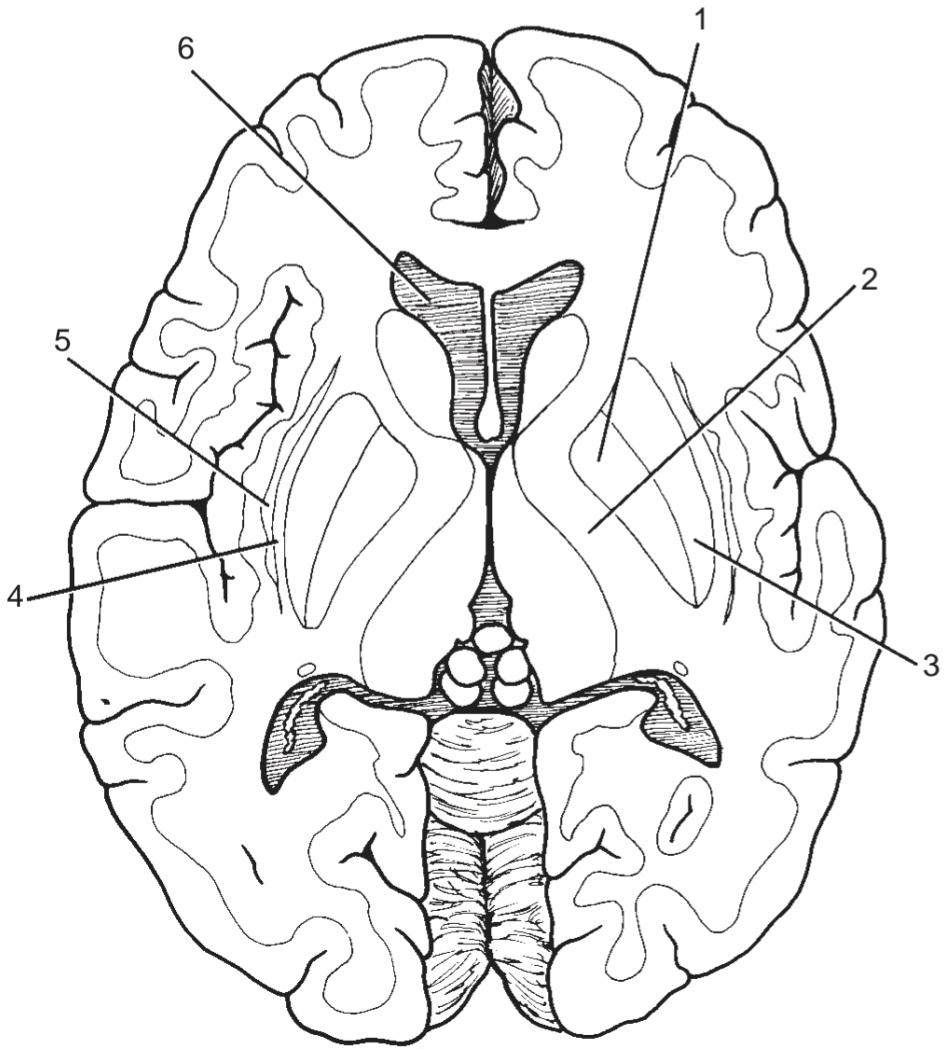
9. Number 1 (a) Anterior horn of lateral ventricle
10. Number 2 (b) Internal capsule
11. Number 3 (c) Claustrum
12. Number 4 (d) Putamen
13. Number 5 (e) External capsule
14. Number 6 (f) Globus pallidus
(g) None of the above
۹. شماره ۱ (الف) شاخ قدامی بطن جانبی
۱۰. شماره ۲ (ب) کپسول داخلی
۱۱. شماره ۳ (ج) عضله کلاستروم
۱۲. شماره ۴ (د) عضله پوتامن
۱۳. شماره ۵ (ه) کپسول خارجی
۱۴. شماره ۶ (و) گلوبوس پالیدوس
(ز) هیچ یک از موارد فوق
√ Answers and Explanations to Review Questions
1. B is correct. The head of the caudate nucleus is connected to the putamen of the lentiform nucleus (see Fig. 10-1). A. The caudate nucleus and the putamen form the neostriatum. C. The tegmentum of the midbrain does not form part of the basal nuclei. D. The internal capsule lies medial to the apex of the globus pallidus (see Fig. 10-2). E. The basal nuclei are formed of gray matter.
√ پاسخها و توضیحات برای مرور سوالات
۱. ب صحیح است. سر هسته دمدار به پوتامن هسته عدسی شکل متصل است (شکل ۱۰-۱ را ببینید). الف. هسته دمدار و پوتامن نئواستریاتوم را تشکیل میدهند. ج. تگمنتوم مغز میانی بخشی از هستههای قاعدهای را تشکیل نمیدهد. د. کپسول داخلی در قسمت داخلی رأس گلوبوس پالیدوس قرار دارد (شکل ۱۰-۲ را ببینید). ه. هستههای قاعدهای از ماده خاکستری تشکیل شدهاند.
2. A is correct. The amygdaloid nucleus is connected to the caudate nucleus (see Fig. 10-1). B. The lentiform nucleus is not divided by the external capsule into the globus pallidus and the putamen (see Fig. 10-2). C. The claustrum forms part of the basal nuclei. D. The corpus striatum lies lateral to the thalamus (see Fig. 10-2). E. The function of the claustrum is unknown.
۲. الف صحیح است. هسته آمیگدالوئید به هسته دمدار متصل است (شکل ۱۰-۱ را ببینید). ب. هسته عدسی شکل توسط کپسول خارجی به گلوبوس پالیدوس و پوتامن تقسیم نمیشود (شکل ۱۰-۲ را ببینید). ج. کلاستروم بخشی از هستههای قاعدهای را تشکیل میدهد. د. جسم مخطط در کنار تالاموس قرار دارد (شکل ۱۰-۲ را ببینید). ه. عملکرد کلاستروم ناشناخته است.
3. D is correct. The tail of the caudate nucleus lies in the roof of the lateral ventricle (see Fig. 10-2). A. The corpus striatum is made up of the caudate nucleus and the lentiform nucleus. B. The head of the caudate nucleus lies medial to the internal capsule (see Fig. 10-2). C. The insula does not form part of the basal nuclei. E. The subthalamic nuclei are functionally closely related to the basal nuclei but are not considered to be part of them.
۳. گزینه د صحیح است. دم هسته دمدار در سقف بطن جانبی قرار دارد (شکل ۱۰-۲ را ببینید). الف. جسم مخطط از هسته دمدار و هسته عدسی شکل تشکیل شده است. ب. سر هسته دمدار در قسمت داخلی کپسول داخلی قرار دارد (شکل ۱۰-۲ را ببینید). ج. اینسولا بخشی از هستههای قاعدهای را تشکیل نمیدهد. ه. هستههای زیرتالاموسی از نظر عملکردی ارتباط نزدیکی با هستههای قاعدهای دارند اما بخشی از آنها محسوب نمیشوند.
4. E is correct. The tail of the caudate nucleus terminates anteriorly in the amygdaloid nucleus (see Fig. 10-1). A. The caudate nucleus is divided into the head, body, and tail (see Fig. 10-1). B. The caudate nucleus is a C-shaped mass of gray matter (see Fig. 10-1). C. The body of the caudate nucleus forms part of the floor of the body of the lateral ventricle (see Fig. 10-1). D. The head of the caudate nucleus lies lateral to the anterior horn of the lateral ventricle (see Fig. 10-2).
۴. ه صحیح است. دم هسته دمدار به صورت قدامی در هسته آمیگدالوئید خاتمه مییابد (شکل ۱۰-۱ را ببینید). الف. هسته دمدار به سر، بدنه و دم تقسیم میشود (شکل ۱۰-۱ را ببینید). ب. هسته دمدار یک توده C شکل از ماده خاکستری است (شکل ۱۰-۱ را ببینید). ج. بدنه هسته دمدار بخشی از کف بدنه بطن جانبی را تشکیل میدهد (شکل ۱۰-۱ را ببینید). د. سر هسته دمدار در سمت خارجی شاخ قدامی بطن جانبی قرار دارد (شکل ۱۰-۲ را ببینید).
5. C is correct. All parts of the cerebral cortex send fibers to the caudate nucleus and putamen. A. Each part of the cerebral cortex is projected to specific parts of the corpus striatum. B. Glutamate is the neurotransmitter at the nerve endings of the corticostriate fibers to the corpus striatum (see Fig. 10-4). D. The largest input to the different parts of the corpus striatum is from the sensory motor part of the cerebral cortex. E. Most of the projection fibers are from the cerebral cortex of the same side.
۵. ج صحیح است. تمام بخشهای قشر مغز، فیبرهایی را به هسته دمدار و پوتامن میفرستند. الف. هر بخش از قشر مغز به بخشهای خاصی از جسم مخطط منتهی میشود. ب. گلوتامات انتقالدهنده عصبی در انتهای عصبی فیبرهای قشری به جسم مخطط است (شکل ۱۰-۴ را ببینید). د. بزرگترین ورودی به بخشهای مختلف جسم مخطط از قسمت حسی-حرکتی قشر مغز است. ه. بیشتر فیبرهای خروجی از قشر مغز همان سمت هستند.
6. A is correct. The neurons in the substantia nigra send axons to the putamen (see Fig. 10-3). B. Dopamine is the neurotransmitter at the nerve endings of the nigrostriatal fibers. C. The nigrostriatal fibers are inhibitory in function. D. The caudate nucleus does receive axons from the substantia nigra. E. Parkinson disease is caused by a reduction in the release of dopamine within the corpus striatum.
۶. الف صحیح است. نورونهای جسم سیاه آکسونها را به پوتامن میفرستند (شکل ۱۰-۳ را ببینید). ب. دوپامین انتقالدهنده عصبی در انتهای عصبی فیبرهای نیگرواستریاتال است. ج. فیبرهای نیگرواستریاتال عملکرد مهاری دارند. د. هسته دمدار آکسونها را از جسم سیاه دریافت میکند. ه. بیماری پارکینسون در اثر کاهش آزادسازی دوپامین در جسم مخطط ایجاد میشود.
7. B is correct. Some of the striatopallidal fibers have GABA as the neurotransmitter. A. None of the efferent fibers from the corpus striatum descend directly to the motor nuclei of the cranial nerves. C. The striatonigral fibers pass from the caudate nucleus to the substantia nigra (see Fig. 10-3). D. No efferent fibers from the corpus striatum pass directly to the cerebellum. E. The anterior horn cells of the spinal cord are not influenced directly by the efferent fibers from the corpus striatum.
۷. ب صحیح است. برخی از فیبرهای استریاتوم دارای گابا به عنوان انتقال دهنده عصبی هستند. الف) هیچ یک از فیبرهای وابران از جسم مخطط مستقیماً به هستههای حرکتی اعصاب جمجمهای نزول نمیکنند. ج) فیبرهای استریاتوم از هسته دمدار به جسم سیاه منتقل میشوند (شکل ۱۰-۳ را ببینید). د) هیچ فیبر وابرانی از جسم مخطط مستقیماً به مخچه منتقل نمیشود. ه) سلولهای شاخ قدامی نخاع مستقیماً تحت تأثیر فیبرهای وابران از جسم مخطط قرار نمیگیرند.
8. D is correct. The activities of the globus pallidus precede the activities of the motor cerebral cortex concerned with discrete movements of the hands and feet. A. The corpus striatum does not integrate information received directly from the cerebellar cortex. B. The outflow of the basal nuclei is channeled through the globus pallidus to the motor areas of the cerebral cortex, thus influencing muscular activities. C. The globus pallidus influences movements of the entire body. E. The activities of the basal nuclei are initiated by information received from the sensory cortex, the thalamus, and the brainstem.
۸. د صحیح است. فعالیتهای گلوبوس پالیدوس مقدم بر فعالیتهای قشر حرکتی مغز است که مربوط به حرکات گسسته دستها و پاها است. الف) جسم مخطط اطلاعات دریافتی مستقیم از قشر مخچه را ادغام نمیکند. ب) جریان خروجی هستههای قاعدهای از طریق گلوبوس پالیدوس به نواحی حرکتی قشر مغز هدایت میشود و بنابراین بر فعالیتهای عضلانی تأثیر میگذارد. ج) گلوبوس پالیدوس بر حرکات کل بدن تأثیر میگذارد. ه) فعالیتهای هستههای قاعدهای توسط اطلاعات دریافتی از قشر حسی، تالاموس و ساقه مغز آغاز میشود.
The answers for Figure 10-10, which shows a horizontal section of the cerebrum, are as follows:
پاسخهای شکل ۱۰-۱۰، که برش افقی از مخ را نشان میدهد، به شرح زیر است:
9. F is correct. Structure 1 is the globus pallidus.
۹. F صحیح است. ساختار ۱، گلوبوس پالیدوس است.
۱۰. B صحیح است. ساختار ۲، کپسول داخلی است.
۱۱. D صحیح است. ساختار ۳، پوتامن است.
۱۲. E صحیح است. ساختار ۴، کپسول خارجی است.
۱۳. C صحیح است. ساختار ۵، کلاستروم است.
«فصل دهم کتاب نورواناتومی بالینی اسنل»
🚀 با ما همراه شوید!
تازهترین مطالب و آموزشهای مغز و اعصاب را از دست ندهید. با فالو کردن کانال تلگرام آیندهنگاران مغز، از ما حمایت کنید!