
پرسشهای مروری و مسائل بالینی تشکیلات مشبک و سیستم لیمبیک


دعای مطالعه [ نمایش ]
بِسْمِ الله الرَّحْمنِ الرَّحیمِ
اَللّهُمَّ اَخْرِجْنى مِنْ ظُلُماتِ الْوَهْمِ
خدايا مرا بيرون آور از تاريكىهاى وهم،
وَ اَكْرِمْنى بِنُورِ الْفَهْمِ
و به نور فهم گرامى ام بدار،
اَللّهُمَّ افْتَحْ عَلَيْنا اَبْوابَ رَحْمَتِكَ
خدايا درهاى رحمتت را به روى ما بگشا،
وَانْشُرْ عَلَيْنا خَزائِنَ عُلُومِكَ بِرَحْمَتِكَ يا اَرْحَمَ الرّاحِمينَ
و خزانههاى علومت را بر ما باز كن به امید رحمتت اى مهربانترين مهربانان.
آیندهنگاران مغز: «ما مغز را میشناسیم، تا آینده را بسازیم.»
کتاب «نوروآناتومی بالینی اسنل» اثر دکتر ریچارد اس. اسنل، با ویرایش جدید دکتر رایان اسپلیتگربر، همچنان بهعنوان مرجع طلایی این حوزه شناخته میشود. این اثر با تلفیق تازهترین پژوهشها و کاربردهای بالینی، پلی استوار میان دانش پایه و عمل پزشکی بنا میکند.
تلاشهای علمی و سالها تدریس ارزشمند استاد گرانقدر دکتر محمدتقی جغتایی الهامبخش ترجمه و گسترش این دانش در ایران بوده است.
ترجمه دقیق این کتاب توسط برند علمی آیندهنگاران مغز به مدیریت داریوش طاهری، امکان دسترسی فارسیزبانان به مرزهای نوین علوم اعصاب را فراهم کرده و رسالتی علمی در جهت شناخت عمیقتر مغز و ترسیم آیندهای روشنتر بر عهده گرفته است.
»» فصل ۹: تشکیلات مشبک و سیستم لیمبیک
»» Chapter 9: Reticular Formation and Limbic System
? Clinical Problem Solving
1. While discussing the neurologic basis of emotions during a ward round, a neurologist asks a third-year medical student what she knows about the KlüverBucy syndrome. What would be your answer to that question? Does Klüver-Bucy syndrome ever occur in humans?
؟ حل مسئله بالینی
۱. در حین بحث در مورد مبانی عصبی احساسات در طول یک بازدید از بخش، یک متخصص مغز و اعصاب از یک دانشجوی پزشکی سال سوم میپرسد که در مورد سندرم کلوور-بوسی چه میداند. پاسخ شما به این سوال چیست؟ آیا سندرم کلوور-بوسی تا به حال در انسان رخ داده است؟
2. A 23-year-old woman with a 4-year history of epileptic attacks visits her neurologist. A friend of hers vividly describes one of her attacks. For a few seconds before the convulsions begin, the patient complains of an unpleasant odor, similar to that encountered in a cow shed. This is followed by a shrill cry as she falls to the floor unconscious. Her whole body immediately becomes involved in generalized tonic and clonic movements. Clearly, this patient has a generalized form of epileptic seizure. Using your knowledge of neuroanatomy, suggest which lobe of the brain was initially involved in the epileptic discharge.
۲. زنی ۲۳ ساله با سابقه ۴ سال حملات صرع به متخصص مغز و اعصاب خود مراجعه میکند. یکی از دوستان او به وضوح یکی از حملات خود را توصیف میکند. چند ثانیه قبل از شروع تشنج، بیمار از بوی نامطبوعی، شبیه به بویی که در طویله گاو احساس میشود، شکایت میکند. به دنبال آن فریاد بلندی میکشد و او بیهوش روی زمین میافتد. تمام بدن او بلافاصله درگیر حرکات تونیک و کلونیک عمومی میشود. واضح است که این بیمار دچار تشنج صرعی عمومی است. با استفاده از دانش خود در مورد نوروآناتومی، پیشنهاد دهید که کدام لوب مغز در ابتدا در تخلیه صرعی دخیل بوده است.
3. A 54-year-old man dies in the hospital with a cerebral tumor. He had always been intellectually very bright and could easily recall events in his childhood. For the past 6 months, his family had noticed that he had difficulty in recalling where he had placed things, such as his pipe. He also had difficulty in recalling recent news events, and, just before he died, he could not remember that his brother had visited him the day before. Using your knowledge of neuroanatomy, suggest which part of the brain was being affected by the expanding and highly invasive tumor.
۳. مردی ۵۴ ساله در بیمارستان به دلیل تومور مغزی فوت میکند. او همیشه از نظر هوشی بسیار باهوش بوده و به راحتی میتوانست وقایع دوران کودکی خود را به یاد بیاورد. در ۶ ماه گذشته، خانوادهاش متوجه شده بودند که او در به خاطر آوردن جایی که چیزهایی مانند پیپش را گذاشته، مشکل دارد. او همچنین در به خاطر آوردن اخبار اخیر مشکل داشت و درست قبل از مرگش، نمیتوانست به یاد بیاورد که برادرش روز قبل به ملاقاتش رفته است. با استفاده از دانش خود در مورد نوروآناتومی، مشخص کنید کدام قسمت از مغز تحت تأثیر تومور در حال گسترش و بسیار تهاجمی قرار گرفته است.
√ Answers and Explanations to Clinical Problem Solving
1. The Klüver-Bucy syndrome consists of the signs and symptoms found in monkeys following bilateral removal of the temporal lobe. The monkeys become docile and unresponsive and display no signs of fear or anger. They have increased appetite and sexual activity, which is often disinhibited. They are able to see objects but are unable to recognize the objects. Humans in whom the amygdaloid area is destroyed do not usually demonstrate this syndrome. It has, however, been described in humans following the bilateral removal of large areas of the temporal lobes.
√ پاسخها و توضیحات مربوط به حل مسئله بالینی
۱. سندرم کلوور-بوسی شامل علائم و نشانههایی است که پس از برداشتن دو طرفه لوب گیجگاهی در میمونها یافت میشود. میمونها مطیع و بیتفاوت میشوند و هیچ نشانهای از ترس یا عصبانیت نشان نمیدهند. آنها اشتها و فعالیت جنسی بیشتری دارند که اغلب مهار نشده است. آنها قادر به دیدن اشیاء هستند اما قادر به تشخیص اشیاء نیستند. انسانهایی که ناحیه آمیگدالوئید آنها تخریب شده است، معمولاً این سندرم را نشان نمیدهند. با این حال، این سندرم در انسان پس از برداشتن دو طرفه نواحی بزرگی از لوبهای گیجگاهی توصیف شده است.
2. The olfactory aura that preceded the general convulsions of the epileptic attack would indicate that the temporal lobe of the cerebral cortex was initially involved.
۲. هاله بویایی که قبل از تشنجهای عمومی حمله صرع وجود دارد، نشان میدهد که لوب گیجگاهی قشر مغز در ابتدا درگیر بوده است.
3. An autopsy study revealed extensive invasion of the hippocampus, fornix, and mammillary bodies in both cerebral hemispheres. The hippocampus is apparently involved in the storage and categorizing of afferent information related to recent memory.
۳. یک مطالعه کالبدشکافی، تهاجم گسترده به هیپوکامپ، فورنیکس و اجسام پستانی در هر دو نیمکره مغزی را نشان داد. ظاهراً هیپوکامپ در ذخیره و طبقهبندی اطلاعات آوران مربوط به حافظه اخیر نقش دارد.
? Review Questions
Directions: Each of the numbered items in this section is followed by answers. Select the ONE lettered answer that is CORRECT.
؟ سوالات مروری
دستورالعمل: هر یک از موارد شمارهگذاری شده در این بخش با پاسخهایی دنبال میشوند. تنها پاسخ صحیح با یک حرف را انتخاب کنید.
1. The following statements concern the reticular formation:
(a) Reticulobulbar and reticulospinal tracts form the afferent pathways from the reticular formation to the motor nuclei of the cranial nerves and the anterior horn cells of the spinal cord, respectively.
(b) The reticular formation extends through the neuroaxis from the spinal cord to the midbrain.
(c) The main pathways through the reticular formation may easily be traced from one part of the CNS to another using silver stains.
(d) Superiorly, the reticular formation is relayed to the cerebral cortex.
(e) Afferent pathways project into the reticular formation from only a few parts of the CNS.
۱. عبارات زیر مربوط به تشکیلات مشبک هستند:
(الف) راههای مشبک-بولبار و مشبک-نخاعی به ترتیب مسیرهای آوران را از تشکیلات مشبک به هستههای حرکتی اعصاب جمجمهای و سلولهای شاخ قدامی نخاع تشکیل میدهند.
(ب) تشکیلات مشبک از طریق محور عصبی از نخاع تا مغز میانی امتداد مییابد.
(ج) مسیرهای اصلی از طریق تشکیلات مشبک را میتوان به راحتی از یک قسمت از سیستم عصبی مرکزی به قسمت دیگر با استفاده از رنگآمیزی نقره ردیابی کرد.
(د) در قسمت فوقانی، تشکیلات مشبک به قشر مغز منتقل میشود.
(ه) مسیرهای آوران تنها از چند قسمت از سیستم عصبی مرکزی به تشکیلات مشبک منتهی میشوند.
2. The following statements concern the functions of the reticular formation:
(a) It influences the activity of the a and y motor neurons.
(b) It opposes the actions of the vestibular spinal tract.
(c) It does not bring about reciprocal inhibition during contraction of the prime mover muscles.
(d) It plays no part in maintaining the tone of the antigravity muscles.
(e) It cannot modulate reflex activity.
۲. عبارات زیر مربوط به عملکردهای تشکیلات مشبک هستند:
(الف) بر فعالیت نورونهای حرکتی a و y تأثیر میگذارد.
(ب) با عملکرد دستگاه نخاعی دهلیزی مخالفت میکند.
(ج) در هنگام انقباض عضلات محرک اصلی، مهار متقابل ایجاد نمیکند.
(د) هیچ نقشی در حفظ تون عضلات ضد جاذبه ندارد.
(ه) نمیتواند فعالیت رفلکسی را تعدیل کند.
(b) It cannot influence all ascending pathways to the supraspinal levels.
(c) By means of its reticulobulbar and reticulospinal tracts, it can control parasympathetic and sympathetic outflows.
(d) It has no effect on biologic rhythms.
(e) It does not influence the degree of wakefulness of an individual.
۳. عبارات زیر مربوط به عملکردهای تشکیلات مشبک هستند:
(الف) بر دریافت درد تأثیری ندارد.
(ب) نمیتواند بر تمام مسیرهای صعودی به سطوح فوق نخاعی تأثیر بگذارد.
(ج) به وسیلهی مسیرهای مشبک-پیلبوری و مشبک-نخاعی خود، میتواند جریانهای پاراسمپاتیک و سمپاتیک را کنترل کند.
(د) هیچ تأثیری بر ریتمهای بیولوژیکی ندارد.
(ه) بر میزان بیداری فرد تأثیری ندارد.
4. Anatomically, the following structures collectively form the limbic system:
(a) Amygdaloid nucleus, red nucleus, and vestibular nuclei
(b) Pulvinar of the thalamus and the substantia nigra
(c) Hippocampal formation
(d) Cingulate gyrus and uncus
(e) Subcallosal, cingulate, and parahippocampal gyri, hippocampal formation, amygdaloid nucleus, mammillary bodies, and anterior thalamic nuclei
۴. از نظر آناتومیکی، ساختارهای زیر به طور کلی سیستم لیمبیک را تشکیل میدهند:
(الف) هسته آمیگدالوئید، هسته قرمز و هستههای دهلیزی
(ب) پولوینار تالاموس و جسم سیاه
(ج) تشکیلات هیپوکامپ
(د) شکنج سینگولیت و آنکوس
(ه) شکنجهای ساب کالوزال، سینگولیت و پاراهیپوکامپ، تشکیلات هیپوکامپ، هسته آمیگدالوئید، اجسام پستانی و هستههای تالاموس قدامی
5. The following statements concern the efferent connections of the hippocampus:
(a) They arise from the small granular cells of the cortex.
(b) They travel through the fornix.
(c) None of the fibers enter the mammillary body.
(d) The fibers within the fornix pass posterior to the interventricular foramen.
(e) Some of the fibers end in thalamic posterior nuclei.
(ب) آنها از طریق فورنیکس عبور میکنند.
(ج) هیچ یک از فیبرها وارد جسم پستانی نمیشوند.
(د) فیبرهای درون فورنیکس از خلف سوراخ بین بطنی عبور میکنند.
(ه) برخی از فیبرها به هستههای خلفی تالاموس ختم میشوند.
(b) It is concerned with visual experiences.
(c) The hippocampus is concerned with recent memory.
(d) The limbic system plays an important role in olfactory function.
(e) It directly influences the activity of the endocrine system.
۶. عبارات زیر مربوط به عملکردهای سیستم لیمبیک هستند:
(الف) به ترس و خشم مربوط نمیشود.
(ب) به تجربیات بصری مربوط میشود.
(ج) هیپوکامپ با حافظه اخیر مرتبط است.
(د) سیستم لیمبیک نقش مهمی در عملکرد بویایی دارد.
(ه) مستقیماً بر فعالیت سیستم غدد درون ریز تأثیر میگذارد.
Matching Questions. Directions: The following questions apply to Figure 9-8. Match the numbers listed on the left with the appropriate lettered structure listed on the right. Each lettered option may be selected once, more than once, or not at all.
سوالات تطبیقی. دستورالعمل: سوالات زیر در مورد شکل 9-8 صدق میکند. اعداد ذکر شده در سمت چپ را با ساختار حروفی مناسب ذکر شده در سمت راست مطابقت دهید. هر گزینه حروفی را میتوان یک بار، بیش از یک بار یا اصلاً انتخاب نکرد.
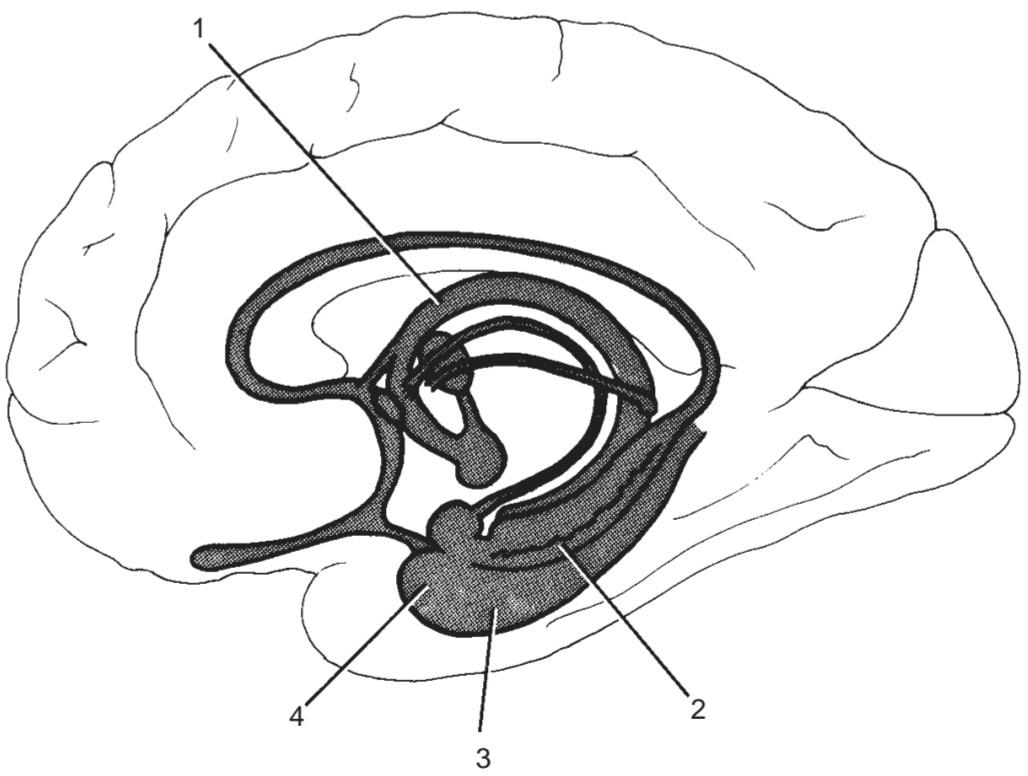
8. Number 2 (b) Body of fornix
9. Number 3 (c) Parahippocampal gyrus
10. Number 4 (d) Dentate gyrus
(e) None of the above
۷. شماره ۱ (الف) آنکوس
۸. شماره ۲ (ب) جسم فورنیکس
۹. شماره ۳ (ج) شکنج پاراهیپوکامپ
۱۰. شماره ۴ (د) شکنج دندانهای
(هـ) هیچکدام از موارد فوق
√ Answers and Explanations to Review Questions
1. D is correct. The reticular formation is relayed superiorly to the cerebral cortex. A. The retrobulbar and reticulospinal tracts form the efferent pathways from the reticular formation to the motor nuclei of the cranial nerves and the anterior horn cells of the spinal cord, respectively. B. The reticular formation extends through the neuroaxis from the spinal cord to the thalamus. C. The main pathways through the reticular formation are poorly defined and difficult to trace from one part of the CNS to another using silver stains. E. Afferent pathways project into the reticular formation from most parts of the CNS.
√ پاسخها و توضیحات مربوط به سوالات مروری
۱. گزینه د صحیح است. تشکیلات مشبک به قشر مغز در بالا منتقل میشود. الف. راههای رتروبولبار و مشبک نخاعی به ترتیب مسیرهای وابران را از تشکیلات مشبک به هستههای حرکتی اعصاب جمجمهای و سلولهای شاخ قدامی نخاع تشکیل میدهند. ب. تشکیلات مشبک از طریق نورواکسیژن از نخاع تا تالاموس امتداد مییابد. ج. مسیرهای اصلی از طریق تشکیلات مشبک به خوبی مشخص نیستند و ردیابی آنها از یک قسمت از سیستم عصبی مرکزی به قسمت دیگر با استفاده از رنگآمیزی نقره دشوار است. ه. مسیرهای آوران از بیشتر قسمتهای سیستم عصبی مرکزی به تشکیلات مشبک منتهی میشوند.
2. A is correct. The reticular formation influences the activity of the a and y motor neurons. B. The reticular formation does not oppose the actions of the vestibular spinal tract. C. The reticular formation brings about reciprocal inhibition during contraction of the prime mover muscles. D. The reticular formation helps maintain the tone of the antigravity muscles. E. The reticular formation can modulate reflex activity.
۲. الف صحیح است. تشکیلات مشبک بر فعالیت نورونهای حرکتی a و y تأثیر میگذارد. ب. تشکیلات مشبک با اعمال دستگاه نخاعی دهلیزی مخالفت نمیکند. ج. تشکیلات مشبک در حین انقباض عضلات محرک اصلی، مهار متقابل ایجاد میکند. د. تشکیلات مشبک به حفظ تون عضلات ضد جاذبه کمک میکند. ه. تشکیلات مشبک میتواند فعالیت رفلکسی را تعدیل کند.
3. C is correct. The reticular formation by means of its reticulobulbar and reticulospinal tracts can control the parasympathetic and sympathetic outflows. A. The reticular formation does affect the reception of pain. B. The reticular formation can influence all ascending pathways to the supraspinal levels. D. The reticular formation can affect the biologic rhythms. E. The reticular formation can influence the degree of wakefulness of an individual.
۳. ج صحیح است. تشکیلات مشبک به وسیلهی راههای مشبکی-پیازی و مشبکی-نخاعی خود میتواند جریانهای پاراسمپاتیک و سمپاتیک را کنترل کند. الف. تشکیلات مشبک بر دریافت درد تأثیر میگذارد. ب. تشکیلات مشبک میتواند بر تمام مسیرهای صعودی به سطوح فوق نخاعی تأثیر بگذارد. د. تشکیلات مشبک میتواند بر ریتمهای بیولوژیکی تأثیر بگذارد. ه. تشکیلات مشبک میتواند بر میزان بیداری فرد تأثیر بگذارد.
4. E is correct. The limbic system is made up of the subcallosal, the cingulate, and the parahippocampal gyri, the hippocampal formation, the amygdaloid nucleus, the mammillary bodies, and the anterior thalamic nuclei (see Fig. 9-3).
۴. گزینه E صحیح است. سیستم لیمبیک از ساب کالوزال، سینگولیت و شکنجهای پاراهیپوکامپ، تشکیلات هیپوکامپ، هسته آمیگدالوئید، اجسام پستانی و هستههای تالاموس قدامی تشکیل شده است (شکل ۹-۳ را ببینید).
5. B is correct. The efferent connections of the hippocampus travel through the fornix. A. The efferent connections of the hippocampus arise from large pyramidal cells of the cortex. C. Some of the efferent fibers from the hippocampus enter the mammillary bodies. D. The efferent fibers in the fornix pass anterior to the interventricular foramen. E. Some of the efferent fibers from the hippocampus end in the anterior nuclei of the thalamus.
۵. ب صحیح است. ارتباطات وابران هیپوکامپ از طریق فورنیکس حرکت میکنند. الف) ارتباطات وابران هیپوکامپ از سلولهای هرمی بزرگ قشر مغز ناشی میشوند. ج) برخی از فیبرهای وابران هیپوکامپ وارد اجسام پستانی میشوند. د) فیبرهای وابران در فورنیکس از جلوی سوراخ بین بطنی عبور میکنند. ه) برخی از فیبرهای وابران هیپوکامپ در هستههای قدامی تالاموس ختم میشوند.
6. C is correct. The hippocampus is concerned with recent memory. A. The limbic system is concerned with the reactions of fear and anger. B. The limbic system is not concerned with visual experiences. D. The limbic system plays no part in olfactory function. E. The limbic system indirectly influences the activity of the endocrine system.
۶. ج صحیح است. هیپوکامپ مربوط به حافظه اخیر است. الف) سیستم لیمبیک مربوط به واکنشهای ترس و خشم است. ب) سیستم لیمبیک مربوط به تجربیات بصری نیست. د) سیستم لیمبیک هیچ نقشی در عملکرد بویایی ندارد. ه) سیستم لیمبیک به طور غیرمستقیم بر فعالیت سیستم غدد درون ریز تأثیر میگذارد.
The answers for Figure 9-8 are as follows:
پاسخهای شکل ۹-۸ به شرح زیر است:
7. B is correct. Number 1 is the body of the fornix.
۷. ب صحیح است. شماره ۱ بدنه فورنیکس است.
8. D is correct. Number 2 is the dentate gyrus.
۸. د صحیح است. شماره ۲ شکنج دندانهای است.
9. C is correct. Number 3 is the parahippocampal gyrus.
۹. ج صحیح است. شماره ۳ شکنج پاراهیپوکامپ است.
10. A is correct. Number 4 is the uncus.
۱۰. الف صحیح است. شماره ۴ آنکوس است.
«فصل نهم کتاب نورواناتومی بالینی اسنل»
🚀 با ما همراه شوید!
تازهترین مطالب و آموزشهای مغز و اعصاب را از دست ندهید. با فالو کردن کانال تلگرام آیندهنگاران مغز، از ما حمایت کنید!