
فیزیولوژی پزشکی گایتون و هال؛ فیزیولوژی ورزشی


دعای مطالعه [ نمایش ]
بِسْمِ الله الرَّحْمنِ الرَّحیمِ
اَللّهُمَّ اَخْرِجْنى مِنْ ظُلُماتِ الْوَهْمِ
خدايا مرا بيرون آور از تاريكىهاى وهم،
وَ اَكْرِمْنى بِنُورِ الْفَهْمِ
و به نور فهم گرامى ام بدار،
اَللّهُمَّ افْتَحْ عَلَيْنا اَبْوابَ رَحْمَتِكَ
خدايا درهاى رحمتت را به روى ما بگشا،
وَانْشُرْ عَلَيْنا خَزائِنَ عُلُومِكَ بِرَحْمَتِكَ يا اَرْحَمَ الرّاحِمينَ
و خزانههاى علومت را بر ما باز كن به امید رحمتت اى مهربانترين مهربانان.
کتاب «فیزیولوژی پزشکی گایتون و هال» بهعنوان یکی از جامعترین و معتبرترین منابع در حوزه علوم پزشکی، همچنان مرجع کلیدی برای درک عملکرد پیچیده بدن انسان است. این اثر با تکیه بر تازهترین پژوهشها و توضیحات دقیق از سازوکارهای فیزیولوژیک، پلی میان علوم پایه پزشکی و کاربردهای بالینی ایجاد میکند و نقشی بیبدیل در آموزش، پژوهش و ارتقای دانش سلامت ایفا مینماید.
ترجمه دقیق و علمی این شاهکار توسط برند علمی آیندهنگاران مغز به مدیریت داریوش طاهری، دسترسی فارسیزبانان به مرزهای نوین دانش فیزیولوژی را ممکن ساخته و رسالتی علمی برای ارتقای آموزش پزشکی، فهم عمیقتر سازوکارهای بدن و توسعه روشهای نوین در حوزه سلامت فراهم آورده است.
» Guyton and Hall Textbook of Medical Physiology
»» CHAPTER 85: Sports Physiology

There are few stresses to which the body is exposed that approach the extreme stresses of heavy exercise. In fact, if some of the extremes of exercise were continued for even moderately prolonged periods, they might be lethal. Therefore, sports physiology is mainly a discussion of the ultimate limits to which several of the bodily mechanisms can be stressed. To give one simple example: In a person who has extremely high fever approaching the level of lethality, the body metabolism increases to about 100% above normal. By comparison, the metabolism of the body during a marathon race may increase to 2000% above normal.
استرس های کمی وجود دارد که بدن در معرض آن قرار می گیرد که به استرس های شدید ورزش های سنگین نزدیک می شود. در واقع، اگر برخی از ورزش های افراطی حتی برای دوره های متوسط طولانی مدت ادامه یابد، ممکن است کشنده باشد. بنابراین، فیزیولوژی ورزشی عمدتاً بحثی است درباره محدودیتهای نهایی که میتوان بر چندین مکانیسم بدن تأکید کرد. برای مثال ساده: در فردی که تب بسیار بالایی دارد و به سطح مرگ و میر نزدیک می شود، متابولیسم بدن تا حدود 100 درصد بالاتر از حد طبیعی افزایش می یابد. در مقایسه، متابولیسم بدن در طول یک مسابقه ماراتن ممکن است تا 2000٪ بالاتر از حد طبیعی افزایش یابد.
Female and Male Athletes
Most of the quantitative data that are given in this chapter are for the young male athlete, not because it is desirable to know only these values, but because it is only in young male athletes that relatively complete measurements have been made. Measurements in older athletes and in females are much less complete. However, for measurements that have been made in the female athlete, similar basic physiological principles apply, except for quantitative differences caused by differences in body size, body composition, and the presence or absence of the male sex hormone testosterone.
ورزشکاران زن و مرد
بیشتر دادههای کمی که در این فصل ارائه میشود برای ورزشکار مرد جوان است، نه به این دلیل که دانستن این مقادیر مطلوب است، بلکه به این دلیل که فقط در ورزشکاران مرد جوان است که اندازهگیریهای نسبتاً کاملی انجام شده است. اندازهگیریها در ورزشکاران مسنتر و در زنان بسیار کمتر است. با این حال، برای اندازه گیری هایی که در ورزشکار زن انجام شده است، اصول اولیه فیزیولوژیکی مشابه اعمال می شود، به جز تفاوت های کمی ناشی از تفاوت در اندازه بدن، ترکیب بدن، و وجود یا عدم وجود هورمون جنسی مردانه تستوسترون.
In general, most quantitative values for women-such as muscle strength, pulmonary ventilation, and cardiac out- put, all of which are related mainly to the muscle mass- vary between two-thirds and three-quarters of the values recorded in men, although there are many exceptions to this generalization. When measured in terms of strength per square centimeter of cross-sectional area, the female muscle can achieve almost exactly the same maximal force of contraction as that of the male muscle-between 3 and 4 kg/cm2. Therefore, most of the difference in total muscle performance lies in the extra percentage of the male body that is muscle, which is caused partly by endocrine differences that we will discuss later.
به طور کلی، بیشتر مقادیر کمی برای زنان – مانند قدرت عضلانی، تهویه ریوی و برون ده قلبی، که همه آنها عمدتاً به توده عضلانی مربوط می شوند- بین دو سوم تا سه چهارم مقادیر ثبت شده در مردان متفاوت است، اگرچه استثناهای زیادی برای این تعمیم وجود دارد. هنگامی که بر حسب قدرت در هر سانتی متر مربع سطح مقطع اندازه گیری می شود، عضله زن می تواند تقریباً به همان حداکثر نیروی انقباض عضله مرد دست یابد – بین 3 تا 4 کیلوگرم بر سانتی متر مربع. بنابراین، بیشتر تفاوت در عملکرد کل عضله در درصد اضافی بدن مرد است که عضلانی است، که تا حدی ناشی از تفاوتهای غدد درون ریز است که بعداً به آن خواهیم پرداخت.
The performance capabilities of the female versus male athlete are illustrated by the relative running speeds for a marathon race. In a comparison, the top female performer had a running speed that was 11% less than that of the top male performer. For other events, however, women have at times held records faster than men-for example, for the two-way swim across the English Channel, for which the availability of extra fat seems to be an advantage for heat insulation, buoyancy, and extra long-term energy.
قابلیت های عملکرد ورزشکار زن در مقابل مرد با سرعت های نسبی دویدن برای یک مسابقه ماراتن نشان داده شده است. در مقایسه، بهترین مجری زن دارای سرعت دویدن بود که 11 درصد کمتر از بهترین مجری مرد بود. با این حال، برای رویدادهای دیگر، زنان در مواقعی رکوردهای سریعتری نسبت به مردان به دست آوردهاند، برای مثال، برای شنای دو طرفه در کانال مانش، که به نظر میرسد در دسترس بودن چربی اضافی برای عایق حرارتی، شناوری و انرژی طولانیمدت اضافی مزیتی است.
Testosterone secreted by the male testes has a powerful anabolic effect in causing greatly increased deposition of protein everywhere in the body, but especially in the muscles. In fact, even a male who participates in very little sports activity but who nevertheless has a normal level of testosterone will have muscles that grow about 40% larger than those of a comparable female without the testosterone.
تستوسترون ترشح شده توسط بیضه های مردانه دارای اثر آنابولیک قوی در ایجاد رسوب بسیار زیاد پروتئین در همه جای بدن، به ویژه در عضلات است. در واقع، حتی مردانی که در فعالیتهای ورزشی بسیار کم شرکت میکنند، اما با این وجود سطح تستوسترون طبیعی دارند، عضلاتی دارند که حدود 40 درصد بزرگتر از ماهیچههای زنانه بدون تستوسترون هستند.
The female sex hormone estrogen probably also ac- counts for some of the difference between female and male performance, although not nearly so much as testosterone. Estrogen increases the deposition of fat in the female, especially in the breasts, hips, and subcutaneous tissue. At least partly for this reason, the average young (age 16-19 years) nonathletic female has about 34% body fat composition, in contrast to the nonathletic young male (age 16-19 years), who has about 23% (Figure 85-1). The average percentages for body fat are higher in older men and women and have increased substantially over the past 20 to 30 years as the prevalence of obesity has risen in populations of most developed countries. In the United States, for example, the prevalence of obesity in now approximately 37% of the adult population. Increased body fat composition is a detriment to the highest levels of athletic performance in events in which performance depends on speed or on the ratio of total body muscle strength to body weight.
احتمالاً هورمون جنسی زنانه استروژن نیز برخی از تفاوتهای بین عملکرد زنانه و مردانه را بهخود اختصاص میدهد، اگرچه تقریباً به اندازه تستوسترون نیست. استروژن رسوب چربی را در زنان به ویژه در سینه ها، باسن و بافت زیر جلدی افزایش می دهد. حداقل تا حدودی به همین دلیل، زنان غیرورزشکار جوان (19-16 سال) متوسط حدود 34 درصد چربی بدن دارند، در مقابل مردان جوان غیر ورزشکار (سن 16-19 سال) که حدود 23 درصد دارند (شکل 85-1). میانگین درصد چربی بدن در مردان و زنان مسن بالاتر است و در طول 20 تا 30 سال گذشته به طور قابل توجهی افزایش یافته است زیرا شیوع چاقی در جمعیت اکثر کشورهای توسعه یافته افزایش یافته است. به عنوان مثال، در ایالات متحده، شیوع چاقی در حال حاضر در حدود 37٪ از جمعیت بزرگسال است. افزایش ترکیب چربی بدن در مسابقاتی که عملکرد به سرعت یا نسبت کل قدرت عضلانی بدن به وزن بدن بستگی دارد، به بالاترین سطوح عملکرد ورزشی آسیب می رساند.
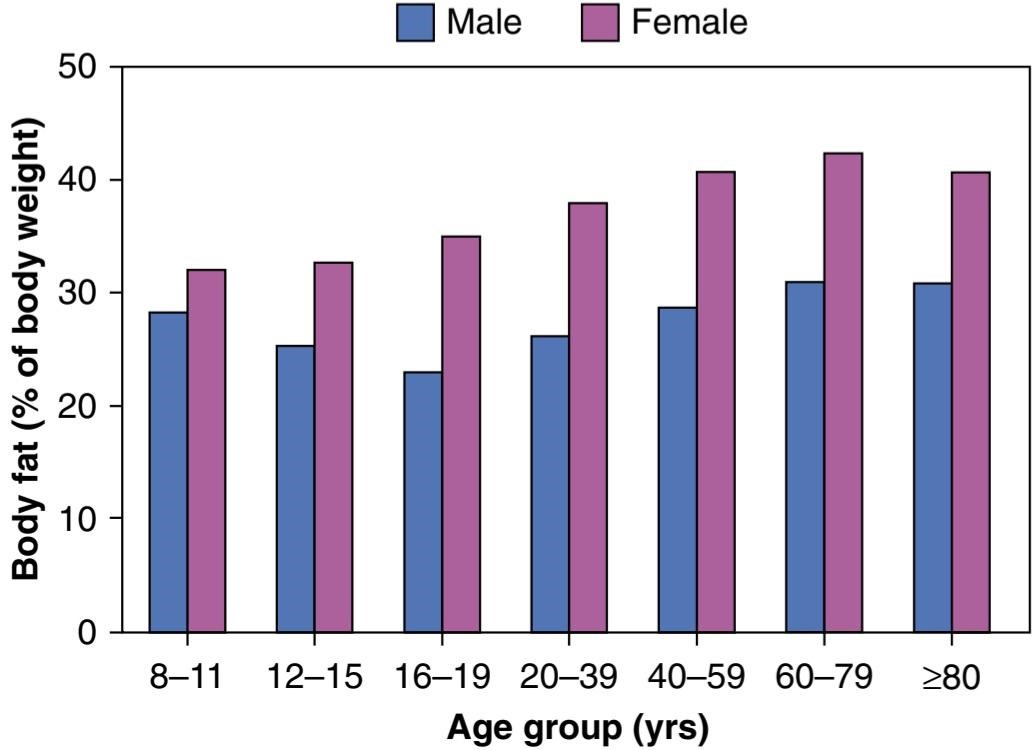
Figure 85-1 Average percentage body fat in males and females at different ages. (Data from the National Health and Nutrition Examination Survey, United States, 1999-2004).
شکل 85-1 میانگین درصد چربی بدن در مردان و زنان در سنین مختلف. (داده ها از بررسی ملی سلامت و تغذیه، ایالات متحده، 1999-2004).
Muscles in Exercise
Strength, Power, and Endurance of Muscles
The final common determinant of success in athletic events is what the muscles can do for you—that is, what strength they can give when it is needed, what power they can achieve in the performance of work, and how long they can continue their activity.
عضلات در ورزش
قدرت، قدرت و استقامت عضلات
آخرین عامل تعیین کننده موفقیت در رویدادهای ورزشی این است که ماهیچه ها چه کاری می توانند برای شما انجام دهند – یعنی در صورت نیاز چه قدرتی می توانند بدهند، چه قدرتی می توانند در انجام کار به دست آورند و تا چه مدت می توانند به فعالیت خود ادامه دهند.
The strength of a muscle is determined mainly by its size, with a maximal contractile force between 3 and 4 kg/cm2 of muscle cross-sectional area. Thus, a person who has enlarged his or her muscles through an exercise training program will have correspondingly increased muscle strength.
قدرت عضله عمدتاً با اندازه آن تعیین می شود، با حداکثر نیروی انقباضی بین 3 تا 4 کیلوگرم بر سانتی متر مربع از سطح مقطع عضله. بنابراین، فردی که عضلات خود را از طریق یک برنامه تمرینی بزرگ کرده است، به همان نسبت قدرت عضلانی بیشتری خواهد داشت.
To give an example of muscle strength, a world-class male weight lifter might have a quadriceps muscle with a cross-sectional area as great as 150 square centimeters. This measurement would translate into a maximal contractile strength of 525 kilograms (or 1155 pounds), with all this force applied to the patellar tendon. Therefore, one can readily understand how it is possible for this tendon at times to be ruptured or actually to be avulsed from its insertion into the tibia below the knee. Also, when such forces occur in tendons that span a joint, similar forces are applied to the surfaces of the joint or sometimes to ligaments spanning the joints, thus accounting for such happenings as displaced cartilages, compression fractures about the joint, and torn ligaments.
برای مثالی از قدرت عضلانی، یک وزنه بردار مرد در کلاس جهانی ممکن است عضله چهار سر ران با سطح مقطع به اندازه 150 سانتی متر مربع داشته باشد. این اندازه گیری به حداکثر قدرت انقباض 525 کیلوگرم (یا 1155 پوند)، با تمام این نیرو اعمال شده به تاندون کشکک تبدیل می شود. بنابراین، می توان به راحتی درک کرد که چگونه ممکن است گاهی اوقات این تاندون پاره شود یا در واقع از ورود آن به استخوان درشت نی زیر زانو خارج شود. همچنین، هنگامی که چنین نیروهایی در تاندونهایی که یک مفصل را میپوشانند، رخ میدهد، نیروهای مشابهی به سطوح مفصل یا گاهی اوقات به رباطهایی که مفاصل را پوشاندهاند اعمال میشود، بنابراین اتفاقاتی مانند جابجایی غضروفها، شکستگیهای فشاری در اطراف مفصل و پارگی رباطها را شامل میشود.
The holding strength of muscles is about 40% greater than the contractile strength. That is, if a muscle is already contracted and a force then attempts to stretch out the muscle, as occurs when landing after a jump, this action requires about 40% more force than can be achieved by a shortening contraction. Therefore, the force of 525 kilo- grams previously calculated for the patellar tendon during muscle contraction becomes 735 kilograms (1617 pounds) during holding contractions, which further compounds the problems of the tendons, joints, and ligaments. It can also lead to internal tearing in the muscle. In fact, forceful stretching of a maximally contracted muscle is one of the surest ways to create the highest degree of muscle soreness.
قدرت نگهداری عضلات حدود 40 درصد بیشتر از قدرت انقباضی است. یعنی اگر یک عضله قبلاً منقبض شده باشد و سپس نیرویی بخواهد عضله را بکشد، همانطور که هنگام فرود آمدن پس از پرش اتفاق می افتد، این عمل به نیرویی حدوداً 40٪ بیشتر از آنچه که با انقباض کوتاه کننده حاصل می شود نیاز دارد. بنابراین، نیروی 525 کیلوگرمی که قبلاً برای تاندون کشکک در حین انقباض عضلانی محاسبه شده بود، در حین نگه داشتن انقباضات به 735 کیلوگرم (1617 پوند) می رسد که مشکلات تاندون ها، مفاصل و رباط ها را بیشتر می کند. همچنین می تواند منجر به پارگی داخلی در عضله شود. در واقع، کشش شدید عضله ای که حداکثر منقبض شده است، یکی از مطمئن ترین راه ها برای ایجاد بالاترین درجه درد عضلانی است.
Mechanical work performed by a muscle is the amount of force applied by the muscle multiplied by the distance over which the force is applied. The power of muscle contraction is different from muscle strength because power is a measure of the total amount of work that the muscle performs in a unit period of time. Power is therefore determined not only by the strength of muscle contraction but also by its distance of contraction and the number of times that it contracts each minute. Muscle power is generally measured in kilogram meters (kg-m) per minute. That is, a muscle that can lift 1-kilogram weight to a height of 1 meter or that can move some object laterally against a force of 1 kilogram for a distance of 1 meter in 1 minute is said to have a power of 1 kg-m/min. The maximal power achievable by all the muscles in the body of a highly trained athlete with all the muscles working together is approximately the following:
کار مکانیکی که توسط عضله انجام می شود مقدار نیروی وارد شده توسط عضله ضرب در فاصله ای است که نیرو بر آن وارد می شود. قدرت انقباض عضلانی با قدرت عضلانی متفاوت است زیرا قدرت اندازه گیری کل مقدار کاری است که عضله در یک دوره زمانی انجام می دهد. بنابراین قدرت نه تنها با قدرت انقباض عضله بلکه با فاصله انقباض آن و تعداد دفعاتی که در هر دقیقه منقبض می شود نیز تعیین می شود. قدرت عضلانی به طور کلی بر حسب کیلوگرم متر (کیلوگرم متر) در دقیقه اندازه گیری می شود. یعنی به عضله ای که بتواند وزنه 1 کیلوگرمی را تا ارتفاع 1 متر بردارد یا بتواند جسمی را به صورت جانبی در برابر نیروی 1 کیلوگرمی برای مسافت 1 متر در 1 دقیقه حرکت دهد، می گویند قدرتی معادل 1 kg-m/min دارد. حداکثر قدرتی که تمام ماهیچههای بدن یک ورزشکار بسیار تمرینکرده با کار کردن همه عضلات با هم تقریباً به شرح زیر است:

Thus, it is clear that a person has the capability of extreme power surges for short periods, such as during a 100-meter dash that is completed entirely within 10 seconds, whereas for long-term endurance events, the power output of the muscles is only one-fourth as great as during the initial power surge.
بنابراین، واضح است که یک فرد توانایی افزایش قدرت شدید را برای دورههای کوتاه دارد، مثلاً در طول یک دوی 100 متری که به طور کامل در عرض 10 ثانیه کامل میشود، در حالی که برای رویدادهای استقامتی طولانیمدت، قدرت خروجی عضلات تنها یک چهارم بیشتر از افزایش قدرت اولیه است.
This does not mean that one’s athletic performance is four times as great during the initial power surge as it is for the next 30 minutes, because the efficiency for translation of muscle power output into athletic performance is often much less during rapid activity than during less rapid but sustained activity. Thus, the velocity of the 100-meter dash is only 1.75 times as great as the velocity of a 30-minute race, despite the 4-fold difference in short-term versus long-term muscle power capability.
این بدان معنا نیست که عملکرد ورزشی یک فرد در طول افزایش توان اولیه چهار برابر بیشتر از 30 دقیقه بعدی است، زیرا بازدهی برای تبدیل خروجی قدرت عضلانی به عملکرد ورزشی اغلب در طول فعالیت سریع بسیار کمتر از فعالیت با سرعت کمتر اما پایدار است. بنابراین، سرعت دوی 100 متر تنها 1.75 برابر سرعت یک مسابقه 30 دقیقهای است، علیرغم تفاوت 4 برابری توانایی عضلات کوتاهمدت در مقابل بلندمدت.
Another measure of muscle performance is endurance. Endurance, to a great extent, depends on the nutritive support for the muscle-more than anything else, it depends on the amount of glycogen that has been stored in the muscle before the period of exercise. A person who consumes a high-carbohydrate diet stores far more glycogen in muscles than does a person who consumes either a mixed diet or a high-fat diet. Therefore, endurance is enhanced by a highcarbohydrate diet. When athletes run at speeds typical for the marathon race, their endurance (as measured by the time that they can sustain the race until complete exhaustion) is approximately the following:
یکی دیگر از معیارهای سنجش عملکرد عضلات، استقامت است. استقامت تا حد زیادی به حمایت غذایی از ماهیچه بستگی دارد – بیش از هر چیز دیگری به مقدار گلیکوژنی که قبل از دوره تمرین در عضله ذخیره شده است بستگی دارد. فردی که رژیم غذایی پر کربوهیدرات مصرف می کند نسبت به فردی که رژیم غذایی ترکیبی یا رژیم غذایی پرچرب مصرف می کند، گلیکوژن بسیار بیشتری در ماهیچه ها ذخیره می کند. بنابراین، استقامت با رژیم غذایی پر کربوهیدرات افزایش می یابد. وقتی ورزشکاران با سرعتهای معمولی برای مسابقه ماراتن میدوند، استقامت آنها (بر اساس زمانی که میتوانند مسابقه را تا خستگی کامل ادامه دهند اندازهگیری میشود) تقریباً به شرح زیر است:

The corresponding amounts of glycogen stored in the muscle before the race started explain these differences. The amounts stored are approximately the following:
مقادیر متناظر گلیکوژن ذخیره شده در عضله قبل از شروع مسابقه، این تفاوت ها را توضیح می دهد. مقادیر ذخیره شده تقریباً به شرح زیر است:

Muscle Metabolic Systems in Exercise
The same basic metabolic systems are present in muscle as in other parts of the body; these systems are discussed in detail in Chapters 68 through 74. However, special quantitative measures of the activities of three metabolic systems are exceedingly important in understanding the limits of physical activity. These systems are (1) the phosphocreatine- creatine system, (2) the glycogen-lactic acid system, and (3) the aerobic system.
سیستم های متابولیک عضلانی در ورزش
همان سیستم های متابولیک اساسی در عضلات مانند سایر قسمت های بدن وجود دارد. این سیستم ها به تفصیل در فصل های 68 تا 74 مورد بحث قرار گرفته اند. با این حال، معیارهای کمی ویژه فعالیت های سه سیستم متابولیک در درک محدودیت های فعالیت بدنی بسیار مهم است. این سیستم ها (1) سیستم فسفوکراتین- کراتین، (2) سیستم گلیکوژن- اسید لاکتیک و (3) سیستم هوازی هستند.
Adenosine Triphosphate. The source of energy actually used to cause muscle contraction is adenosine triphosphate (ATP), which has the following basic formula:
آدنوزین تری فسفات. منبع انرژی که در واقع برای ایجاد انقباض عضلانی استفاده می شود، آدنوزین تری فسفات (ATP) است که دارای فرمول اصلی زیر است:

The bonds attaching the last two phosphate radicals to the molecule, designated by the symbol ~, are high-energy phosphate bonds. Each of these bonds stores 7300 calories of energy per mole of ATP under standard conditions (and even slightly more than this under the physical conditions in the body, which is discussed in detail in Chapter 68). Therefore, when one phosphate radical is removed, more than 7300 calories of energy are released to energize the muscle contractile process. Then, when the second phosphate radical is removed, still another 7300 calories become available. Removal of the first phosphate converts the ATP into adenosine diphosphate (ADP), and removal of the second converts this ADP into adenosine monophosphate (AMP).
پیوندهایی که دو رادیکال فسفات آخر را به مولکول متصل می کنند، که با علامت ~ مشخص شده اند، پیوندهای فسفات با انرژی بالا هستند. هر یک از این پیوندها 7300 کالری انرژی در هر مول ATP در شرایط استاندارد ذخیره می کند (و حتی کمی بیشتر از این در شرایط فیزیکی در بدن که در فصل 68 به تفصیل مورد بحث قرار گرفته است). بنابراین، هنگامی که یک رادیکال فسفات حذف می شود، بیش از 7300 کالری انرژی آزاد می شود تا به فرآیند انقباض عضلانی انرژی بخشد. سپس، هنگامی که دومین رادیکال فسفات حذف شد، 7300 کالری دیگر نیز در دسترس خواهد بود. حذف فسفات اول، ATP را به آدنوزین دی فسفات (ADP) تبدیل می کند و حذف فسفات دوم، این ADP را به آدنوزین مونوفسفات (AMP) تبدیل می کند.
The amount of ATP present in the muscles, even in a well- trained athlete, is sufficient to sustain maximal muscle power for only about 3 seconds, which might be enough for one half of a 50-meter dash. Therefore, except for a few seconds at a time, it is essential that new ATP be formed continuously, even during the performance of short athletic events. Figure 85-2 shows the overall metabolic system, demonstrating the breakdown of ATP first to ADP and then to AMP, with release of energy to the muscles for contraction. The left-hand side of the figure shows the three metabolic systems that provide a continuous supply of ATP in the muscle fibers.
مقدار ATP موجود در ماهیچه ها، حتی در ورزشکارانی که به خوبی تمرین کرده اند، برای حفظ حداکثر قدرت عضلانی تنها برای حدود 3 ثانیه کافی است، که ممکن است برای نیمی از دویدن 50 متر کافی باشد. بنابراین، به جز چند ثانیه در یک زمان، ضروری است که ATP جدید به طور مداوم، حتی در طول اجرای رویدادهای ورزشی کوتاه، تشکیل شود. شکل 85-2 سیستم متابولیک کلی را نشان می دهد که تجزیه ATP را ابتدا به ADP و سپس به AMP با آزاد شدن انرژی به عضلات برای انقباض نشان می دهد. سمت چپ شکل، سه سیستم متابولیک را نشان می دهد که تامین مداوم ATP در فیبرهای عضلانی را فراهم می کند.
Phosphocreatine-Creatine System
Phosphocreatine (also called creatine phosphate) is another chemical compound that has a high-energy phosphate bond, with the following formula:
سیستم فسفوکراتین-کراتین
فسفوکراتین (که کراتین فسفات نیز نامیده می شود) ترکیب شیمیایی دیگری است که دارای پیوند فسفات با انرژی بالا است، با فرمول زیر:

Phosphocreatine can decompose to creatine and phosphate ion, as shown in Figure 85-2, and in doing so releases large amounts of energy. In fact, the high-energy phosphate bond of phosphocreatine has more energy than the bond of ATP: 10,300 calories per mole compared with 7300 for the ATP bond. Therefore, phosphocreatine can easily provide enough energy to reconstitute the high-energy bond of ATP. Furthermore, most muscle cells have two to four times as much phosphocreatine as ATP.
همانطور که در شکل 85-2 نشان داده شده است، فسفوکراتین می تواند به کراتین و یون فسفات تجزیه شود و با انجام این کار مقادیر زیادی انرژی آزاد می کند. در واقع، پیوند فسفات پرانرژی فسفوکراتین انرژی بیشتری نسبت به پیوند ATP دارد: 10300 کالری در هر مول در مقایسه با 7300 کالری برای پیوند ATP. بنابراین، فسفوکراتین به راحتی می تواند انرژی کافی برای بازسازی پیوند پرانرژی ATP را فراهم کند. علاوه بر این، اکثر سلول های عضلانی دو تا چهار برابر بیشتر از ATP فسفوکراتین دارند.
A special characteristic of energy transfer from phos- phocreatine to ATP is that it occurs within a small frac- tion of a second. Therefore, all the energy stored in muscle phosphocreatine is almost instantaneously available for muscle contraction, just as is the energy stored in ATP.
یک ویژگی خاص انتقال انرژی از فسفوکراتین به ATP این است که در کسری کوچک از ثانیه اتفاق می افتد. بنابراین، تمام انرژی ذخیره شده در فسفوکراتین عضلانی تقریباً بلافاصله برای انقباض عضلانی در دسترس است، درست مانند انرژی ذخیره شده در ATP.
The combined amounts of cell ATP and cell phospho- creatine are called the phosphagen energy system. These substances together can provide maximal muscle power for 8 to 10 seconds, almost enough for the 100-meter run. Figure 85-2 Important metabolic systems that supply energy for muscle contraction.
مقادیر ترکیبی ATP سلول و فسفوکراتین سلولی سیستم انرژی فسفاژن نامیده می شود. این مواد با هم می توانند حداکثر قدرت عضلانی را برای 8 تا 10 ثانیه فراهم کنند که تقریباً برای دوی 100 متر کافی است. شکل 85-2 سیستم های متابولیک مهمی که انرژی را برای انقباض عضلانی تامین می کنند.
Thus, the energy from the phosphagen system is used for maximal short bursts of muscle power.
بنابراین، انرژی حاصل از سیستم فسفاژن برای حداکثر انفجارهای کوتاه قدرت عضلانی استفاده می شود.

Figure 85-2. Importantmetabolic systems that supply energy for muscle contraction.
شکل 85-2. سیستم های متابولیک مهمی که انرژی را برای انقباض عضلانی تامین می کنند.
Glycogen-Lactic Acid System. The stored glycogen in muscle can be split into glucose, and the glucose can then be used for energy. The initial stage of this process, called glycolysis, occurs without use of oxygen and, therefore, is said to be anaerobic metabolism (see Chapter 68). During glycolysis, each glucose molecule is split into two pyruvic acid molecules, and energy is released to form four ATP molecules for each original glucose molecule, as explained in Chapter 68. Ordinarily, the pyruvic acid then enters the mitochondria of muscle cells and reacts with oxygen to form still many more ATP molecules. However, when there is insufficient oxygen for this second stage (the oxidative stage) of glucose metabolism to occur, most of the pyruvic acid then is converted into lactic acid, which diffuses out of the muscle cells into the interstitial fluid and blood. Therefore, much of the muscle glycogen is transformed to lactic acid, but in doing so, considerable amounts of ATP are formed entirely without consumption of oxygen.
سیستم گلیکوژن-اسید لاکتیک. گلیکوژن ذخیره شده در ماهیچه را می توان به گلوکز تقسیم کرد و سپس از گلوکز برای انرژی استفاده کرد. مرحله اولیه این فرآیند که گلیکولیز نامیده می شود، بدون استفاده از اکسیژن اتفاق می افتد و بنابراین گفته می شود که متابولیسم بی هوازی است (به فصل 68 مراجعه کنید). در طی گلیکولیز، هر مولکول گلوکز به دو مولکول اسید پیروویک تقسیم میشود و انرژی آزاد میشود تا چهار مولکول ATP برای هر مولکول گلوکز اصلی تشکیل شود، همانطور که در فصل 68 توضیح داده شد. معمولاً، اسید پیروویک سپس وارد میتوکندری سلولهای عضلانی میشود و با تعداد بیشتری از مولکولهای ATP ژن واکنش نشان میدهد. با این حال، هنگامی که اکسیژن کافی برای این مرحله دوم (مرحله اکسیداتیو) متابولیسم گلوکز وجود ندارد، بیشتر اسید پیروویک به اسید لاکتیک تبدیل میشود که از سلولهای عضلانی به مایع بینابینی و خون منتشر میشود. بنابراین، بسیاری از گلیکوژن عضلانی به اسید لاکتیک تبدیل می شود، اما با انجام این کار، مقادیر قابل توجهی ATP به طور کامل بدون مصرف اکسیژن تشکیل می شود.
Another characteristic of the glycogen-lactic acid system is that it can form ATP molecules about 2.5 times as rapidly as can the oxidative mechanism of mitochondria. Therefore, when large amounts of ATP are required for short to moderate periods of muscle contraction, this anaerobic glycolysis mechanism can be used as a rapid source of energy. However, it is only about one-half as rapid as the phosphagen system. Under optimal conditions, the glycogen-lactic acid system can provide 1.3 to 1.6 minutes of maximal muscle activity in addition to the 8 to 10 seconds provided by the phosphagen system, although at somewhat reduced muscle power.
یکی دیگر از ویژگی های سیستم اسید لاکتیک گلیکوژن این است که می تواند مولکول های ATP را حدود 2.5 برابر سریعتر از مکانیسم اکسیداتیو میتوکندری تشکیل دهد. بنابراین، هنگامی که مقادیر زیادی ATP برای دوره های کوتاه تا متوسط انقباض عضلانی مورد نیاز است، این مکانیسم گلیکولیز بی هوازی می تواند به عنوان منبع سریع انرژی مورد استفاده قرار گیرد. با این حال، سرعت آن فقط به اندازه نصف سیستم فسفاژن است. در شرایط بهینه، سیستم اسید لاکتیک گلیکوژن می تواند 1.3 تا 1.6 دقیقه حداکثر فعالیت عضلانی را علاوه بر 8 تا 10 ثانیه ارائه شده توسط سیستم فسفاژن فراهم کند، اگرچه تا حدودی قدرت عضلانی کاهش می یابد.
Aerobic System. The aerobic system is the oxidation of foodstuffs in the mitochondria to provide energy. As shown to the left in Figure 85-2, glucose, fatty acids, and amino acids from the foodstuffs after some intermediate processing combine with oxygen to release tremendous amounts of energy that are used to convert AMP and ADP into ATP, as discussed in Chapter 68.
سیستم هوازی. سیستم هوازی اکسیداسیون مواد غذایی در میتوکندری برای تامین انرژی است. همانطور که در شکل 85-2 در سمت چپ نشان داده شده است، گلوکز، اسیدهای چرب و اسیدهای آمینه مواد غذایی پس از انجام برخی پردازشهای میانی با اکسیژن ترکیب میشوند تا مقادیر زیادی انرژی آزاد کنند که برای تبدیل AMP و ADP به ATP استفاده میشود، همانطور که در فصل 68 بحث شد.
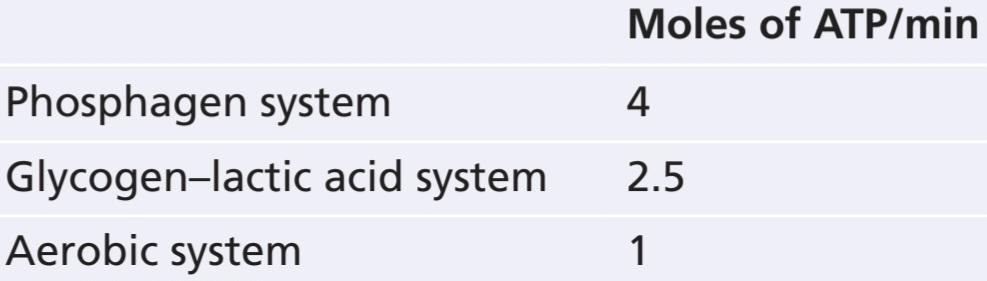
In comparing this aerobic mechanism of energy supply with the glycogen-lactic acid system and the phosphagen system, the relative maximal rates of power generation in terms of moles of ATP generation per minute are the following:
در مقایسه این مکانیسم هوازی تامین انرژی با سیستم گلیکوژن-اسید لاکتیک و سیستم فسفاژن، حداکثر نرخ های نسبی تولید برق بر حسب مول های تولید ATP در دقیقه به شرح زیر است:
When comparing the same systems for endurance, the relative values are the following:
هنگام مقایسه سیستم های مشابه برای استقامت، مقادیر نسبی به شرح زیر است:
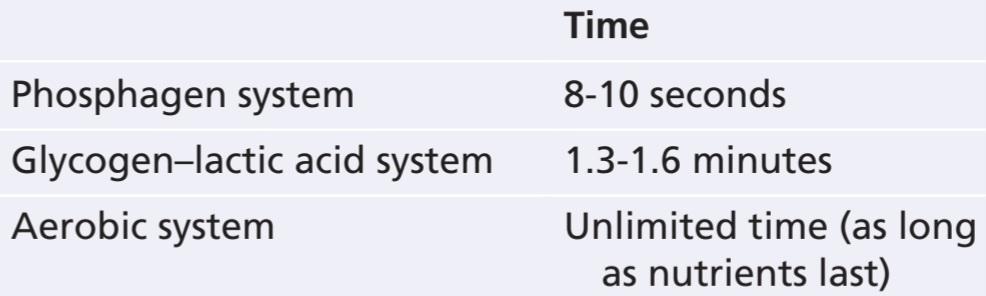
Thus, one can readily see that the phosphagen system is used by the muscle for power surges of a few seconds, and the aerobic system is required for prolonged athletic activity. In between is the glycogen-lactic acid system, which is especially important for providing extra power during such intermediate races as 200- to 800-meter runs.
بنابراین، می توان به راحتی مشاهده کرد که سیستم فسفاژن توسط عضله برای افزایش قدرت چند ثانیه ای استفاده می شود، و سیستم هوازی برای فعالیت های ورزشی طولانی مدت مورد نیاز است. در این بین سیستم اسید گلیکوژن-لاکتیک وجود دارد که به ویژه برای تامین نیروی اضافی در طول مسابقات میانی مانند دوی 200 تا 800 متر اهمیت دارد.
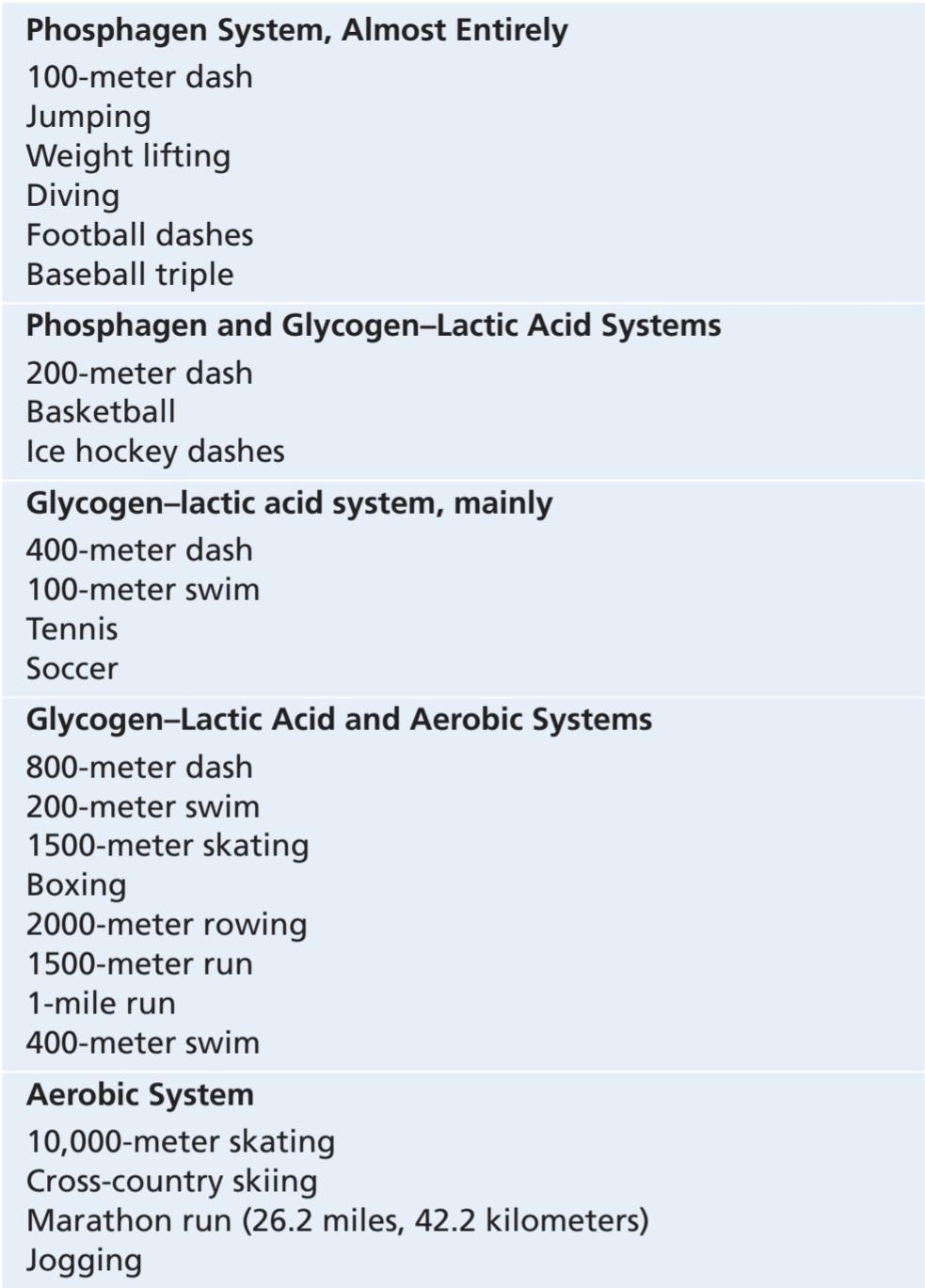
What Types of Sports Use Which Energy Systems? By considering the vigor of a sports activity and its duration, one can estimate closely which of the energy systems is used for each activity. Various approximations are present- ed in Table 85-1.
چه نوع ورزش هایی از کدام سیستم های انرژی استفاده می کنند؟ با در نظر گرفتن قدرت یک فعالیت ورزشی و مدت زمان آن، می توان از نزدیک تخمین زد که کدام یک از سیستم های انرژی برای هر فعالیت استفاده می شود. تقریب های مختلفی در جدول 85-1 ارائه شده است.
Table 85-1 Energy Systems Used in Various Sports
جدول 85-1 سیستم های انرژی مورد استفاده در ورزش های مختلف
Recovery of Muscle Metabolic Systems After Exercise. In the same way that energy from phosphocre- atine can be used to reconstitute ATP, energy from the glycogen-lactic acid system can be used to reconstitute phosphocreatine and ATP. Energy from the oxidative metabolism of the aerobic system can then be used to reconstitute all the other systems-the ATP, phosphocreatine, and glycogen-lactic acid systems.
ریکاوری سیستم متابولیک عضلانی بعد از ورزش. همانطور که انرژی حاصل از فسفوکراتین می تواند برای بازسازی ATP استفاده شود، انرژی حاصل از سیستم اسید گلیکوژن-لاکتیک نیز می تواند برای بازسازی فسفوکراتین و ATP استفاده شود. سپس انرژی حاصل از متابولیسم اکسیداتیو سیستم هوازی را می توان برای بازسازی تمام سیستم های دیگر مانند سیستم های ATP، فسفوکراتین و گلیکوژن-اسید لاکتیک استفاده کرد.
Reconstitution of the lactic acid system means mainly the removal of the excess lactic acid that has accumulated in the body fluids. Removal of the excess lactic acid is especially important because buildup of lactic acid contributes to fatigue and the “burning” sensation in active muscles during intense exercise. When adequate amounts of energy are available from oxidative metabolism, removal of lactic acid is achieved in two ways: (1) A small portion of it is converted back into pyruvic acid and then metabolized oxidatively by the body tissues, and (2) the remaining lactic acid is reconverted into glucose mainly in the liver, and the glucose in turn is used to replenish the glycogen stores of the muscles.
بازسازی سیستم اسید لاکتیک عمدتاً به معنای حذف اسید لاکتیک اضافی است که در مایعات بدن انباشته شده است. حذف اسید لاکتیک اضافی به ویژه مهم است زیرا تجمع اسید لاکتیک به خستگی و احساس “سوزش” در عضلات فعال در طول تمرینات شدید کمک می کند. هنگامی که مقادیر کافی انرژی از متابولیسم اکسیداتیو در دسترس باشد، حذف اسید لاکتیک به دو صورت حاصل میشود: (1) بخش کوچکی از آن دوباره به پیروویک اسید تبدیل میشود و سپس توسط بافتهای بدن به صورت اکسیداتیو متابولیزه میشود، و (2) اسید لاکتیک باقیمانده به گلوکز تبدیل میشود و گلوکز به طور عمده در کبد مورد استفاده قرار میگیرد. ماهیچه ها
Recovery of the Aerobic System After Exercise. Even during the early stages of heavy exercise, a portion of one’s aerobic energy capability is depleted. This depletion results from two effects: (1) the so-called oxygen debt and (2) depletion of glycogen stores of the muscles.
ریکاوری سیستم هوازی بعد از ورزش. حتی در مراحل اولیه تمرینات سنگین، بخشی از قابلیت انرژی هوازی فرد کاهش می یابد. این تخلیه ناشی از دو اثر است: (1) به اصطلاح بدهی اکسیژن و (2) تخلیه ذخایر گلیکوژن عضلات.
Oxygen Debt. The body normally contains about 2 liters of stored oxygen that can be used for aerobic metabolism even without breathing any new oxygen. This stored oxygen consists of the following: (1) 0.5 liter in the air of the lungs, (2) 0.25 liter dissolved in the body fluids, (3) 1 liter combined with the hemoglobin of the blood, and (4) 0.3 liter stored in the muscle fibers, combined mainly with myoglobin, an oxygen-binding chemical similar to hemoglobin.
بدهی اکسیژن. بدن به طور معمول حاوی حدود 2 لیتر اکسیژن ذخیره شده است که می تواند برای متابولیسم هوازی حتی بدون تنفس اکسیژن جدید استفاده شود. این اکسیژن ذخیره شده شامل موارد زیر است: (1) 0.5 لیتر در هوای ریه، (2) 0.25 لیتر محلول در مایعات بدن، (3) 1 لیتر ترکیب با هموگلوبین خون، و (4) 0.3 لیتر ذخیره شده در فیبرهای عضلانی، ترکیب شده عمدتاً با میوگلوبین شیمیایی مشابه هیوگلوبین.
In heavy exercise, almost all this stored oxygen is used within a minute or so for aerobic metabolism. Then, after the exercise is over, this stored oxygen must be replenished by breathing extra amounts of oxygen over and above the normal requirements. In addition, about 9 liters more oxygen must be consumed to reconstitute the phosphagen system and the lactic acid system. All this extra oxygen that must be “repaid,” about 11.5 liters, is called the oxygen debt.
در ورزش های سنگین، تقریباً تمام این اکسیژن ذخیره شده در عرض یک دقیقه یا بیشتر برای متابولیسم هوازی استفاده می شود. سپس، پس از پایان تمرین، این اکسیژن ذخیره شده باید با تنفس مقادیر اضافی اکسیژن بیش از حد نیاز طبیعی، دوباره پر شود. علاوه بر این، حدود 9 لیتر اکسیژن بیشتر باید برای بازسازی سیستم فسفاژن و سیستم اسید لاکتیک مصرف شود. تمام این اکسیژن اضافی که باید “بازپرداخت” شود، یعنی حدود 11.5 لیتر، بدهی اکسیژن نامیده می شود.
Figure 85-3 shows this principle of oxygen debt. During the first 4 minutes, as depicted in the figure, the person exercises heavily, and the rate of oxygen uptake increases more than 15-fold. Then, even after the exercise is over, the oxygen uptake still remains above normal; at first it is very high while the body is reconstituting the phosphagen system and repaying the stored oxygen portion of the oxygen debt, and then it is still above normal although at a lower level for another 40 minutes while the lactic acid is removed. The early portion of the oxygen debt is called the alactacid oxygen debt and amounts to about 3.5 liters. The latter portion is called the lactic acid oxygen debt and amounts to about 8 liters.
شکل 85-3 این اصل بدهی اکسیژن را نشان می دهد. در طول 4 دقیقه اول، همانطور که در شکل نشان داده شده است، فرد به شدت ورزش می کند و سرعت جذب اکسیژن بیش از 15 برابر افزایش می یابد. سپس، حتی پس از پایان تمرین، جذب اکسیژن همچنان بالاتر از حد طبیعی باقی می ماند. در ابتدا در حالی که بدن در حال بازسازی سیستم فسفاژن و بازپرداخت بخش اکسیژن ذخیره شده بدهی اکسیژن است، بسیار بالا است، و سپس در حالی که اسید لاکتیک حذف می شود، هنوز بالاتر از حد طبیعی است، اگرچه در سطح پایین تر برای 40 دقیقه دیگر. بخش اولیه بدهی اکسیژن، بدهی اکسیژن آلاکتاسید نامیده می شود و حدود 3.5 لیتر است. قسمت اخیر بدهی اکسیژن اسید لاکتیک نامیده می شود و حدود 8 لیتر است.

Figure 85-3 Rate of oxygen uptake by the lungs during maximal exercise for 4 minutes and then for about 40 minutes after the exercise is over. This figure demonstrates the principle of oxygen debt.
شکل 85-3 میزان جذب اکسیژن توسط ریه ها در طول حداکثر ورزش به مدت 4 دقیقه و سپس حدود 40 دقیقه پس از پایان تمرین. این شکل اصل بدهی اکسیژن را نشان می دهد.
Recovery of Muscle Glycogen. Recovery from exhaustive muscle glycogen depletion is not a simple matter. This process often requires days, rather than the seconds, minutes, or hours required for recovery of the phosphagen and lactic acid metabolic systems. Figure 85-4 shows this recovery process under three conditions: (1) in people who consume a high-carbohydrate diet; (2) in people who consume a high-fat, high-protein diet; and (3) in people who consume no food. Note that for persons who consume a high-carbohydrate diet, full recovery occurs in about 2 days. Conversely, people who consume a high-fat, high-protein diet or no food at all show very little recovery, even after as long as 5 days. The messages of this comparison are (1) it is important for athletes to consume a high-carbohydrate diet before a grueling athletic event and (2) athletes should not participate in exhaustive exercise during the 48 hours preceding the event.
بازیابی گلیکوژن عضلانی. بهبودی پس از کاهش گلیکوژن عضلانی کار ساده ای نیست. این فرآیند اغلب به روزها، به جای ثانیه ها، دقیقه ها یا ساعت های لازم برای بازیابی سیستم های متابولیک فسفاژن و اسید لاکتیک نیاز دارد. شکل 85-4 این روند بهبودی را تحت سه شرایط نشان می دهد: (1) در افرادی که رژیم غذایی پر کربوهیدرات مصرف می کنند. (2) در افرادی که رژیم غذایی پرچرب و پر پروتئین مصرف می کنند. و (3) در افرادی که غذا مصرف نمی کنند. توجه داشته باشید که برای افرادی که رژیم غذایی پر کربوهیدرات مصرف می کنند، بهبودی کامل در حدود 2 روز اتفاق می افتد. برعکس، افرادی که رژیم غذایی پرچرب و پر پروتئین مصرف میکنند یا اصلاً غذا نمیخورند، حتی پس از 5 روز بهبودی بسیار کمی دارند. پیام های این مقایسه عبارتند از: (1) مصرف یک رژیم غذایی پر کربوهیدرات قبل از یک مسابقه ورزشی طاقت فرسا برای ورزشکاران مهم است و (2) ورزشکاران نباید در طول 48 ساعت قبل از مسابقه در تمرینات خسته کننده شرکت کنند.

Figure 85-4 The effect of diet on the rate of muscle glycogen replenishment after prolonged exercise. (Modified from Fox EL: Sports Physiology. Philadelphia: Saunders College Publishing, 1979.)
شکل 85-4 تأثیر رژیم غذایی بر میزان گلیکوژن ماهیچه ای پس از ورزش طولانی مدت. (اصلاح شده از Fox EL: Sports Physiology. Philadelphia: Saunders College Publishing, 1979.)
Nutrients Used During Muscle Activity
In addition to the use of a large amount of carbohydrates by the muscles during exercise, especially during the early stages of exercise, muscles use large amounts of fat for energy in the form of fatty acids and acetoacetic acid (see Chapter 69), as well as (to a much less extent) proteins in the form of amino acids. In fact, even under the best conditions, in endurance athletic events that last longer than 4 to 5 hours, the glycogen stores of the muscle become almost totally depleted and are of little further use for energizing muscle contraction. Instead, the muscle now depends on energy from other sources, mainly from fats.
مواد مغذی مورد استفاده در طول فعالیت عضلانی
علاوه بر استفاده از مقدار زیادی کربوهیدرات توسط ماهیچه ها در طول تمرین، به ویژه در مراحل اولیه تمرین، عضلات از مقادیر زیادی چربی برای انرژی به شکل اسیدهای چرب و اسید استواستیک (به فصل 69 مراجعه کنید) و همچنین (به میزان بسیار کمتر) پروتئین ها به شکل اسیدهای آمینه استفاده می کنند. در واقع، حتی در بهترین شرایط، در مسابقات ورزشی استقامتی که بیش از 4 تا 5 ساعت طول میکشد، ذخایر گلیکوژن عضله تقریباً به طور کامل تخلیه میشود و برای انرژی بخشیدن به انقباض عضلانی کاربرد چندانی ندارد. در عوض، عضله اکنون به انرژی از منابع دیگر، عمدتاً از چربی ها، وابسته است.
Figure 85-5 shows the approximate relative usage of carbohydrates and fat for energy during prolonged ex- haustive exercise under three dietary conditions: a high- carbohydrate diet, a mixed diet, and a high-fat diet. Note that most of the energy is derived from carbohydrates during the first few seconds or minutes of the exercise, but at the time of exhaustion, as much as 60% to 85% of the energy is being derived from fats rather than carbohydrates.
شکل 85-5 استفاده نسبی تقریبی از کربوهیدرات ها و چربی برای انرژی را در طول ورزش طولانی مدت تحت سه شرایط رژیم غذایی نشان می دهد: یک رژیم پر کربوهیدرات، یک رژیم غذایی مخلوط و یک رژیم غذایی پرچرب. توجه داشته باشید که بیشتر انرژی از کربوهیدرات ها در چند ثانیه یا دقیقه اول تمرین به دست می آید، اما در زمان خستگی، 60 تا 85 درصد انرژی به جای کربوهیدرات ها از چربی ها گرفته می شود.
Not all the energy from carbohydrates comes from the stored muscle glycogen. In fact, almost as much glycogen is stored in the liver as in the muscles, and this glycogen can be released into the blood in the form of glucose and then taken up by the muscles as an energy source. In addition, glucose solutions given to an athlete to drink during the course of an athletic event can provide as much as 30% to 40% of the energy required during prolonged events such as marathon races.
تمام انرژی کربوهیدرات ها از گلیکوژن ذخیره شده ماهیچه ها تامین نمی شود. در واقع تقریباً به اندازه ماهیچه ها گلیکوژن در کبد ذخیره می شود و این گلیکوژن می تواند به صورت گلوکز وارد خون شود و سپس به عنوان منبع انرژی توسط ماهیچه ها جذب شود. علاوه بر این، محلولهای گلوکزی که به یک ورزشکار برای نوشیدن در طول یک مسابقه ورزشی داده میشود، میتواند 30 تا 40 درصد انرژی مورد نیاز را در طول مسابقات طولانی مانند مسابقات ماراتن تأمین کند.
Therefore, if muscle glycogen and blood glucose are available, they are the energy nutrients of choice for intense muscle activity. Even so, for a long-term endurance event, one can expect fat to supply more than 50% of the required energy after about the first 3 to 4 hours.
بنابراین، اگر گلیکوژن عضلانی و گلوکز خون در دسترس باشد، آنها مواد مغذی انرژی انتخابی برای فعالیت شدید عضلانی هستند. با این وجود، برای یک رویداد استقامتی طولانی مدت، می توان انتظار داشت که چربی بیش از 50 درصد انرژی مورد نیاز را پس از حدود 3 تا 4 ساعت اول تامین کند.
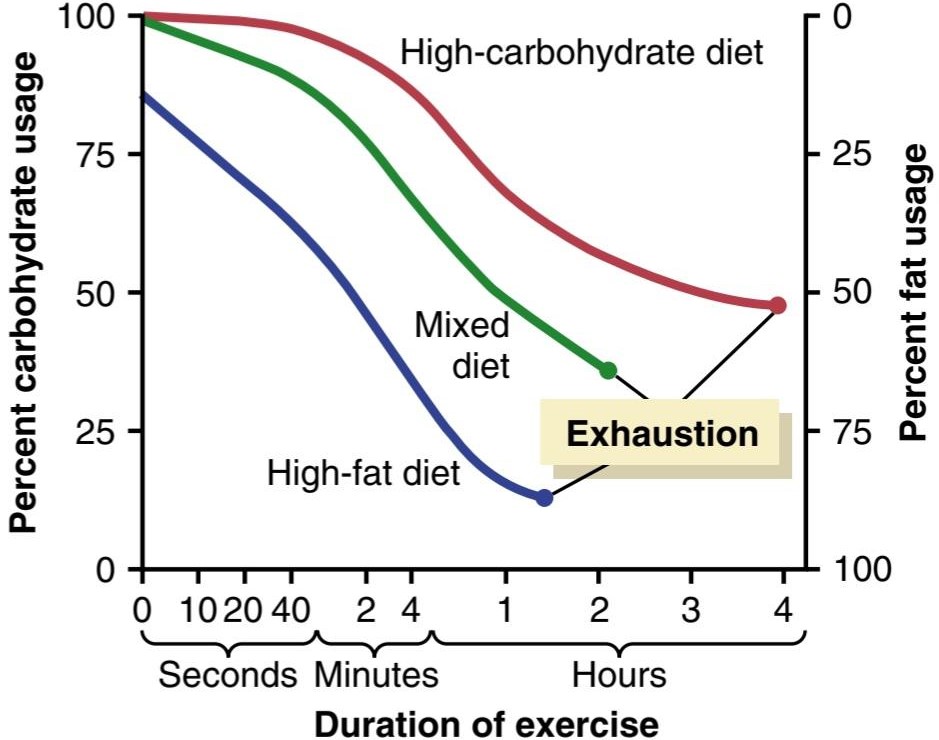
Figure 85-5 The effect of duration of exercise, as well as type of diet, on relative percentages of carbohydrate or fat used for energy by muscles. (Data from Fox EL: Sports Physiology. Philadelphia: Saunders College Publishing, 1979.)
شکل 85-5 تأثیر مدت زمان ورزش و همچنین نوع رژیم غذایی بر درصد نسبی کربوهیدرات یا چربی مصرف شده برای انرژی توسط عضلات. (داده ها از Fox EL: Sports Physiology. Philadelphia: Saunders College Publishing, 1979.)
Effect of Athletic Training on Muscles and Muscle Performance
Maximal Resistance Training Increases Muscle Strength. One of the cardinal principles of muscle development during athletic training is the following: Muscles that function under no load, even if they are exercised for hours on end, increase little in strength. At the other extreme, muscles that contract at more than 50% maximal force of contraction will develop strength rapidly even if the contractions are performed only a few times each day. Using this principle, experiments on muscle building have shown that six nearly maximal muscle contractions performed in three sets 3 days a week give approximately optimal increase in muscle strength without producing chronic muscle fatigue.
تأثیر تمرینات ورزشی بر عضلات و عملکرد عضلانی
تمرین مقاومتی حداکثر قدرت عضلانی را افزایش می دهد. یکی از اصول اصلی رشد عضلانی در طول تمرینات ورزشی به شرح زیر است: عضلاتی که بدون بار عمل می کنند، حتی اگر ساعت ها متوالی تمرین شوند، قدرت کمی افزایش می دهند. از طرف دیگر، ماهیچه هایی که با بیش از 50 درصد حداکثر نیروی انقباض منقبض می شوند، حتی اگر انقباضات فقط چند بار در روز انجام شوند، به سرعت قدرت خواهند داشت. با استفاده از این اصل، آزمایشها بر روی عضلهسازی نشان دادهاند که شش تقریباً حداکثر انقباض عضلانی که در سه ست و 3 روز در هفته انجام میشوند، افزایش تقریباً مطلوبی در قدرت عضلانی بدون ایجاد خستگی مزمن عضلانی دارند.
The upper curve in Figure 85-6 shows the approximate percentage increase in strength that can be achieved in a previously untrained young person by this resistive training program, demonstrating that the muscle strength increases about 30% during the first 6 to 8 weeks but almost plateaus after that time. Along with this increase in strength is an approximately equal percentage increase in muscle mass, which is called muscle hypertrophy.
منحنی بالایی در شکل 85-6 درصد افزایش تقریبی قدرت را نشان میدهد که میتوان با این برنامه تمرینی مقاومتی در یک فرد جوان که قبلاً تمرین نکرده بود به دست آورد، نشان میدهد که قدرت عضلانی در طی 6 تا 8 هفته اول حدود 30٪ افزایش مییابد اما پس از آن زمان تقریباً فلات میشود. همراه با این افزایش قدرت، درصد تقریباً برابری در توده عضلانی افزایش می یابد که به آن هیپرتروفی عضلانی می گویند.
In old age, many people become so sedentary that their muscles atrophy tremendously. In these cases, however, muscle training may increase muscle strength more than 100%.
در سنین بالا، بسیاری از افراد آنقدر بی تحرک می شوند که ماهیچه هایشان به شدت تحلیل می رود. اما در این موارد، تمرین عضلانی ممکن است قدرت عضلانی را بیش از 100 درصد افزایش دهد.

Figure 85-6 Approximate effect of optimal resistive exercise training on increase in muscle strength over a training period of 10 weeks.
شکل 85-6 تأثیر تقریبی تمرین مقاومتی بهینه بر افزایش قدرت عضلانی در یک دوره تمرینی 10 هفته ای.
Muscle Hypertrophy. The average size of a person’s muscles is determined to a great extent by heredity plus the level of testosterone secretion, which, in men, causes considerably larger muscles than in women. With training, however, the muscles can become hypertrophied perhaps an additional 30% to 60%. Most of this hypertrophy results from increased diameter of the muscle fibers rather than increased numbers of fibers. However, a very few greatly enlarged muscle fibers are believed to split down the middle along their entire length to form entirely new fibers, thus increasing the number of fibers slightly.
هایپرتروفی عضلانی. اندازه متوسط ماهیچه های یک فرد تا حد زیادی به وراثت به علاوه سطح ترشح تستوسترون تعیین می شود که در مردان باعث می شود عضلات به طور قابل توجهی بزرگتر از زنان باشد. با این حال، با تمرین، عضلات ممکن است 30 تا 60 درصد دیگر هیپرتروفی شوند. بیشتر این هیپرتروفی ناشی از افزایش قطر فیبرهای عضلانی به جای افزایش تعداد فیبرها است. با این حال، اعتقاد بر این است که تعداد بسیار کمی از فیبرهای عضلانی بسیار بزرگ شده در وسط در تمام طول خود شکافته می شوند تا فیبرهای کاملاً جدیدی را تشکیل دهند، بنابراین تعداد فیبرها کمی افزایش می یابد.
The changes that occur inside the hypertrophied muscle fibers include (1) increased numbers of myofibrils, proportionate to the degree of hypertrophy; (2) up to 120% in- crease in mitochondrial enzymes; (3) as much as 60% to 80% increase in the components of the phosphagen metabolic system, including ATP and phosphocreatine; (4) as much as 50% increase in stored glycogen; and (5) as much as 75% to 100% increase in stored triglyceride (fat). Because of all these changes, the capabilities of both the anaerobic and the aerobic metabolic systems are increased, especially increasing the maximum oxidation rate and efficiency of the oxidative metabolic system as much as 45%.
تغییراتی که در داخل فیبرهای عضلانی هیپرتروفی شده رخ می دهد شامل (1) افزایش تعداد میوفیبریل ها، متناسب با درجه هیپرتروفی است. (2) تا 120% افزایش در آنزیم های میتوکندری. (3) 60 تا 80 درصد افزایش در اجزای سیستم متابولیک فسفاژن، از جمله ATP و فسفوکراتین. (4) به اندازه 50٪ افزایش در گلیکوژن ذخیره شده. و (5) به میزان 75 تا 100 درصد افزایش تری گلیسیرید (چربی) ذخیره شده. به دلیل همه این تغییرات، قابلیتهای سیستم متابولیک بیهوازی و هوازی افزایش مییابد، به ویژه افزایش حداکثر سرعت اکسیداسیون و کارایی سیستم متابولیک اکسیداتیو تا 45 درصد.
Fast-Twitch and Slow-Twitch Muscle Fibers. In the human being, all muscles have varying percentages of fast- twitch and slow-twitch muscle fibers. For example, the gastrocnemius muscle has a higher preponderance of fast- twitch fibers, which gives it the capability of forceful and rapid contraction of the type used in jumping. In contrast, the soleus muscle has a higher preponderance of slow- twitch muscle fibers, and therefore is used to a greater extent for prolonged lower leg muscle activity.
فیبرهای عضلانی سریع و کند انقباض. در انسان، همه ماهیچه ها دارای درصدهای متفاوتی از فیبرهای عضلانی تند انقباض و کند انقباض هستند. به عنوان مثال، عضله گاستروکنمیوس دارای برتری بیشتری از فیبرهای تند انقباض است که به آن قابلیت انقباض شدید و سریع از نوع مورد استفاده در پرش را می دهد. در مقابل، عضله کف پا دارای غلبه بیشتری از فیبرهای عضلانی کند انقباض است و بنابراین به میزان بیشتری برای فعالیت طولانی مدت عضلات پایین ساق استفاده می شود.
The basic differences between the fast-twitch and the slow-twitch fibers are the following:
تفاوت های اساسی بین فیبرهای تند انقباض و کند انقباض به شرح زیر است:
1. Fast-twitch fibers are about twice as large in diameter compared with slow-twitch fibers.
1. قطر فیبرهای تند انقباض در مقایسه با الیاف کند انقباض تقریباً دو برابر بیشتر است.
2. The enzymes that promote rapid release of energy from the phosphagen and glycogen-lactic acid energy systems are two to three times as active in fast-twitch fibers as in slow-twitch fibers, thus making the maximal power that can be achieved for very short periods by fast-twitch fibers about twice as great as that of slow- twitch fibers.
2. آنزیم هایی که باعث آزاد شدن سریع انرژی از سیستم های انرژی فسفاژن و گلیکوژن-اسید لاکتیک می شوند، در الیاف تند انقباض دو تا سه برابر الیاف کند انقباض فعال هستند، بنابراین حداکثر توانی را می دهند که می توان برای دوره های بسیار کوتاه با فیبرهای تند انقباض حدود دو برابر انقباض آهسته به دست آورد.
3. Slow-twitch fibers are mainly organized for endurance, especially for generation of aerobic energy. They have far more mitochondria than do the fast-twitch fibers. In addition, they contain considerably more myoglobin, a hemoglobin-like protein that combines with oxygen within the muscle fiber; the extra myoglobin increases the rate of diffusion of oxygen throughout the fiber by shuttling oxygen from one molecule of myoglobin to the next. In addition, the enzymes of the aerobic metabolic system are considerably more active in slow-twitch fibers than in fast-twitch fibers.
3. فیبرهای کند انقباض عمدتاً برای استقامت، به ویژه برای تولید انرژی هوازی سازماندهی می شوند. میتوکندری آنها بسیار بیشتر از فیبرهای تند انقباض است. علاوه بر این، آنها حاوی مقدار قابل توجهی میوگلوبین هستند، یک پروتئین هموگلوبین مانند که با اکسیژن در فیبر عضلانی ترکیب می شود. میوگلوبین اضافی با انتقال اکسیژن از یک مولکول میوگلوبین به مولکول بعدی، سرعت انتشار اکسیژن در سراسر فیبر را افزایش می دهد. علاوه بر این، آنزیم های سیستم متابولیک هوازی به طور قابل توجهی در فیبرهای کند انقباض فعال تر از الیاف تند انقباض هستند.
4. The number of capillaries is greater in the vicinity of slow-twitch fibers than in the vicinity of fast-twitch fibers.
4. تعداد مویرگ ها در مجاورت الیاف کند انقباض بیشتر از مجاورت الیاف تند انقباض است.
In summary, fast-twitch fibers can deliver extreme amounts of power for a few seconds to a minute or so. Conversely, slow-twitch fibers provide endurance, delivering prolonged strength of contraction over many minutes to hours.
به طور خلاصه، فیبرهای تند انقباض می توانند انرژی زیادی را برای چند ثانیه تا یک دقیقه یا بیشتر ارائه دهند. برعکس، الیاف آهسته انقباض استقامت ایجاد می کنند و قدرت انقباض طولانی مدت را در طی چند دقیقه تا چند ساعت ارائه می دهند.
Hereditary Differences Among Athletes for Fast-Twitch Versus Slow-Twitch Muscle Fibers. Some people have considerably more fast-twitch than slow-twitch fibers, and others have more slow-twitch fibers; this factor could determine to some extent the athletic capabilities of different individuals. Athletic training may change the relative proportions of fast-twitch and slow-twitch fibers as much as 10%. However, the relative proportions of fast-twitch and slow-twitch fibers seem to be determined to a great extent by genetic inheritance, which in turn helps deter- mine which area of athletics is most suited to each person: some people appear to be born to be marathoners, whereas others are born to be sprinters and jumpers. For example, the following values are recorded percentages of fast-twitch versus slow-twitch fiber in the quadriceps muscles of different types of athletes:
تفاوت های ارثی بین ورزشکاران برای فیبرهای عضلانی سریع انقباض در مقابل کند انقباض. برخی از افراد دارای فیبرهای کند انقباض به طور قابل توجهی سریعتر از فیبرهای کند انقباض هستند و برخی دیگر دارای فیبرهای کند انقباض بیشتری هستند. این عامل می تواند تا حدودی توانایی های ورزشی افراد مختلف را تعیین کند. تمرینات ورزشی ممکن است نسبت نسبی فیبرهای تند انقباض و کند انقباض را تا 10 درصد تغییر دهد. با این حال، به نظر می رسد نسبت نسبی فیبرهای تند انقباض و کند انقباض تا حد زیادی توسط وراثت ژنتیکی تعیین می شود، که به نوبه خود کمک می کند تا مشخص شود که کدام رشته دو و میدانی برای هر فرد مناسب تر است: برخی افراد به نظر می رسد که ماراتن به دنیا می آیند، در حالی که برخی دیگر برای دوومیدانی و پرش به دنیا می آیند. به عنوان مثال، مقادیر زیر درصد فیبر تند انقباض در مقابل فیبر کند انقباض در عضلات چهار سر ران انواع مختلف ورزشکاران ثبت شده است:

Respiration in Exercise
Although one’s respiratory ability is of relatively little concern in the performance of sprint types of athletics, it is critical for maximal performance in endurance athletics.
تنفس در ورزش
اگرچه توانایی تنفسی فرد در عملکرد انواع دو و میدانی دوومیدانی نسبتاً کمی اهمیت دارد، اما برای حداکثر عملکرد در دو و میدانی استقامتی بسیار مهم است.
Oxygen Consumption and Pulmonary Ventilation in Exercise. Normal oxygen consumption for a young man at rest is about 250 ml/min. However, under maximal conditions, this consumption can be increased to approximately the following average levels:
مصرف اکسیژن و تهویه ریوی در ورزش. مصرف طبیعی اکسیژن برای یک مرد جوان در حالت استراحت حدود 250 میلی لیتر در دقیقه است. با این حال، تحت شرایط حداکثر، این مصرف را می توان تقریباً به سطوح متوسط زیر افزایش داد:

Figure 85-7 shows the relation between oxygen consumption and total pulmonary ventilation at different levels of exercise. As would be expected, there is a linear relation. Both oxygen consumption and total pulmonary ventilation increase about 20-fold between the resting state and maximal intensity of exercise in the well-trained athlete.
شکل 85-7 رابطه بین مصرف اکسیژن و تهویه کلی ریوی را در سطوح مختلف تمرین نشان می دهد. همانطور که انتظار می رود، یک رابطه خطی وجود دارد. هم مصرف اکسیژن و هم تهویه کلی ریوی بین حالت استراحت و حداکثر شدت ورزش در ورزشکار خوب تمرین شده حدود 20 برابر افزایش می یابد.

Figure 85-7 Effect of exercise on oxygen consumption and ventilatory rate. (Modified from Gray JS: Pulmonary Ventilation and Its Physiological Regulation. Springfield, IL: Charles C Thomas, 1950.)
شکل 85-7 تأثیر ورزش بر مصرف اکسیژن و میزان تهویه. (اصلاح شده از Gray JS: تهویه ریوی و تنظیم فیزیولوژیکی آن. Springfield, IL: Charles C Thomas, 1950.)
Limits of Pulmonary Ventilation. How severely do we stress our respiratory systems during exercise? This question can be answered by the following comparison for a normal young man:
محدودیت های تهویه ریوی. در حین ورزش چقدر به سیستم تنفسی خود فشار وارد می کنیم؟ این سوال را می توان با مقایسه زیر برای یک مرد جوان عادی پاسخ داد:

Thus, the maximal breathing capacity is about 50% greater than the actual pulmonary ventilation during maximal exercise. This difference provides an element of safety for athletes, giving them extra ventilation that can be called on in such conditions as (1) exercise at high altitudes, (2) exercise under very hot conditions, and (3) abnormalities in the respiratory system.
بنابراین، حداکثر ظرفیت تنفس حدود 50٪ بیشتر از تهویه ریوی واقعی در طول حداکثر ورزش است. این تفاوت عنصر ایمنی را برای ورزشکاران فراهم می کند و به آنها تهویه اضافی می دهد که می تواند در شرایطی مانند (1) ورزش در ارتفاعات بالا، (2) ورزش در شرایط بسیار گرم و (3) ناهنجاری در سیستم تنفسی انجام شود.
The important point is that the respiratory system is not normally the most limiting factor in the delivery of oxygen to the muscles during maximal muscle aerobic metabolism. We shall see shortly that the ability of the heart to pump blood to the muscles is usually a greater limiting factor.
نکته مهم این است که سیستم تنفسی به طور معمول محدود کننده ترین عامل در رساندن اکسیژن به عضلات در طول حداکثر متابولیسم هوازی عضلانی نیست. به زودی خواهیم دید که توانایی قلب برای پمپاژ خون به عضلات معمولاً یک عامل محدود کننده بزرگتر است.
Effect of Training on Vozmax. The abbreviation for the rate of oxygen usage (in L/min) under maximal aerobic metabolism is Vo2max. Figure 85-8 shows the progressive effect of athletic training on Vo2max recorded in a group of subjects beginning at the level of no training and then while pursuing the training program for 7 to 13 weeks. In this study, it is surprising that the Vo,max increased only about 10%. Furthermore, the frequency of training, whether two times or five times per week, had little effect on the increase in Vo2max. Yet, as pointed out earlier, the Vo2max of a marathoner is about 45% greater than that of an untrained person. Part of this greater Vo2max of the marathoner may be genetically determined; that is, people who have greater chest sizes in relation to body size and stronger respiratory muscles may select themselves to become marathoners. However, it is also likely that many years of training increase the marathoner’s Vo2max by values considerably greater than the 10% that has been recorded in short-term experiments such as that in Figure 85-8.
تاثیر آموزش بر Vozmax. مخفف نرخ مصرف اکسیژن (بر حسب L/min) تحت حداکثر متابولیسم هوازی Vo2max است. شکل 8-85 اثر پیشرونده تمرینات ورزشی را بر Vo2max نشان میدهد که در گروهی از آزمودنیها در سطح بدون تمرین و سپس در حین پیگیری برنامه تمرینی به مدت 7 تا 13 هفته ثبت شده است. در این مطالعه، شگفت آور است که Vo,max تنها حدود 10٪ افزایش یافته است. علاوه بر این، دفعات تمرین، خواه دو بار یا پنج بار در هفته، تأثیر کمی بر افزایش Vo2max داشت. با این حال، همانطور که قبلاً اشاره شد، Vo2max یک ماراتن حدود 45٪ بیشتر از یک فرد آموزش ندیده است. بخشی از این Vo2max بیشتر در ماراتن ممکن است ژنتیکی تعیین شود. یعنی افرادی که اندازه سینههای بزرگتری نسبت به سایز بدن و عضلات تنفسی قویتری دارند، ممکن است خود را برای ماراتن شدن انتخاب کنند. با این حال، این احتمال نیز وجود دارد که چندین سال تمرین، Vo2max ماراتن را به میزان قابل توجهی بیشتر از 10 درصدی که در آزمایشهای کوتاهمدت مانند شکل 85-8 ثبت شده است، افزایش دهد.

Figure 85-8 Increase in Vo2max over a period of 7 to 13 weeks of athletic training. (Modified from Fox EL: Sports Physiology. Philadel- phia: Saunders College Publishing, 1979.)
شکل 85-8 افزایش Vo2max طی یک دوره 7 تا 13 هفته ای تمرین ورزشی. (اصلاح شده از Fox EL: Sports Physiology. Philadelphia: Saunders College Publishing, 1979.)
Oxygen-Diffusing Capacity of Athletes. The oxygen- diffusing capacity is a measure of the rate at which oxygen can diffuse from the pulmonary alveoli into the blood. This capacity is expressed in terms of milliliters of oxygen that will diffuse each minute for each millimeter of mercury difference between alveolar partial pressure of oxygen and pulmonary blood oxygen pressure. That is, if the partial pressure of oxygen in the alveoli is 91 mm Hg and the oxygen pressure in the blood is 90 mm Hg, the amount of oxygen that diffuses through the respiratory membrane each minute is equal to the diffusing capacity. The following values are measured values for different diffusing capacities:
ظرفیت پخش اکسیژن ورزشکاران. ظرفیت انتشار اکسیژن معیاری از سرعت انتشار اکسیژن از آلوئول های ریوی به خون است. این ظرفیت بر حسب میلی لیتر اکسیژن بیان می شود که در هر دقیقه به ازای هر میلی متر جیوه اختلاف بین فشار جزئی آلوئولی اکسیژن و فشار اکسیژن خون ریوی منتشر می شود. یعنی اگر فشار جزئی اکسیژن در آلوئول ها 91 میلی متر جیوه و فشار اکسیژن خون 90 میلی متر جیوه باشد، مقدار اکسیژنی که در هر دقیقه از غشای تنفسی پخش می شود برابر با ظرفیت انتشار است. مقادیر زیر مقادیر اندازه گیری شده برای ظرفیت های مختلف انتشار هستند:

The most startling fact about these results is the severalfold increase in diffusing capacity between the resting state and the state of maximal exercise. This finding results mainly from the fact that blood flow through many of the pulmonary capillaries is sluggish or even dormant in the resting state, whereas in maximal exercise, increased blood flow through the lungs causes all the pulmonary capillaries to be perfused at their maximal rates, thus providing a far greater surface area through which oxygen can diffuse into the pulmonary capillary blood.
شگفتانگیزترین واقعیت در مورد این نتایج، افزایش چندین برابری ظرفیت انتشار بین حالت استراحت و حالت حداکثر تمرین است. این یافته عمدتاً از این واقعیت ناشی میشود که جریان خون در بسیاری از مویرگهای ریوی در حالت استراحت کند یا حتی غیرفعال است، در حالی که در تمرین حداکثری، افزایش جریان خون از طریق ریهها باعث میشود که تمام مویرگهای ریوی با حداکثر سرعت خود پرفیوژن شوند، در نتیجه سطح بسیار بیشتری را فراهم میکند که از طریق آن کلاهک خونی از طریق ریهها استفاده میشود.
It is also clear from these values that athletes who require greater amounts of oxygen per minute have higher diffusing capacities. Is this the case because people with naturally greater diffusing capacities choose these types of sports, or is it because something about the training procedures increases the diffusing capacity? The answer is uncertain, but it is very likely that training, particularly endurance training, does play an important role.
همچنین از این مقادیر مشخص می شود که ورزشکارانی که به مقادیر بیشتری اکسیژن در دقیقه نیاز دارند، ظرفیت انتشار بالاتری دارند. آیا این به این دلیل است که افرادی که به طور طبیعی ظرفیت انتشار بیشتری دارند، این نوع ورزش ها را انتخاب می کنند یا به این دلیل است که چیزی در مورد روش های تمرینی باعث افزایش ظرفیت پخش می شود؟ پاسخ قطعی نیست، اما به احتمال زیاد تمرین، به ویژه تمرینات استقامتی، نقش مهمی ایفا می کند.
Blood Gases During Exercise. Because of the great oxygen usage by the muscles in exercise, one might expect the oxygen pressure of the arterial blood to decrease markedly during strenuous athletics and the carbon dioxide pressure of the venous blood to increase far above normal. However, this normally is not the case. Both of these values remain nearly normal, demonstrating the extreme ability of the respiratory system to provide adequate aeration of the blood, even during heavy exercise.
گازهای خون در حین ورزش. به دلیل مصرف زیاد اکسیژن توسط ماهیچه ها در ورزش، ممکن است انتظار داشته باشیم که فشار اکسیژن خون شریانی به طور قابل توجهی در طول ورزش های شدید کاهش یابد و فشار دی اکسید کربن خون وریدی بسیار بالاتر از حد طبیعی افزایش یابد. با این حال، معمولاً اینطور نیست. هر دوی این مقادیر تقریباً نرمال باقی میمانند و توانایی شدید سیستم تنفسی را در ارائه تهویه کافی خون، حتی در حین ورزش سنگین نشان میدهند.
This demonstrates another important point: The blood gases do not always have to become abnormal for respiration to be stimulated in exercise. Instead, respiration is stimulated mainly by neurogenic mechanisms during exercise, as discussed in Chapter 42. Part of this stimulation results from direct stimulation of the respiratory center by the same nervous signals that are transmitted from the brain to the muscles to cause the exercise. An additional part is believed to result from sensory signals transmitted into the respiratory center from the contracting muscles and moving joints. All this extra nervous stimulation of respiration is normally sufficient to provide the necessary increase in pulmonary ventilation required to keep the blood oxygen and carbon dioxide very near to normal.
این یک نکته مهم دیگر را نشان می دهد: گازهای خون همیشه لازم نیست غیر طبیعی شوند تا تنفس در ورزش تحریک شود. در عوض، همانطور که در فصل 42 بحث شد، تنفس عمدتاً توسط مکانیسمهای عصبی در طول تمرین تحریک میشود. بخشی از این تحریک ناشی از تحریک مستقیم مرکز تنفسی توسط همان سیگنالهای عصبی است که از مغز به عضلات منتقل میشود تا باعث ورزش شود. اعتقاد بر این است که بخش اضافی ناشی از سیگنال های حسی است که از عضلات منقبض و مفاصل متحرک به مرکز تنفسی منتقل می شود. تمام این تحریکات عصبی اضافی تنفس معمولاً برای افزایش لازم در تهویه ریوی لازم برای حفظ اکسیژن و دی اکسید کربن خون بسیار نزدیک به نرمال کافی است.
Effect of Smoking on Pulmonary Ventilation in Exercise. It is widely known that smoking can decrease an athlete’s “wind.” This is true for many reasons:
تأثیر سیگار بر تهویه ریوی در ورزش. به طور گسترده ای شناخته شده است که سیگار کشیدن می تواند “باد” ورزشکار را کاهش دهد. این به دلایل زیادی صادق است:
1. One effect of nicotine is constriction of terminal bronchioles of the lungs, which increases the resistance of airflow into and out of the lungs.
1. یکی از اثرات نیکوتین انقباض برونشیول های انتهایی ریه است که مقاومت جریان هوا را به داخل و خارج از ریه ها افزایش می دهد.
2. The irritating effects of smoke cause increased fluid secretion into the bronchial tree, as well as some swelling of the epithelial linings.
2. اثرات تحریک کننده دود باعث افزایش ترشح مایع در درخت برونش و همچنین تورم پوشش های اپیتلیال می شود.
3. Nicotine paralyzes the cilia on the surfaces of respiratory epithelial cells that normally beat continuously to remove excess fluids and foreign particles from the respiratory passageways. As a result, much debris accumulates in the passageways and adds further to the difficulty of breathing.
3. نیکوتین مژک های روی سطوح سلول های اپیتلیال تنفسی را فلج می کند که به طور معمول به طور مداوم برای حذف مایعات اضافی و ذرات خارجی از مجاری تنفسی ضرب و شتم می کنند. در نتیجه، مواد زائد زیادی در گذرگاهها جمع میشوند و بر دشواری تنفس میافزایند.
After putting all these factors together, even a light smoker often feels respiratory strain during maximal exercise, and the level of performance may be reduced.
پس از کنار هم قرار دادن همه این عوامل، حتی یک سیگاری سبک اغلب در طول حداکثر ورزش احساس فشار تنفسی می کند و سطح عملکرد ممکن است کاهش یابد.
Much more severe are the effects of chronic smoking. There are few chronic smokers in whom some degree of emphysema does not develop. In this disease, the following mechanisms occur: (1) chronic bronchitis, (2) obstruction of many of the terminal bronchioles, and (3) destruction of many alveolar walls. In persons with severe emphysema, as much as four-fifths of the respiratory membrane can be destroyed; then even the slightest exercise can cause respiratory distress. In fact, many such patients cannot even perform the simple feat of walking across the floor of a single room without gasping for breath.
عوارض سیگار کشیدن مزمن بسیار شدیدتر است. تعداد کمی از افراد سیگاری مزمن وجود دارند که درجاتی از آمفیزم در آنها ایجاد نشود. در این بیماری مکانیسم های زیر رخ می دهد: (1) برونشیت مزمن، (2) انسداد بسیاری از برونشیول های انتهایی، و (3) تخریب بسیاری از دیواره های آلوئول. در افراد مبتلا به آمفیزم شدید، تا چهار پنجم غشای تنفسی می تواند از بین برود. در این صورت حتی کوچکترین ورزش می تواند باعث ناراحتی تنفسی شود. در واقع، بسیاری از چنین بیمارانی حتی نمیتوانند کار ساده راه رفتن روی کف یک اتاق را بدون نفس نفس زدن انجام دهند.
Cardiovascular System in Exercise
Muscle Blood Flow. A key requirement of cardiovascular function in exercise is to deliver the required oxygen and other nutrients to the exercising muscles. For this purpose, the muscle blood flow increases drastically during exercise. Figure 85-9 shows a recording of muscle blood flow in the calf of a person for a period of 6 minutes during moderately strong intermittent contractions. Note not only the great increase in flow-about 13-fold-but also the flow decrease during each muscle contraction. Two points can be made from this study:
سیستم قلبی عروقی در ورزش
جریان خون عضلانی. یکی از نیازهای کلیدی عملکرد قلب و عروق در ورزش، رساندن اکسیژن مورد نیاز و سایر مواد مغذی به عضلات در حال تمرین است. برای این منظور جریان خون ماهیچه ای در حین ورزش به شدت افزایش می یابد. شکل 9-85 ضبط جریان خون ماهیچه ای در ساق پای یک فرد را به مدت 6 دقیقه در طی انقباضات متناوب نسبتاً قوی نشان می دهد. توجه داشته باشید که نه تنها به افزایش زیاد جریان – حدود 13 برابر – بلکه به کاهش جریان در طول هر انقباض عضلانی نیز توجه کنید. از این تحقیق دو نکته قابل استناد است:
1. The actual contractile process itself temporarily de- creases muscle blood flow because the contracting skeletal muscle compresses the intramuscular blood vessels; therefore, strong tonic muscle contractions can cause rapid muscle fatigue because of lack of delivery of enough oxygen and other nutrients during the continuous contraction.
1. فرآیند انقباضی واقعی خود به طور موقت جریان خون عضلانی را کاهش می دهد زیرا عضله اسکلتی منقبض عروق خونی داخل عضلانی را فشرده می کند. بنابراین، انقباضات قوی عضلانی تونیک می تواند باعث خستگی سریع عضلانی به دلیل عدم تحویل اکسیژن کافی و سایر مواد مغذی در طول انقباض مداوم شود.
2. The blood flow to muscles during exercise increases markedly. The following comparison shows the maximal in- crease in blood flow that can occur in a well-trained athlete:
2. جریان خون به ماهیچه ها در طول تمرین به طور قابل توجهی افزایش می یابد. مقایسه زیر حداکثر افزایش جریان خون را نشان می دهد که می تواند در یک ورزشکار خوب ورزیده رخ دهد:
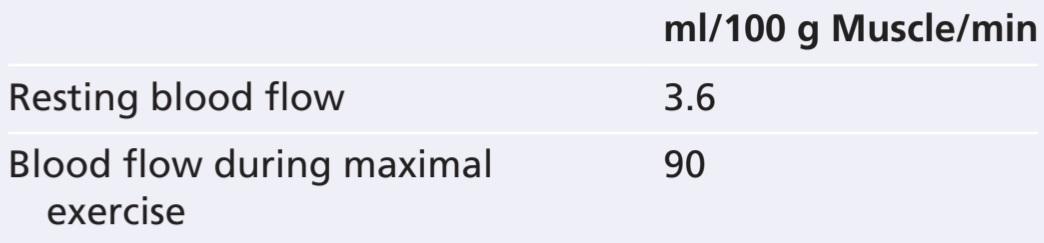
Thus, muscle blood flow can increase a maximum of about 25-fold during the most strenuous exercise. Almost one- half this increase in flow results from intramuscular vasodilation caused by the direct effects of increased muscle metabolism, as explained in Chapter 21. The remaining increase results from multiple factors, the most important of which is probably the moderate increase in arterial blood pressure that occurs in exercise, which is usually about a 30% increase. The increase in pressure not only forces more blood through the blood vessels but also stretches the walls of the arterioles and further reduces vascular resistance. Therefore, a 30% increase in blood pressure can often more than double the blood flow, which multiplies the great increase in flow already caused by the metabolic vasodilation at least another 2-fold.
بنابراین، جریان خون عضلانی می تواند حداکثر در حدود 25 برابر در طول شدیدترین ورزش افزایش یابد. تقریباً نیمی از این افزایش جریان ناشی از اتساع عروق داخل عضلانی ناشی از اثرات مستقیم افزایش متابولیسم عضلانی است، همانطور که در فصل 21 توضیح داده شد. افزایش باقیمانده ناشی از عوامل متعددی است که مهمترین آنها احتمالاً افزایش متوسط فشار خون شریانی است که در ورزش رخ می دهد که معمولاً حدود 30 درصد افزایش می یابد. افزایش فشار نه تنها خون بیشتری را از طریق رگهای خونی وارد میکند، بلکه دیوارههای شریانها را نیز کشیده و مقاومت عروقی را بیشتر کاهش میدهد. بنابراین، افزایش 30 درصدی فشار خون اغلب میتواند جریان خون را بیش از دو برابر کند، که افزایش شدید جریان را که قبلاً ناشی از اتساع عروق متابولیک است، حداقل 2 برابر دیگر افزایش میدهد.
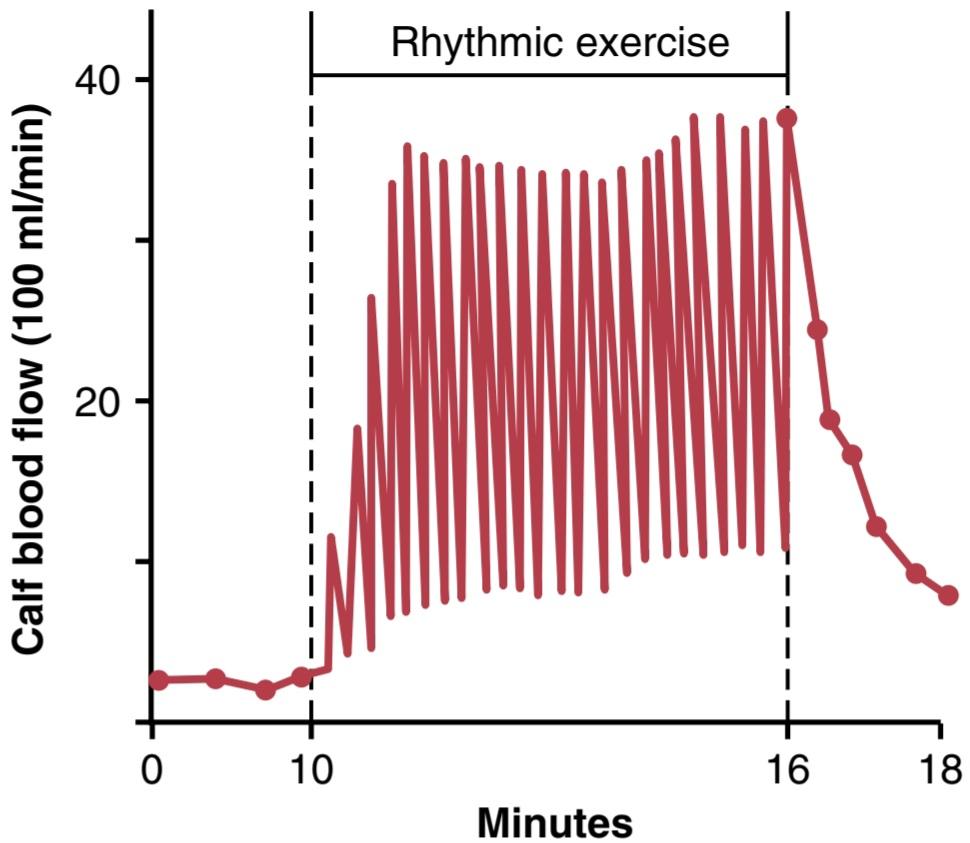
Figure 85-9 Effects of muscle exercise on blood flow in the calf of a leg during strong rhythmic contractions. The blood flow was much less during contraction than between contractions. (Modified from Barcroft J, Dornhorst AC: The blood flow through the human calf during rhythmic exercise, J Physiol 109:402, 1949.)
شکل 85-9 اثرات ورزش عضلانی بر جریان خون در ساق پا در طول انقباضات ریتمیک قوی. جریان خون در طول انقباض بسیار کمتر از بین انقباضات بود. (اصلاح شده از Barcroft J, Dornhorst AC: جریان خون در گوساله انسان در طی تمرینات ریتمیک, J Physiol 109:402, 1949.)
Work Output, Oxygen Consumption, and Cardiac Output During Exercise. Figure 85-10 shows the interrelations among work output, oxygen consumption, and cardiac out- put during exercise. It is not surprising that all these factors are directly related to one another, as shown by the linear functions, because the muscle work output increases oxygen consumption, and increased oxygen consumption in turn dilates the muscle blood vessels, thus increasing venous return and cardiac output. Typical cardiac outputs at several levels of exercise are as follows:
برون ده کار، مصرف اکسیژن و برون ده قلبی در طول ورزش. شکل 85-10 روابط متقابل بین برون ده کار، مصرف اکسیژن و برون ده قلبی در طول ورزش را نشان می دهد. تعجب آور نیست که همه این عوامل به طور مستقیم با یکدیگر مرتبط هستند، همانطور که توسط توابع خطی نشان داده شده است، زیرا برون ده کار عضلانی مصرف اکسیژن را افزایش می دهد و افزایش مصرف اکسیژن به نوبه خود رگ های خونی عضلانی را گشاد می کند، در نتیجه بازگشت وریدی و برون ده قلبی را افزایش می دهد. برون ده قلبی معمولی در سطوح مختلف ورزش به شرح زیر است:

Thus, the normal untrained person can increase cardiac output a little over 4-fold, and the well-trained athlete can increase output about 6-fold. Cardiac outputs as great as 35 to 40 L/min, or seven to eight times normal resting output, have been measured in individual marathoners.
بنابراین، فرد عادی بدون تمرین می تواند برون ده قلبی را کمی بیش از 4 برابر افزایش دهد و ورزشکاری که خوب تمرین کرده است می تواند برون ده قلبی را حدود 6 برابر افزایش دهد. برون ده قلبی به اندازه 35 تا 40 لیتر در دقیقه، یا هفت تا هشت برابر برون ده طبیعی استراحت، در ماراتن داران انفرادی اندازه گیری شده است.
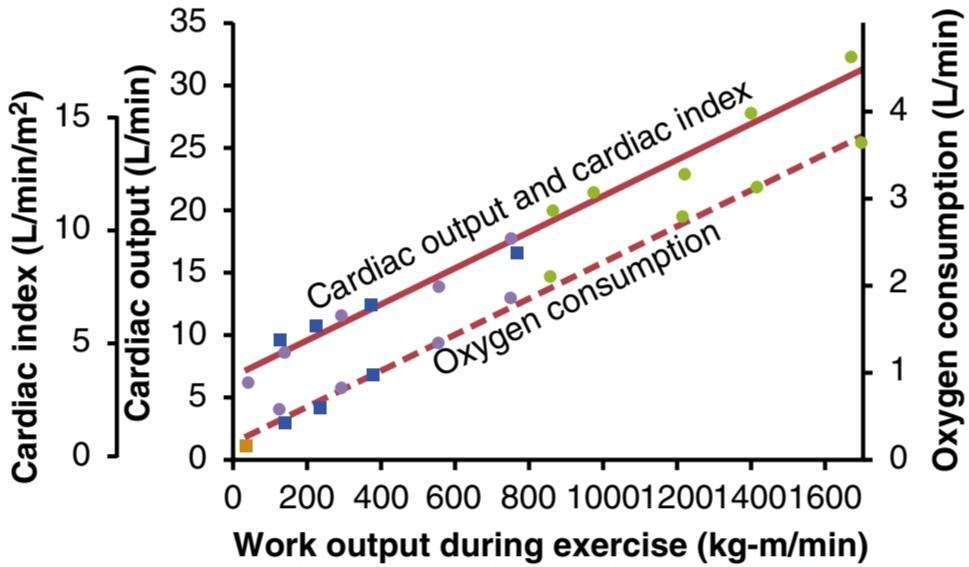
Figure 85-10 Relation between cardiac output and work output (sol- id line) and between oxygen consumption and work output (dashed line) during different levels of exercise. The different colored dots and squares show data derived from different studies in humans. (Modified from Guyton AC, Jones CE, Coleman TB: Circulatory Physiology: Cardiac Output and Its Regulation. Philadelphia: WB Saunders, 1973.)
شکل 85-10 رابطه بین برون ده قلبی و برون ده کار (خط جامد) و بین مصرف اکسیژن و برون ده کار (خط چین) در طی سطوح مختلف تمرین. نقاط و مربع های رنگی مختلف داده های حاصل از مطالعات مختلف در انسان را نشان می دهد. (تغییر شده از Guyton AC، Jones CE، Coleman TB: Circulation Physiology: Cardiac Output and It. Philadelphia: WB Saunders, 1973.)
Effect of Training on Heart Hypertrophy and on Cardiac Output. From the foregoing data, it is clear that marathoners can achieve maximal cardiac outputs that are about 40% greater than those achieved by untrained persons. This results mainly from the fact that the heart chambers of marathoners enlarge about 40%; along with this enlargement of the chambers, the heart mass also increases 40% or more. Therefore, not only do the skeletal muscles hypertrophy during athletic training, but so does the heart. However, heart enlargement and increased pumping capacity occur mainly in the endurance types, not in the sprint types, of athletic training.
تأثیر تمرین بر هیپرتروفی قلب و برون ده قلبی. از دادههای فوق، واضح است که ماراتنبازان میتوانند به حداکثر برونده قلبی دست یابند که حدوداً 40 درصد بیشتر از برونده قلبی است که توسط افراد آموزشدیده به دست میآید. این امر عمدتاً از این واقعیت ناشی می شود که حفره های قلب دونده های ماراتن حدود 40٪ بزرگ می شود. همراه با این بزرگ شدن حفره ها، توده قلب نیز 40 درصد یا بیشتر افزایش می یابد. بنابراین، نه تنها عضلات اسکلتی در طول تمرینات ورزشی هیپرتروفی می شوند، بلکه قلب نیز دچار هیپرتروفی می شود. با این حال، بزرگ شدن قلب و افزایش ظرفیت پمپاژ عمدتا در انواع استقامتی، نه در انواع دوی سرعت، تمرینات ورزشی رخ می دهد.
Even though the heart of the marathoner is considerably larger than that of the normal person, resting cardiac output is almost exactly the same as that in a normal person. However, this normal cardiac output is achieved by a large stroke volume at a reduced heart rate. Table 85-2 compares stroke volume and heart rate in the untrained person and the marathoner.
حتی اگر قلب یک ماراتن به طور قابل توجهی بزرگتر از قلب یک فرد عادی است، برون ده قلبی در حال استراحت تقریباً دقیقاً مشابه قلب یک فرد عادی است. با این حال، این برون ده قلبی طبیعی با حجم ضربه ای زیاد و با کاهش ضربان قلب به دست می آید. جدول 85-2 حجم سکته مغزی و ضربان قلب را در فرد آموزش ندیده و دونده ماراتن مقایسه می کند.
Thus, the heart-pumping effectiveness of each heartbeat is 40% to 50% greater in the highly trained athlete than in the untrained person, but there is a corresponding decrease in the heart rate at rest.
بنابراین، اثر پمپاژ قلب هر ضربان در ورزشکاران بسیار تمرینکرده 40 تا 50 درصد بیشتر از افراد تمریننشده است، اما کاهش متناظر در ضربان قلب در حالت استراحت وجود دارد.
Table 85-2 Comparison of Cardiac Function Between Marathoner and Nonathlete
جدول 85-2 مقایسه عملکرد قلب بین دو ماراتن و غیر ورزشکار.

Role of Stroke Volume and Heart Rate in Increasing Cardiac Output. Figure 85-11 shows the approximate changes in stroke volume and heart rate as the cardiac output increases from its resting level of about 5.5 L/min to 30 L/min in the marathon runner. The stroke volume increases from 105 to 162 ml, an increase of about 50%, whereas the heart rate increases from 50 to 185 beats/min, an increase of 270%. Therefore, the heart rate increase by far accounts for a greater proportion of the increase in cardiac output than does the increase in stroke volume during sustained strenuous exercise. The stroke volume normally reaches its maximum by the time the cardiac output has in- creased only halfway to its maximum. Any further increase in cardiac output must occur by increasing the heart rate.
نقش حجم سکته مغزی و ضربان قلب در افزایش برون ده قلبی. شکل 85-11 تغییرات تقریبی در حجم ضربه و ضربان قلب را نشان میدهد، زیرا برون ده قلبی از سطح استراحت آن در حدود 5.5 لیتر در دقیقه به 30 لیتر در دقیقه در دونده ماراتن افزایش مییابد. حجم ضربه از 105 به 162 میلیلیتر افزایش مییابد که حدود 50 درصد افزایش مییابد در حالی که ضربان قلب از 50 به 185 ضربه در دقیقه افزایش مییابد که افزایشی 270 درصدی دارد. بنابراین، افزایش ضربان قلب سهم بیشتری از افزایش برون ده قلبی را نسبت به افزایش حجم ضربه در طی تمرینات شدید مداوم دارد. حجم ضربه معمولاً زمانی به حداکثر می رسد که برون ده قلبی فقط در نیمه راه به حداکثر خود افزایش یابد. هر گونه افزایش بیشتر در برون ده قلبی باید با افزایش ضربان قلب اتفاق بیفتد.

Figure 85-11 Approximate stroke volume output and heart rate at different levels of cardiac output in a marathon athlete.
شکل 85-11 برون ده حجم سکته مغزی تقریبی و ضربان قلب در سطوح مختلف برون ده قلبی در یک ورزشکار ماراتن.
Relation of Cardiovascular Performance to Vo2max. During maximal exercise, both the heart rate and stroke volume are increased to about 95% of their maximal levels. Because the cardiac output is equal to stroke volume times heart rate, the cardiac output is about 90% of the maximum that the person can achieve, which is in contrast to about 65% of maximum for pulmonary ventilation. Therefore, one can readily see that the cardiovascular system is normally much more limiting on Vo2max than is the respiratory system because oxygen utilization by the body can never be more than the rate at which the cardiovascular system can transport oxygen to the tissues.
رابطه عملکرد قلبی عروقی با Vo2max. در طول تمرین حداکثر، ضربان قلب و حجم سکته مغزی هر دو به حدود 95٪ از حداکثر سطح خود افزایش می یابد. از آنجایی که برون ده قلبی برابر با حجم ضربه ضربان قلب است، برون ده قلبی حدود 90 درصد حداکثری است که فرد می تواند به دست آورد، که در مقابل حدود 65 درصد حداکثر برای تهویه ریوی است. بنابراین، می توان به آسانی متوجه شد که سیستم قلبی عروقی معمولاً نسبت به سیستم تنفسی بسیار محدودتر از Vo2max است، زیرا استفاده از اکسیژن توسط بدن هرگز نمی تواند بیشتر از سرعتی باشد که سیستم قلبی عروقی می تواند اکسیژن را به بافت ها منتقل کند.
For this reason, it is frequently stated that the level of athletic performance that can be achieved by the marathoner mainly depends on the performance capability of his or her heart, because this is the most limiting link in the delivery of adequate oxygen to the exercising muscles. Therefore, the 40% greater cardiac output that the marathoner can achieve over the average untrained male is probably the single most important physiological benefit of the marathoner’s training program.
به همین دلیل، اغلب بیان میشود که سطح عملکرد ورزشی که میتواند توسط دونده ماراتن به دست آورد، عمدتاً به توانایی عملکرد قلب او بستگی دارد، زیرا این محدودترین پیوند در رساندن اکسیژن کافی به عضلات در حال تمرین است. بنابراین، 40 درصد برون ده قلبی بیشتر که یک دونده ماراتن می تواند نسبت به مردان متوسط تمرین نکرده به دست آورد، احتمالاً مهمترین مزیت فیزیولوژیکی برنامه تمرینی ماراتن است.
Effect of Heart Disease and Old Age on Athletic Performance. Because of the critical limitation that the cardiovascular system places on maximal performance in endurance athletics, one can readily understand that any type of heart disease that reduces maximal cardiac output will cause an almost corresponding decrease in achievable total body muscle power. Therefore, a person with congestive heart failure frequently has difficulty achieving even the muscle power required to climb out of bed, much less to walk across the floor.
تأثیر بیماری قلبی و سالمندی بر عملکرد ورزشی. به دلیل محدودیت حیاتی که سیستم قلبی عروقی برای حداکثر عملکرد در دو و میدانی استقامتی قائل است، می توان به راحتی درک کرد که هر نوع بیماری قلبی که حداکثر برون ده قلبی را کاهش می دهد باعث کاهش تقریباً متناظر در قدرت کل ماهیچه های بدن می شود. بنابراین، یک فرد مبتلا به نارسایی احتقانی قلب اغلب در دستیابی به قدرت عضلانی مورد نیاز برای بلند شدن از رختخواب مشکل دارد، خیلی کمتر برای راه رفتن روی زمین.
The maximal cardiac output of older people also de- creases considerably; there is as much as a 50% decrease be- tween ages 18 and 80 years. Also, there is even more of a decrease in maximal breathing capacity. For these reasons, as well as because of reduced skeletal muscle mass, the maximal achievable muscle power is greatly reduced in old age.
حداکثر برون ده قلبی افراد مسن نیز به میزان قابل توجهی کاهش می یابد. بین سنین 18 تا 80 سال 50 درصد کاهش دارد. همچنین، کاهش حتی بیشتر در حداکثر ظرفیت تنفس وجود دارد. به این دلایل و همچنین به دلیل کاهش توده عضلانی اسکلتی، حداکثر قدرت عضلانی قابل دستیابی در سنین بالا به شدت کاهش می یابد.
Body Heat in Exercise
Almost all the energy released by the body’s metabolism of nutrients is eventually converted into body heat. This applies even to the energy that causes muscle contraction for the following reasons: First, the maximal efficiency for conversion of nutrient energy into muscle work, even under the best of conditions, is only 20% to 25%; the remainder of the nutrient energy is converted into heat during the course of the intracellular chemical reactions. Second, almost all the energy that does go into creating muscle work still becomes body heat because all but a small portion of this energy is used for (1) overcoming viscous resistance to the movement of the muscles and joints, (2) overcoming the friction of the blood flowing through the blood vessels, and (3) other, similar effects, all of which convert the muscle contractile energy into heat.
گرمای بدن در ورزش
تقریباً تمام انرژی آزاد شده توسط متابولیسم مواد مغذی بدن در نهایت به گرمای بدن تبدیل می شود. این حتی در مورد انرژی ای که به دلایل زیر باعث انقباض عضلانی می شود نیز صدق می کند: اول، حداکثر بازده برای تبدیل انرژی مواد مغذی به کار عضلانی، حتی در بهترین شرایط، تنها 20 تا 25 درصد است. باقیمانده انرژی مواد مغذی در طی واکنش های شیمیایی درون سلولی به گرما تبدیل می شود. ثانیاً، تقریباً تمام انرژی که برای ایجاد کار عضلانی صرف میشود، همچنان به گرمای بدن تبدیل میشود، زیرا تمام این انرژی به جز بخش کوچکی برای (1) غلبه بر مقاومت چسبناک در برابر حرکت عضلات و مفاصل، (2) غلبه بر اصطکاک خونی که در رگهای خونی جریان دارد، و (3) سایر اثرات مشابه، که همگی انرژی را به گرما تبدیل میکنند، استفاده میشود.
Now, recognizing that the oxygen consumption by the body can increase as much as 20-fold in the well-trained athlete and that the amount of heat liberated in the body is almost exactly proportional to the oxygen consumption (as discussed in Chapter 73), one quickly realizes that tremendous amounts of heat are injected into the internal body tissues when performing endurance athletic events. Next, with a vast rate of heat flow into the body, on a very hot and humid day that prevents the sweating mechanism from eliminating the heat, an intolerable and even lethal condition called heatstroke can develop in the athlete.
اکنون، با درک این موضوع که مصرف اکسیژن توسط بدن در ورزشکارانی که به خوبی تمرین کرده اند می تواند تا 20 برابر افزایش یابد و میزان گرمای آزاد شده در بدن تقریباً دقیقاً متناسب با مصرف اکسیژن است (همانطور که در فصل 73 بحث شد)، به سرعت متوجه می شویم که مقادیر فوق العاده ای از گرما به هنگام انجام فعالیت های استقامتی به بافت های داخلی بدن تزریق می شود. در مرحله بعد، با سرعت زیاد جریان گرما در بدن، در یک روز بسیار گرم و مرطوب که مکانیسم تعریق را از از بین بردن گرما جلوگیری می کند، یک وضعیت غیرقابل تحمل و حتی کشنده به نام گرمازدگی در ورزشکار ایجاد می شود.
Heatstroke. During endurance athletics, even under normal environmental conditions, the body temperature often rises from its normal level of 98.6°F to 102°F or 103°F (37°C to 40°C). With very hot and humid conditions or excess clothing, the body temperature can rise to 106°F to 108°F (41°C to 42°C). At this level, the elevated temperature becomes destructive to tissue cells, especially the brain cells. When this phenomenon occurs, multiple symptoms begin to appear, including extreme weakness, exhaustion, headache, dizziness, nausea, profuse sweating, confusion, staggering gait, collapse, and unconsciousness.
گرمازدگی. در طول دو و میدانی استقامتی، حتی در شرایط محیطی عادی، دمای بدن اغلب از سطح طبیعی خود یعنی 98.6 درجه فارنهایت به 102 درجه فارنهایت یا 103 درجه فارنهایت (37 درجه سانتیگراد تا 40 درجه سانتیگراد) افزایش می یابد. با شرایط بسیار گرم و مرطوب یا لباس های اضافی، دمای بدن می تواند به 106 درجه فارنهایت تا 108 درجه فارنهایت (41 تا 42 درجه سانتی گراد) افزایش یابد. در این سطح، دمای بالا برای سلول های بافتی، به ویژه سلول های مغزی مخرب می شود. هنگامی که این پدیده رخ می دهد، علائم متعددی از جمله ضعف شدید، خستگی، سردرد، سرگیجه، حالت تهوع، تعریق زیاد، گیجی، راه رفتن مبهوت کننده، فروپاشی و بیهوشی شروع می شود.
This entire complex is called heatstroke, and failure to treat it immediately can lead to death. In fact, even though the person has stopped exercising, the temperature does not easily decrease, partly because at these high temperatures, the temperature-regulating mechanism often fails (see Chapter 74). A second reason is that in heatstroke, the very high body temperature approximately doubles the rates of all intracellular chemical reactions, thus liberating still more heat.
کل این مجموعه گرمازدگی نامیده می شود و عدم درمان فوری آن می تواند منجر به مرگ شود. در واقع، حتی اگر فرد ورزش را متوقف کرده باشد، دما به راحتی کاهش نمی یابد، تا حدی به این دلیل که در این دماهای بالا، مکانیسم تنظیم دما اغلب از کار می افتد (به فصل 74 مراجعه کنید). دلیل دوم این است که در گرمازدگی، دمای بسیار بالای بدن تقریباً سرعت تمام واکنشهای شیمیایی درون سلولی را دو برابر میکند و در نتیجه گرمای بیشتری آزاد میکند.
The treatment of heatstroke is to reduce the body tem- perature as rapidly as possible. The most practical way to reduce the body temperature is to remove all clothing, maintain a spray of cool water on all surfaces of the body or continually sponge the body, and blow air over the body with a fan. Experiments have shown that this treatment can reduce the temperature either as rapidly or almost as rapidly as any other procedure, although some physicians prefer total immersion of the body in water containing a mush of crushed ice, if available.
درمان گرمازدگی کاهش هر چه سریعتر دمای بدن است. عملی ترین راه برای کاهش دمای بدن این است که تمام لباس ها را بیرون بیاورید، اسپری آب خنک را روی تمام سطوح بدن نگه دارید یا به طور مداوم بدن را با اسفنج بمالید و هوا را با پنکه روی بدن دمش دهید. آزمایشها نشان دادهاند که این درمان میتواند دما را به سرعت یا تقریباً به همان سرعتی مانند هر روش دیگری کاهش دهد، اگرچه برخی از پزشکان غوطهور شدن کامل بدن در آب حاوی یخ خرد شده را در صورت وجود ترجیح میدهند.
Body Fluids and Salt in Exercise
As much as a 5- to 10-pound weight loss has been recorded in athletes in a period of 1 hour during endurance athletic events under hot and humid conditions. Essentially all this weight loss results from loss of sweat. Loss of enough sweat to decrease body weight only 3% can significantly diminish a person’s performance, and a 5% to 10% rapid decrease in weight can often be serious, leading to muscle cramps, nausea, and other adverse effects. Therefore, it is essential to replace fluid as it is lost.
مایعات بدن و نمک در ورزش
به اندازه 5 تا 10 پوند کاهش وزن در ورزشکاران در مدت 1 ساعت در مسابقات استقامتی در شرایط گرم و مرطوب ثبت شده است. اساساً تمام این کاهش وزن ناشی از از دست دادن عرق است. از دست دادن عرق کافی برای کاهش وزن بدن تنها 3 درصد می تواند عملکرد فرد را به میزان قابل توجهی کاهش دهد و کاهش سریع وزن بین 5 تا 10 درصد اغلب می تواند جدی باشد و منجر به گرفتگی عضلات، حالت تهوع و سایر عوارض جانبی شود. بنابراین، تعویض مایع به دلیل از دست رفتن آن ضروری است.
Replacement of Sodium Chloride and Potassium. Because sweat contains a large amount of sodium chloride, it has long been stated that all athletes should take salt (sodium chloride) tablets when performing exercise on hot and humid days. However, overuse of salt tablets has often done as much harm as good. Furthermore, if an athlete becomes acclimatized to the heat by progressive increase in athletic exposure over a period of 1 to 2 weeks rather than performing maximal athletic feats on the first day, the sweat glands also become acclimatized, so the amount of salt lost in the sweat becomes only a small fraction of that lost before acclimatization. This sweat gland acclimatization results mainly from increased aldosterone secretion by the adrenal cortex. The aldosterone in turn has a direct effect on the sweat glands, increasing reabsorption of sodium chloride from the sweat before the sweat issues forth from the sweat gland tubules onto the surface of the skin. Once the athlete is acclimatized, only rarely do salt supplements need to be considered during athletic events.
جایگزینی کلرید سدیم و پتاسیم. از آنجایی که عرق حاوی مقدار زیادی کلرید سدیم است، از قدیم گفته شده است که همه ورزشکاران هنگام ورزش در روزهای گرم و مرطوب باید از قرص نمک (کلرید سدیم) استفاده کنند. با این حال، استفاده بیش از حد از قرص های نمک اغلب به همان اندازه که مفید است، ضرر دارد. علاوه بر این، اگر یک ورزشکار با افزایش تدریجی قرار گرفتن در معرض ورزش در طی یک دوره 1 تا 2 هفته ای به جای انجام حداکثر کارهای ورزشی در روز اول، با گرما سازگار شود، غدد عرق نیز سازگار می شوند، بنابراین مقدار نمک از دست رفته در عرق تنها کسری کوچک از آن از دست می رود. این سازگاری غده عرق عمدتاً ناشی از افزایش ترشح آلدوسترون توسط قشر آدرنال است. آلدوسترون به نوبه خود تأثیر مستقیمی بر غدد عرق دارد و باعث افزایش بازجذب کلرید سدیم از عرق قبل از خروج عرق از لوله های غده عرق به سطح پوست می شود. هنگامی که ورزشکار سازگار شد، به ندرت باید مکمل های نمک را در طول مسابقات ورزشی در نظر گرفت.
Exercise-associated hyponatremia (low plasma sodium concentration) can sometimes occur after sustained physical exertion. In fact, severe hyponatremia can be an important cause of fatalities in endurance athletes. As noted in Chapter 25, severe hyponatremia can cause tissue edema, especially in the brain, which can be lethal. In persons who experience life-threatening hyponatremia after heavy exercise, the main cause is not simply the loss of sodium due to sweating; instead, the hyponatremia is often due to ingestion of hypotonic fluid (water or sports drinks that usually have a sodium concentration of less than 18 mmol/L) in excess of sweat, urine, and insensible (mainly respiratory) fluid losses. This excess fluid consumption can be driven by thirst but also may be due to conditioned behavior that is based on recommendations to drink fluid during exercise to avoid dehydration. Copious supplies of water are also generally available in marathons, triathlons, and other en- durance athletic events.
هیپوناترمی مرتبط با ورزش (غلظت کم سدیم پلاسما) گاهی ممکن است پس از فعالیت بدنی مداوم رخ دهد. در واقع، هیپوناترمی شدید می تواند یکی از علل مهم مرگ و میر در ورزشکاران استقامتی باشد. همانطور که در فصل 25 اشاره شد، هیپوناترمی شدید می تواند باعث ادم بافتی، به ویژه در مغز شود که می تواند کشنده باشد. در افرادی که پس از ورزش سنگین هیپوناترمی تهدید کننده زندگی را تجربه می کنند، علت اصلی صرفاً از دست دادن سدیم به دلیل تعریق نیست. در عوض، هیپوناترمی اغلب به دلیل مصرف مایع هیپوتونیک (آب یا نوشیدنی های ورزشی که معمولاً غلظت سدیم آنها کمتر از 18 میلی مول در لیتر است) بیش از حد عرق، ادرار و از دست دادن غیر محسوس مایعات (عمدتاً تنفسی) است. این مصرف بیش از حد مایعات میتواند ناشی از تشنگی باشد، اما ممکن است به دلیل رفتار شرطیشدهای باشد که براساس توصیههایی برای نوشیدن مایعات در طول ورزش برای جلوگیری از کمآبی بدن است. منابع آب فراوان نیز عموماً در ماراتن ها، مسابقات سه گانه و سایر مسابقات ورزشی استقامتی موجود است.
Experience by military units exposed to heavy exercise in the desert has demonstrated still another electrolyte problem-the loss of potassium. Potassium loss results partly from the increased secretion of aldosterone during heat acclimatization, which increases the loss of potassium in the urine, as well as in the sweat. As a consequence of these findings, some of the supplemental fluids for athletics contain properly proportioned amounts of potassium along with sodium, usually in the form of fruit juices.
تجربه واحدهای نظامی که در معرض تمرینات سنگین در صحرا قرار گرفته اند، مشکل الکترولیت دیگری را نشان داده است، از دست دادن پتاسیم. از دست دادن پتاسیم تا حدی ناشی از افزایش ترشح آلدوسترون در طول سازگاری با گرما است که باعث افزایش از دست دادن پتاسیم در ادرار و همچنین در عرق می شود. در نتیجه این یافتهها، برخی از مایعات مکمل برای ورزشها حاوی مقادیر مناسبی پتاسیم همراه با سدیم هستند که معمولاً به شکل آب میوه هستند.
Drugs and Athletes
Without belaboring this issue, let us list some of the effects of drugs in athletics.
مواد مخدر و ورزشکاران
اجازه دهید بدون پرداختن به این موضوع، برخی از اثرات مواد مخدر در دو و میدانی را فهرست کنیم.
First, some persons believe that caffeine increases athletic performance. In one experiment performed by a marathon runner, running time for the marathon was improved by 7% through judicious use of caffeine in amounts similar to those found in one to three cups of coffee. Yet experiments by other investigators have failed to confirm any advantage, thus leaving this issue in doubt.
اول، برخی از افراد معتقدند که کافئین عملکرد ورزشی را افزایش می دهد. در آزمایشی که توسط یک دونده ماراتن انجام شد، زمان دویدن برای ماراتن با استفاده عاقلانه از کافئین در مقادیری مشابه آنچه در یک تا سه فنجان قهوه یافت می شود، 7 درصد بهبود یافت. با این حال، آزمایشهای دیگر محققین هیچ مزیتی را تأیید نکردهاند، بنابراین این موضوع مورد تردید قرار میگیرد.
Second, use of male sex hormones (androgens) or other anabolic steroids to increase muscle strength undoubtedly can increase athletic performance under some conditions, especially in women and even in men. However, anabolic steroids also greatly increase the risk of cardiovascular disease because they often cause hypertension, decreased high-density blood lipoproteins, and increased low-density lipoproteins, all of which promote heart at- tacks and strokes.
دوم، استفاده از هورمونهای جنسی مردانه (آندروژنها) یا دیگر استروئیدهای آنابولیک برای افزایش قدرت عضلانی، بدون شک میتواند عملکرد ورزشی را تحت برخی شرایط، بهویژه در زنان و حتی در مردان، افزایش دهد. با این حال، استروئیدهای آنابولیک نیز خطر ابتلا به بیماری های قلبی عروقی را تا حد زیادی افزایش می دهند زیرا اغلب باعث فشار خون بالا، کاهش لیپوپروتئین های با چگالی بالا و افزایش لیپوپروتئین های با چگالی کم می شوند که همگی باعث حملات قلبی و سکته می شوند.
In men, any type of male sex hormone preparation also leads to decreased testicular function, including both de- creased formation of sperm and decreased secretion of the person’s own natural testosterone, with residual effects sometimes lasting at least for many months and perhaps indefinitely. In a woman, even more significant effects such as facial hair, a bass voice, ruddy skin, and cessation of menses can occur because she is not normally adapted to the male sex hormone.
در مردان، هر نوع آماده سازی هورمون جنسی مردانه منجر به کاهش عملکرد بیضه می شود، از جمله کاهش تشکیل اسپرم و کاهش ترشح تستوسترون طبیعی خود فرد، با اثرات باقیمانده که گاهی حداقل برای چندین ماه و شاید به طور قطع ادامه می یابد. در یک زن، اثرات مهم تری مانند موهای صورت، صدای بم، پوست قرمز و قطع قاعدگی ممکن است رخ دهد زیرا او به طور معمول با هورمون جنسی مردانه سازگار نیست.
Other drugs, such as amphetamines and cocaine, have been reputed to increase athletic performance. It is equally true that overuse of these drugs can lead to deterioration of performance. Furthermore, experiments have failed to prove the value of these drugs except as a psychic stimulant. Some athletes have been known to die during athletic events because of interaction between such drugs and the norepinephrine and epinephrine released by the sympathetic nervous system during exercise. One of the possible causes of death under these conditions is overexcitability of the heart, leading to ventricular fibrillation, which is lethal within seconds.
سایر مواد مخدر، مانند آمفتامین ها و کوکائین، برای افزایش عملکرد ورزشی شناخته شده اند. به همان اندازه درست است که استفاده بیش از حد از این داروها می تواند منجر به بدتر شدن عملکرد شود. علاوه بر این، آزمایشها در اثبات ارزش این داروها به جز به عنوان یک محرک روانی شکست خوردهاند. برخی از ورزشکاران به دلیل تداخل بین این داروها و نوراپی نفرین و اپی نفرین آزاد شده توسط سیستم عصبی سمپاتیک در حین ورزش، می میرند. یکی از علل احتمالی مرگ در این شرایط تحریک بیش از حد قلب است که منجر به فیبریلاسیون بطنی می شود که در عرض چند ثانیه کشنده است.
Body Fitness Prolongs Life
Multiple studies have shown that people who maintain appropriate body fitness, using judicious regimens of exercise and weight control, have the additional benefit of prolonged life. Especially between the ages of 50 and 70 years, studies have shown mortality to be three times less in the most fit people than in the least fit people.
تناسب اندام باعث افزایش طول عمر می شود
مطالعات متعدد نشان داده است که افرادی که تناسب اندام مناسبی را با استفاده از رژیم های عاقلانه ورزش و کنترل وزن حفظ می کنند، از مزایای اضافی عمر طولانی برخوردارند. به خصوص در سنین بین 50 تا 70 سال، مطالعات نشان داده است که مرگ و میر در افراد با تناسب اندام سه برابر کمتر از افراد کم تناسب است.
Why does body fitness prolong life? The following reasons are some of the most important.
چرا تناسب اندام باعث افزایش عمر می شود؟ دلایل زیر برخی از مهمترین آنها هستند.
Body fitness and weight control greatly reduce cardiovascular disease. This results from (1) maintenance of moderately lower blood pressure and (2) reduced blood cholesterol and low-density lipoprotein along with increased high-density lipoprotein. As pointed out earlier, these changes all work together to reduce the number of heart attacks, brain strokes, and kidney disease.
تناسب اندام و کنترل وزن تا حد زیادی بیماری های قلبی عروقی را کاهش می دهد. این نتیجه از (1) حفظ فشار خون نسبتاً پایین تر و (2) کاهش کلسترول خون و لیپوپروتئین با چگالی کم همراه با افزایش لیپوپروتئین با چگالی بالا است. همانطور که قبلاً اشاره شد، این تغییرات همه با هم کار می کنند تا تعداد حملات قلبی، سکته مغزی و بیماری کلیوی را کاهش دهند.
The athletically fit person has more bodily reserves to call on when he or she does become sick. For example, an 80-year-old, nonfit person may have a respiratory system that limits oxygen delivery to the tissues to no more than 1 L/min; this means a respiratory reserve of no more than 3-fold to 4- fold. However, an athletically fit old person may have twice as much reserve. This extra reserve is especially important in preserving life when the older person experiences conditions such as pneumonia that can rapidly require all available respiratory reserve. In addition, the ability to increase cardiac output in times of need (the “cardiac reserve”) is often 50% greater in the athletically fit old person than in the nonfit old person.
فردی که دارای آمادگی جسمانی است، ذخایر بدنی بیشتری دارد که در صورت مریض شدن از آن استفاده کند. برای مثال، یک فرد 80 ساله و غیر مناسب ممکن است سیستم تنفسی داشته باشد که اکسیژن رسانی به بافت ها را به حداکثر 1 لیتر در دقیقه محدود می کند. این به معنای ذخیره تنفسی بیش از 3 تا 4 برابر نیست. با این حال، یک فرد مسن دارای آمادگی ورزشی ممکن است دو برابر بیشتر ذخیره داشته باشد. این ذخیره اضافی به ویژه در حفظ زندگی زمانی که فرد مسن شرایطی مانند ذات الریه را تجربه می کند که می تواند به سرعت به تمام ذخیره های تنفسی موجود نیاز داشته باشد، اهمیت دارد. علاوه بر این، توانایی افزایش برون ده قلبی در مواقع ضروری (“ذخیره قلبی”) اغلب در افراد مسن دارای آمادگی ورزشی 50 درصد بیشتر از افراد مسن غیر مناسب است.
Exercise and overall body fitness also reduce the risk for several chronic metabolic disorders associated with obesity, such as insulin resistance and type 2 diabetes. Moderate exercise, even in the absence of significant weight loss, has been shown to improve insulin sensitivity and reduce, or in some cases eliminate, the need for insulin treatment in patients with type 2 diabetes.
ورزش و تناسب اندام کلی بدن همچنین خطر ابتلا به چندین اختلال متابولیک مزمن مرتبط با چاقی مانند مقاومت به انسولین و دیابت نوع 2 را کاهش می دهد. نشان داده شده است که ورزش متوسط، حتی در صورت عدم کاهش وزن قابل توجه، باعث بهبود حساسیت به انسولین و کاهش یا در برخی موارد از بین بردن نیاز به درمان با انسولین در بیماران مبتلا به دیابت نوع 2 می شود.
Improved body fitness also reduces the risk for several types of cancers, including breast, prostate, and colon cancer. Much of the beneficial effects of exercise may be related to a reduction in obesity. However, studies in animals used in experiments and in humans have also shown that regular exercise reduces the risk for many chronic diseases through mechanisms that are, at least to some extent, independent of weight loss or decreased adiposity.
بهبود تناسب اندام همچنین خطر ابتلا به انواع مختلف سرطان از جمله سرطان سینه، پروستات و روده بزرگ را کاهش می دهد. بسیاری از اثرات مفید ورزش ممکن است با کاهش چاقی مرتبط باشد. با این حال، مطالعات روی حیوانات مورد استفاده در آزمایشها و روی انسان نیز نشان داده است که ورزش منظم خطر ابتلا به بسیاری از بیماریهای مزمن را از طریق مکانیسمهایی که حداقل تا حدی مستقل از کاهش وزن یا کاهش چاقی هستند، کاهش میدهد.
کلیک کنید «Bibliography: فهرست کتب مربوطه»
Blaauw B, Schiaffino S, Reggiani C: Mechanisms modulating skeletal muscle phenotype. Compr Physiol 3:1645, 2013.
Booth FW, Roberts CK, Thyfault JP, et al: Role of inactivity in chronic diseases: evolutionary insight and pathophysiological mechanisms. Physiol Rev 97:1351, 2017.
Del Buono MG, Arena R, Borlaug BA, et al: Exercise intolerance in patients with heart failure: JACC state-of-the-art review. J Am Coll Cardiol 73:2209, 2019.
Diaz-Canestro C, Montero D: Sex dimorphism of VO2max trainability: a systematic review and meta-analysis. Sports Med 49:1949, 2019.
Grgic J, Mcllvenna LC, Fyfe JJ, et al: Does aerobic training promote the same skeletal muscle hypertrophy as resistance training? A systematic review and meta-analysis.
Sports Med 49:233, 2019. Handelsman DJ, Hirschberg AL, Bermon S: Circulating testosterone as the hormonal basis of sex differences in athletic performance. Endocr Rev 39:803, 2018.
Jones AM, Burnley M, Black MI, et al: The maximal metabolic steady state: redefining the ‘gold standard’. Physiol Rep 2019 May;7(10):e14098. doi: 10.14814/phy2.14098
Joyner MJ, Casey DP: Regulation of increased blood flow (hyperemia) to muscles during exercise: a hierarchy of competing physiological needs. Physiol Rev 95:549, 2015.
🚀 با ما همراه شوید!
تازهترین مطالب و آموزشهای مغز و اعصاب را از دست ندهید. با فالو کردن کانال تلگرام آیندهنگاران مغز، از ما حمایت کنید!