
فیزیولوژی پزشکی گایتون و هال؛ تنظیم دمای بدن و تب


دعای مطالعه [ نمایش ]
بِسْمِ الله الرَّحْمنِ الرَّحیمِ
اَللّهُمَّ اَخْرِجْنى مِنْ ظُلُماتِ الْوَهْمِ
خدايا مرا بيرون آور از تاريكىهاى وهم،
وَ اَكْرِمْنى بِنُورِ الْفَهْمِ
و به نور فهم گرامى ام بدار،
اَللّهُمَّ افْتَحْ عَلَيْنا اَبْوابَ رَحْمَتِكَ
خدايا درهاى رحمتت را به روى ما بگشا،
وَانْشُرْ عَلَيْنا خَزائِنَ عُلُومِكَ بِرَحْمَتِكَ يا اَرْحَمَ الرّاحِمينَ
و خزانههاى علومت را بر ما باز كن به امید رحمتت اى مهربانترين مهربانان.
کتاب «فیزیولوژی پزشکی گایتون و هال» بهعنوان یکی از جامعترین و معتبرترین منابع در حوزه علوم پزشکی، همچنان مرجع کلیدی برای درک عملکرد پیچیده بدن انسان است. این اثر با تکیه بر تازهترین پژوهشها و توضیحات دقیق از سازوکارهای فیزیولوژیک، پلی میان علوم پایه پزشکی و کاربردهای بالینی ایجاد میکند و نقشی بیبدیل در آموزش، پژوهش و ارتقای دانش سلامت ایفا مینماید.
ترجمه دقیق و علمی این شاهکار توسط برند علمی آیندهنگاران مغز به مدیریت داریوش طاهری، دسترسی فارسیزبانان به مرزهای نوین دانش فیزیولوژی را ممکن ساخته و رسالتی علمی برای ارتقای آموزش پزشکی، فهم عمیقتر سازوکارهای بدن و توسعه روشهای نوین در حوزه سلامت فراهم آورده است.
» Guyton and Hall Textbook of Medical Physiology
»» CHAPTER 74: Body Temperature Regulation and Fever
NORMAL BODY TEMPERATURES
Body Core Temperature and Skin Temperature. The temperature of the deep tissues of the body-the “core” of the body-usually remains very constant, within ±1°F (±0.6°C), except when a person has a febrile illness. In- deed, a nude person can be exposed to temperatures as low as 55°F or as high as 130°F in dry air and still maintain an almost constant core temperature. The mechanisms for regulating body temperature represent a beautifully designed control system. In this chapter we discuss this system as it operates in health and in disease.
دمای نرمال بدن
دمای هسته بدن و دمای پوست. دمای بافت های عمیق بدن – “هسته” بدن – معمولاً بسیار ثابت باقی می ماند، در محدوده ± 1 درجه فارنهایت (± 0.6 درجه سانتیگراد)، به جز زمانی که فرد مبتلا به بیماری تب دار باشد. در واقع، یک فرد برهنه می تواند در معرض دمای کمتر از 55 درجه فارنهایت یا تا 130 درجه فارنهایت در هوای خشک قرار گیرد و همچنان دمای هسته را تقریباً ثابت نگه دارد. مکانیسم های تنظیم دمای بدن نشان دهنده یک سیستم کنترلی با طراحی زیبا است. در این فصل ما در مورد این سیستم بحث می کنیم که در سلامت و بیماری عمل می کند.
The skin temperature, in contrast to the core temperature, rises and falls with the temperature of the surroundings. The skin temperature is important when we refer to the skin’s ability to lose heat to the surroundings.
دمای پوست، بر خلاف دمای هسته، با دمای محیط افزایش و کاهش می یابد. دمای پوست زمانی مهم است که به توانایی پوست در از دست دادن گرما به محیط اطراف اشاره می کنیم.
Normal Core Temperature. No single core temperature can be considered normal because measurements in many healthy people have shown a range of normal temperatures measured orally, as shown in Figure 74-1, from less than 97°F (36°C) to greater than 99.5°F (37.5°C). The average normal core temperature is generally considered to be between 98.0°F and 98.6°F when measured orally and about 1°F higher when measured rectally.
دمای هسته طبیعی. هیچ دمای هستهای را نمیتوان طبیعی در نظر گرفت زیرا اندازهگیریها در بسیاری از افراد سالم طیفی از دمای طبیعی را نشان دادهاند که به صورت خوراکی اندازهگیری میشوند، همانطور که در شکل 74-1 نشان داده شده است، از کمتر از 97 درجه فارنهایت (36 درجه سانتیگراد) تا بیشتر از 99.5 درجه فارنهایت (37.5 درجه سانتیگراد). میانگین دمای طبیعی هسته معمولاً بین 98.0 درجه فارنهایت و 98.6 درجه فارنهایت زمانی که به صورت خوراکی اندازه گیری می شود و حدود 1 درجه فارنهایت بیشتر در هنگام اندازه گیری مقعدی در نظر گرفته می شود.
The body temperature increases during exercise and varies with temperature extremes of the surroundings because the temperature regulatory mechanisms are not perfect. When excessive heat is produced in the body by strenuous exercise, the temperature can rise temporarily to as high as 101°F to 104°F. Conversely, when the body is exposed to extreme cold, the temperature can fall below 96°F.
دمای بدن در حین ورزش افزایش مییابد و با دمای محیط اطراف تغییر میکند، زیرا مکانیسمهای تنظیم دما کامل نیستند. هنگامی که گرمای بیش از حد در بدن توسط ورزش شدید تولید می شود، دما می تواند به طور موقت تا 101 درجه فارنهایت تا 104 درجه فارنهایت افزایش یابد. برعکس، وقتی بدن در معرض سرمای شدید قرار می گیرد، دما می تواند به زیر 96 درجه فارنهایت برسد.

Figure 74-1. Estimated normal range of body “core” temperature. (Modified from DuBois EF: Fever. Springfield, IL: Charles C. Thomas, 1948.)
شکل 74-1. محدوده طبیعی تخمینی دمای “هسته” بدن. (اصلاح شده از DuBois EF: Fever. Springfield, IL: Charles C. Thomas, 1948.)
BODY TEMPERATURE IS CONTROLLED BY BALANCING HEAT PRODUCTION AND HEAT LOSS
When the rate of heat production in the body is greater than the rate at which heat is being lost, heat builds up in the body, and the body temperature rises. Conversely, when heat loss is greater, both body heat and body temperature decrease. Most of the remainder of this chapter is concerned with this balance between heat production and heat loss and the mechanisms by which the body controls this production and loss.
دمای بدن با متعادل کردن تولید گرما و از دست دادن گرما کنترل می شود
وقتی سرعت تولید گرما در بدن بیشتر از سرعت از دست رفتن گرما باشد، گرما در بدن جمع میشود و دمای بدن افزایش مییابد. برعکس، وقتی از دست دادن گرما بیشتر باشد، هم گرمای بدن و هم دمای بدن کاهش مییابد. بیشتر قسمت های باقی مانده این فصل به تعادل بین تولید گرما و اتلاف گرما و مکانیسم هایی مربوط می شود که توسط آن بدن این تولید و اتلاف را کنترل می کند.
HEAT PRODUCTION
Heat production is a principal by-product of metabolism. In Chapter 73, which summarizes body energetics, we discuss the different factors that determine the rate of heat production, called the metabolic rate of the body. The most important of these factors are listed again here: (1) basal rate of metabolism of all the cells of the body; (2) extra rate of metabolism caused by muscle activity, including muscle contractions caused by shivering; (3) extra metabolism caused by the effect of thyroxine (and, to a lesser extent, other hormones, such as growth hormone and testosterone) on the cells; (4) extra metabolism caused by the effect of epinephrine, norepinephrine, and sympathetic stimulation on the cells; (5) extra metabolism caused by increased chemical activity in the cells, especially when the cell temperature increases; and (6) extra metabolism needed for digestion, absorption, and storage of food (thermogenic effect of food).
تولید گرما
تولید گرما یک محصول جانبی اصلی متابولیسم است. در فصل 73 که انرژی های بدن را به طور خلاصه بیان می کند، عوامل مختلفی که میزان تولید گرما را تعیین می کنند، به نام نرخ متابولیک بدن را مورد بحث قرار می دهیم. مهمترین این عوامل در اینجا مجدداً ذکر شده است: (1) میزان متابولیسم پایه تمام سلولهای بدن. (2) نرخ اضافی متابولیسم ناشی از فعالیت عضلانی، از جمله انقباضات عضلانی ناشی از لرز. (3) متابولیسم اضافی ناشی از اثر تیروکسین (و تا حدی دیگر هورمونها مانند هورمون رشد و تستوسترون) روی سلولها. (4) متابولیسم اضافی ناشی از اثر اپی نفرین، نوراپی نفرین و تحریک سمپاتیک روی سلول ها. (5) متابولیسم اضافی ناشی از افزایش فعالیت شیمیایی در سلول ها، به ویژه هنگامی که دمای سلول افزایش می یابد. و (6) متابولیسم اضافی مورد نیاز برای هضم، جذب و ذخیره غذا (اثر گرمازایی غذا).
HEAT LOSS
Most of the heat produced in the body is generated in the deep organs, especially the liver, brain, and heart, and in the skeletal muscles during physical activity. This heat is then transferred from the deeper organs and tissues to the skin, where it is lost to the air and other surroundings. Therefore, the rate at which heat is lost is determined almost entirely by two factors: (1) how rapidly heat can be conducted from where it is produced in the body core to the skin and (2) how rapidly heat can then be transferred from the skin to the surroundings. Let us begin by dis- cussing the system that insulates the core from the skin surface.
اتلاف حرارت
بیشتر گرمای تولید شده در بدن در اندام های عمقی به ویژه کبد، مغز و قلب و در ماهیچه های اسکلتی در حین فعالیت بدنی تولید می شود. سپس این گرما از اندامها و بافتهای عمیقتر به پوست منتقل میشود، جایی که در هوا و سایر محیطهای اطراف از دست میرود. بنابراین، سرعت از دست رفتن گرما تقریباً به طور کامل توسط دو عامل تعیین می شود: (1) با چه سرعتی گرما می تواند از جایی که در هسته بدن تولید می شود به پوست هدایت شود و (2) با چه سرعتی گرما می تواند سپس از پوست به محیط اطراف منتقل شود. اجازه دهید با بحث در مورد سیستمی که هسته را از سطح پوست عایق می کند، شروع کنیم.
Insulator System of the Body
The skin, the subcutaneous tissues, and especially the fat of the subcutaneous tissues act together as a heat insulator for the body. The fat is important because it conducts heat only one-third as readily as other tissues. When no blood is flowing from the heated internal organs to the skin, the insulating properties of the normal male body are about equal to three-quarters the insulating properties of a usual suit of clothes. In women, this insulation is even better.
سیستم عایق بدن
پوست، بافتهای زیر جلدی و بهویژه چربی بافتهای زیر جلدی بهعنوان یک عایق حرارتی برای بدن عمل میکنند. چربی مهم است زیرا گرما را تنها یک سوم به آسانی سایر بافت ها هدایت می کند. وقتی هیچ خونی از اندام های داخلی گرم شده به پوست جریان نمی یابد، خواص عایق بدن مردانه معمولی تقریباً برابر با سه چهارم ویژگی های عایق لباس معمولی است. در زنان، این عایق حتی بهتر است.
The insulation beneath the skin is an effective means of maintaining normal internal core temperature, even though it allows the temperature of the skin to approach the temperature of the surroundings.
عایق زیر پوست وسیله ای موثر برای حفظ دمای طبیعی هسته داخلی است، حتی اگر اجازه می دهد دمای پوست به دمای محیط نزدیک شود.
Blood Flow to the Skin From the Body Core Provides Heat Transfer
Blood vessels are distributed profusely beneath the skin. Especially important is a continuous venous plexus that is supplied by inflow of blood from the skin capillaries, shown in Figure 74-2. In the most exposed areas of the body-the hands, feet, and ears-blood is also supplied to the plexus directly from the small arteries through highly muscular arteriovenous anastomoses.
جریان خون به پوست از هسته بدن باعث انتقال حرارت می شود
رگ های خونی به میزان زیادی در زیر پوست پخش می شوند. شبکه وریدی پیوسته ای که از طریق جریان خون از مویرگ های پوست تامین می شود، اهمیت ویژه ای دارد، که در شکل 74-2 نشان داده شده است. در نواحی در معرض بیشتر بدن – دست ها، پاها و گوش ها – خون نیز مستقیماً از شریان های کوچک از طریق آناستوموزهای شریانی وریدی بسیار عضلانی به شبکه می رسد.
The rate of blood flow into the skin venous plexus can vary tremendously, from barely above zero to as great as 30% of the total cardiac output. A high rate of skin flow causes heat to be conducted from the body core to the skin with great efficiency, whereas reduction in the rate of skin flow can decrease heat conduction from the core to very little.
سرعت جریان خون در شبکه وریدی پوست می تواند بسیار متفاوت باشد، از به سختی بالای صفر تا 30 درصد برون ده قلبی کل. سرعت بالای جریان پوست باعث می شود که گرما از هسته بدن به پوست با کارایی بالا هدایت شود، در حالی که کاهش سرعت جریان پوست می تواند رسانش گرما از هسته را به مقدار بسیار کمی کاهش دهد.

Figure 74-2. Skin circulation.
شکل 74-2. گردش خون.
Figure 74-3 shows quantitatively the effect of environmental air temperature on conductance of heat from the core to the skin surface and then conductance into the air, demonstrating an approximate eightfold increase in heat conductance between the fully vasoconstricted state and the fully vasodilated state.
شکل 74-3 به طور کمی تأثیر دمای هوای محیطی را بر رسانایی گرما از هسته به سطح پوست و سپس رسانایی به هوا نشان میدهد، که یک افزایش تقریبی هشت برابری در هدایت حرارتی بین حالت کاملاً منقبض عروق و حالت کاملاً گشاد شده عروق نشان میدهد.
Therefore, the skin is an effective controlled “heat radiator” system, and the flow of blood to the skin is a most effective mechanism for heat transfer from the body core to the skin.
بنابراین، پوست یک سیستم “رادیاتور گرما” کنترل شده موثر است و جریان خون به پوست موثرترین مکانیسم برای انتقال حرارت از هسته بدن به پوست است.

Figure 74-3. Effect of changes in the environmental temperature on heat conductance from the body core to the skin surface (in °F). (Modified from Benzinger TH: Heat and Temperature Fundamentals of Medical Physiology. New York: Dowden, Hutchinson & Ross, 1980.)
شکل 74-3. تأثیر تغییرات دمای محیط بر رسانایی گرمایی از هسته بدن به سطح پوست (در درجه فارنهایت). (اصلاح شده از Benzinger TH: Heat and Temperature Fundamentals of Medical Physiology. New York: Dowden, Hutchinson & Ross, 1980.)
Control of Heat Conduction to the Skin by the Sympathetic Nervous System. Heat conduction to the skin by the blood is controlled by the degree of vasoconstriction of the arterioles and the arteriovenous anastomoses that supply blood to the venous plexus of the skin. This vasoconstriction is controlled almost entirely by the sympathetic nervous system in response to changes in body core temperature and changes in environmental temperature. This is discussed later in the chapter in connection with control of body temperature by the hypothalamus.
کنترل انتقال حرارت به پوست توسط سیستم عصبی سمپاتیک. هدایت گرما به پوست توسط خون توسط میزان انقباض عروق شریان ها و آناستوموزهای شریانی وریدی که خون را به شبکه وریدی پوست می رسانند کنترل می شود. این انقباض عروق تقریباً به طور کامل توسط سیستم عصبی سمپاتیک در پاسخ به تغییرات دمای هسته بدن و تغییرات دمای محیط کنترل می شود. این موضوع بعداً در فصل در ارتباط با کنترل دمای بدن توسط هیپوتالاموس مورد بحث قرار می گیرد.
Basic Physics of Heat Loss From the Skin Surface
The various methods by which heat is lost from the skin to the surroundings are shown in Figure 74-4. They include radiation, conduction, and evaporation, which are explained next.
فیزیک پایه از دست دادن حرارت از سطح پوست
روش های مختلفی که توسط آن گرما از پوست به محیط اطراف از دست می رود در شکل 74-4 نشان داده شده است. آنها شامل تشعشع، هدایت و تبخیر هستند که در ادامه توضیح داده می شود.
Radiation Causes Heat Loss in the Form of Infrared Rays. As shown in Figure 74-4, in a nude person sitting inside at normal room temperature, about 60% of total heat loss is by radiation.
تشعشعات باعث از دست دادن گرما به شکل اشعه مادون قرمز می شود. همانطور که در شکل 74-4 نشان داده شده است، در یک فرد برهنه که در داخل در دمای معمولی اتاق نشسته است، حدود 60٪ از کل اتلاف گرما توسط تشعشع است.
Most infrared heat rays (a type of electromagnetic ray) that radiate from the body have wavelengths of 5 to 20 micrometers, 10 to 30 times the wavelengths of light rays. All objects that are not at absolute zero temperature radiate such rays. The human body radiates heat rays in all directions. Heat rays are also being radiated from the walls of rooms and other objects toward the body. If the temperature of the body is greater than the temperature of the surroundings, a greater quantity of heat is radiated from the body than is radiated to the body.
بیشتر پرتوهای گرمایی مادون قرمز (نوعی پرتوهای الکترومغناطیسی) که از بدن ساطع می شوند، دارای طول موج 5 تا 20 میکرومتر، 10 تا 30 برابر طول موج پرتوهای نور هستند. تمام اجسامی که در دمای صفر مطلق نیستند، چنین پرتوهایی را ساطع می کنند. بدن انسان پرتوهای گرما را در همه جهات ساطع می کند. پرتوهای گرما نیز از دیوار اتاق ها و سایر اشیاء به سمت بدن تابش می شود. اگر دمای بدن بیشتر از دمای محیط اطراف باشد، مقدار بیشتری از گرما از بدن تابش می شود تا به بدن.
Conductive Heat Loss Occurs by Direct Contact With an Object. As shown in Figure 74-4, only minute quantities of heat, about 3%, are normally lost from the body by direct conduction from the surface of the body to solid objects, such as a chair or a bed. Loss of heat by conduction to air, however, represents a sizable proportion of the body’s heat loss (~15%), even under normal conditions.
از دست دادن حرارت رسانا در تماس مستقیم با یک جسم رخ می دهد. همانطور که در شکل 74-4 نشان داده شده است، تنها مقادیر کمی از گرما، حدود 3 درصد، معمولاً با هدایت مستقیم از سطح بدن به اجسام جامد، مانند صندلی یا تخت، از بدن خارج می شود. با این حال، از دست دادن گرما توسط هدایت به هوا، نشان دهنده نسبت قابل توجهی از اتلاف حرارت بدن (~ 15٪)، حتی در شرایط عادی است.
Heat is actually the kinetic energy of molecular motion, and the molecules of the skin are continually undergoing vibratory motion. Much of the energy of this motion can be transferred to the air if the air is colder than the skin, thus increasing the velocity of the air molecules’ motion. Once the temperature of the air adjacent to the skin equals the temperature of the skin, no further loss of heat occurs in this way because now an equal amount of heat is conducted from the air to the body. Therefore, conduction of heat from the body to the air is self-limited unless the heated air moves away from the skin, so new, unheated air is continually brought in contact with the skin, a phenomenon called air convection.
گرما در واقع انرژی جنبشی حرکت مولکولی است و مولکول های پوست به طور مداوم در حال حرکت ارتعاشی هستند. اگر هوا سردتر از پوست باشد، بیشتر انرژی این حرکت می تواند به هوا منتقل شود، بنابراین سرعت حرکت مولکول های هوا افزایش می یابد. هنگامی که دمای هوای مجاور پوست با دمای پوست برابر شد، دیگر از دست دادن گرما در این راه رخ نمی دهد زیرا اکنون مقدار مساوی گرما از هوا به بدن هدایت می شود. بنابراین، هدایت گرما از بدن به هوا به خودی خود محدود می شود، مگر اینکه هوای گرم شده از پوست دور شود، بنابراین هوای جدید و گرم نشده به طور مداوم با پوست در تماس است، پدیده ای که به آن همرفت هوا می گویند.

Figure 74-4. Mechanisms of heat loss from the body.
شکل 74-4. مکانیسم های از دست دادن گرما از بدن.
Convective Heat Loss Results From Air Movement. Heat from the skin is first conducted to the air and then carried away by the convection air currents.
نتایج تلفات حرارتی همرفتی از حرکت هوا. گرمای پوست ابتدا به هوا هدایت می شود و سپس توسط جریان های هوای همرفتی منتقل می شود.
A small amount of convection almost always occurs around the body because of the tendency for air adjacent to the skin to rise as it becomes heated. Therefore, in a nude person seated in a comfortable room without gross air movement, about 15% of his or her total heat loss occurs by conduction to the air and then by air convection away from the body.
مقدار کمی همرفت تقریباً همیشه در اطراف بدن اتفاق میافتد، زیرا هوای مجاور پوست با گرم شدن هوا بالا میرود. بنابراین، در یک فرد برهنه که در یک اتاق راحت و بدون حرکت هوای ناخالص نشسته است، حدود 15 درصد از کل اتلاف حرارت او از طریق هدایت به هوا و سپس انتقال هوا به دور از بدن اتفاق میافتد.
Cooling Effect of Wind. When the body is exposed to wind, the layer of air immediately adjacent to the skin is replaced by new air much more rapidly than is normal, and heat loss by convection increases accordingly. The cooling effect of wind at low velocities is about proportional to the square root of the wind velocity. For example, a wind of 4 miles per hour is about twice as effective for cooling as a wind of 1 mile per hour.
اثر خنک کنندگی باد. وقتی بدن در معرض باد قرار میگیرد، لایهای از هوا که بلافاصله مجاور پوست است با سرعت بسیار بیشتری نسبت به حالت عادی با هوای جدید جایگزین میشود و اتلاف گرما توسط همرفت افزایش مییابد. اثر خنک کنندگی باد در سرعت های پایین تقریباً متناسب با جذر سرعت باد است. به عنوان مثال، باد با سرعت 4 مایل در ساعت تقریباً دو برابر موثرتر از باد با سرعت 1 مایل در ساعت برای خنک کردن است.
Conduction and Convection of Heat From a Person Suspended in Water. Water has a specific heat several thousand times as great as that of air, so each unit portion of water adjacent to the skin can absorb far greater quantities of heat than can be absorbed by air. Also, heat conductivity in water is very great in comparison with that in air. Consequently, it is impossible for the body to heat a thin layer of water next to the body to form an “insulator zone” as occurs in air. Therefore, if the temperature of the water is below body temperature the rate of heat loss to water is usually many times greater than the rate of heat loss to air.
هدایت و انتقال حرارت از یک فرد معلق در آب. گرمای ویژه آب چندین هزار برابر گرمای هوا است، بنابراین هر واحد آب در مجاورت پوست می تواند مقادیر بسیار بیشتری گرما را نسبت به جذب هوا جذب کند. همچنین هدایت گرمایی آب در مقایسه با هوا بسیار زیاد است. در نتیجه، برای بدن غیرممکن است که لایه نازکی از آب را در کنار بدن گرم کند تا مانند هوا، یک “منطقه عایق” ایجاد کند. بنابراین، اگر دمای آب کمتر از دمای بدن باشد، سرعت از دست دادن گرما به آب معمولاً چندین برابر بیشتر از سرعت اتلاف گرما به هوا است.
Evaporation
When water evaporates from the body surface, 0.58 Calorie (kilocalorie) of heat is lost for each gram of water that evaporates. Even when a person is not sweating, water still evaporates insensibly from the skin and lungs at a rate of about 600 to 700 ml/day. This insensible evaporation causes continual heat loss at a rate of 16 to 19 Calories per hour. Insensible evaporation through the skin and lungs cannot be controlled for purposes of temperature regulation because it results from continual diffusion of water molecules through the skin and respiratory surfaces. However, loss of heat by evaporation of sweat can be controlled by regulating the rate of sweating, which is discussed later in this chapter.
تبخیر
هنگامی که آب از سطح بدن تبخیر می شود، به ازای هر گرم آبی که تبخیر می شود، 0.58 کالری (کیلو کالری) گرما از دست می رود. حتی زمانی که فرد عرق نمی کند، آب همچنان به طور غیر قابل احساسی از پوست و ریه ها با سرعتی در حدود 600 تا 700 میلی لیتر در روز تبخیر می شود. این تبخیر نامحسوس باعث اتلاف مداوم حرارت به میزان 16 تا 19 کالری در ساعت می شود. تبخیر غیر محسوس از طریق پوست و ریه ها را نمی توان به منظور تنظیم دما کنترل کرد زیرا از انتشار مداوم مولکول های آب در پوست و سطوح تنفسی ناشی می شود. با این حال، از دست دادن گرما با تبخیر عرق را می توان با تنظیم میزان تعریق، که بعداً در این فصل مورد بحث قرار می گیرد، کنترل کرد.
Evaporation is a Necessary Cooling Mechanism at Very High Air Temperatures. As long as skin temperature is greater than the temperature of the surroundings, heat can be lost by radiation and conduction. However, when the temperature of the surroundings becomes greater than that of the skin, instead of losing heat, the body gains heat by both radiation and conduction. Under these conditions, the only means by which the body can rid itself of heat is by evaporation.
تبخیر یک مکانیسم خنک کننده ضروری در دمای هوای بسیار بالا است. تا زمانی که دمای پوست بیشتر از دمای محیط اطراف باشد، گرما می تواند توسط تابش و رسانایی از بین برود. با این حال، هنگامی که دمای محیط از دمای پوست بیشتر می شود، بدن به جای از دست دادن گرما، گرما را هم با تابش و هم از طریق رسانش به دست می آورد. در این شرایط، تنها وسیله ای که بدن می تواند خود را از گرما خلاص کند، تبخیر است.
Therefore, anything that prevents adequate evaporation when the surrounding temperature is higher than the skin temperature will cause the internal body temperature to rise. This phenomenon occurs occasionally in human beings who are born with congenital absence of sweat glands. These people can tolerate cold temperatures as well as normal people can, but they can become severely stressed and die of heatstroke in tropical zones because, without the evaporative refrigeration system, they cannot prevent a rise in body temperature when the air temperature is greater than that of the body.
بنابراین، هر چیزی که از تبخیر کافی در زمانی که دمای محیط بالاتر از دمای پوست است جلوگیری کند، باعث افزایش دمای داخلی بدن می شود. این پدیده گهگاه در انسان هایی که با فقدان مادرزادی غدد عرق متولد می شوند، رخ می دهد. این افراد می توانند دمای سرد را به خوبی افراد عادی تحمل کنند، اما ممکن است در مناطق گرمسیری دچار استرس شدید شده و در اثر گرمازدگی جان خود را از دست بدهند، زیرا بدون سیستم تبرید تبخیری، نمی توانند از افزایش دمای بدن در زمانی که دمای هوا بیشتر از دمای بدن است، جلوگیری کنند.
Clothing Reduces Conductive and Convective Heat Loss. Clothing entraps air next to the skin in the weave of the cloth, thereby increasing the thickness of the so-called private zone of air adjacent to the skin and decreasing the flow of convection air currents. Consequently, the rate of heat loss from the body by conduction and convection is greatly depressed. A usual suit of clothes decreases the rate of heat loss to about half that from the nude body, but arctic-type clothing can decrease this heat loss to as little as one sixth.
لباس اتلاف گرمای رسانا و همرفتی را کاهش می دهد. لباس هوا را در کنار پوست در بافت پارچه به دام می اندازد و در نتیجه ضخامت منطقه به اصطلاح خصوصی هوا در مجاورت پوست را افزایش می دهد و جریان هوای همرفتی را کاهش می دهد. در نتیجه، سرعت از دست دادن گرما از بدن توسط رسانش و همرفت به شدت کاهش می یابد. لباسهای معمولی سرعت اتلاف گرما را به نصف بدن برهنه کاهش میدهند، اما لباسهای قطب شمال میتوانند این اتلاف گرما را تا یک ششم کاهش دهند.
About half the heat transmitted from the skin to the clothing is radiated to the clothing instead of being con- ducted across the small intervening space. Therefore, coating the inside of clothing with a thin layer of metal, such as silver or gold, which reflects radiant heat back to the body, makes the insulating properties of clothing far more effective than otherwise. By using this technique, clothing for use in the arctic can be decreased in weight by about half.
حدود نیمی از گرمای منتقل شده از پوست به لباس به جای اینکه در فضای کوچک میانی منتقل شود به لباس تابش می شود. بنابراین، پوشاندن داخل لباس با یک لایه نازک از فلز، مانند نقره یا طلا، که گرمای تابشی را به بدن منعکس می کند، باعث می شود که خاصیت عایق بودن لباس بسیار موثرتر از موارد دیگر باشد. با استفاده از این تکنیک، وزن لباس های مورد استفاده در قطب شمال را می توان به نصف کاهش داد.
The effectiveness of clothing in maintaining body temperature is almost completely lost when the clothing becomes wet because the high conductivity of water increases the rate of heat transmission through cloth 20- fold or more. Therefore, one of the most important factors for protecting the body against cold in arctic regions is extreme caution against allowing the clothing to become wet. Indeed, one must be careful not to become over- heated even temporarily because sweating in one’s clothes makes them much less effective thereafter as an insulator.
اثربخشی لباس در حفظ دمای بدن تقریباً با خیس شدن لباس از بین می رود زیرا رسانایی بالای آب سرعت انتقال گرما از طریق پارچه را تا 20 برابر یا بیشتر افزایش می دهد. بنابراین، یکی از مهم ترین عوامل محافظت از بدن در برابر سرما در مناطق قطبی، احتیاط شدید از خیس شدن لباس است. در واقع، فرد باید مراقب باشد که حتی به طور موقت بیش از حد گرم نشود زیرا تعریق در لباس باعث می شود که پس از آن به عنوان یک عایق کارایی آنها کمتر شود.
Sweating and Its Regulation by the Autonomic Nervous System
Stimulation of the anterior hypothalamus-preoptic area in the brain either electrically or by excess heat causes sweating. The nerve impulses from this area that cause sweating are transmitted in the autonomic pathways to the spinal cord and then through sympathetic outflow to the skin.
تعریق و تنظیم آن توسط سیستم عصبی خودمختار
تحریک ناحیه قدامی هیپوتالاموس-پری اپتیک در مغز به صورت الکتریکی یا گرمای بیش از حد باعث تعریق می شود. تکانه های عصبی از این ناحیه که باعث تعریق می شوند در مسیرهای خودمختار به نخاع و سپس از طریق خروج سمپاتیک به پوست منتقل می شوند.
It should be recalled from the discussion of the autonomic nervous system in Chapter 61 that the sweat glands are innervated by cholinergic nerve fibers (fibers that secrete acetylcholine but that run in the sympathetic nerves along with the adrenergic fibers). These glands can also be stimulated to some extent by epinephrine or norepinephrine circulating in the blood, even though the glands themselves do not have adrenergic innervation. This mechanism is important during exercise, when these hormones are secreted by the adrenal medullae and the body needs to lose excessive amounts of heat produced by the active muscles.
از بحث سیستم عصبی خودکار در فصل 61 باید به خاطر داشت که غدد عرق توسط فیبرهای عصبی کولینرژیک (الیافی که استیل کولین ترشح می کنند اما همراه با رشته های آدرنرژیک در اعصاب سمپاتیک جریان دارند) عصب دهی می شوند. این غدد همچنین می توانند تا حدودی توسط اپی نفرین یا نوراپی نفرین در گردش خون تحریک شوند، حتی اگر خود غدد عصب آدرنرژیک ندارند. این مکانیسم در حین ورزش، زمانی که این هورمون ها توسط بصل الکلیف آدرنال ترشح می شوند و بدن نیاز به از دست دادن مقادیر بیش از حد گرمای تولید شده توسط ماهیچه های فعال دارد، مهم است.
Mechanism of Sweat Secretion. In Figure 74-5, the sweat gland is shown to be a tubular structure consisting of two parts: (1) a deep subdermal coiled portion that secretes the sweat, and (2) a duct portion that passes out- ward through the dermis and epidermis of the skin. As is true of so many other glands, the secretory portion of the sweat gland secretes a fluid called the primary secretion or precursor secretion; the concentrations of constituents in the fluid are then modified as the fluid flows through the duct.
مکانیسم ترشح عرق. در شکل 74-5، غده عرق یک ساختار لوله ای متشکل از دو بخش نشان داده شده است: (1) یک بخش پیچیده زیر پوستی عمیق که عرق را ترشح می کند، و (2) یک قسمت مجرای که از درم و اپیدرم پوست به بیرون عبور می کند. همانطور که در مورد بسیاری از غدد دیگر صادق است، بخش ترشحی غده عرق مایعی به نام ترشح اولیه یا ترشح پیش ساز ترشح می کند. سپس با عبور سیال از مجرا، غلظت اجزای تشکیل دهنده در سیال تغییر می یابد.
The precursor secretion is an active secretory product of the epithelial cells lining the coiled portion of the sweat gland. Cholinergic sympathetic nerve fibers ending on or near the glandular cells elicit the secretion.
ترشح پیش ساز یک محصول ترشحی فعال سلول های اپیتلیال است که قسمت پیچ خورده غده عرق را پوشانده است. رشته های عصبی سمپاتیک کولینرژیک که به سلول های غده ای یا نزدیک آن ختم می شوند، ترشح را ایجاد می کنند.
The composition of the precursor secretion is similar to that of plasma, except that it does not contain plasma proteins. The concentration of sodium is about 142 mEq/L, and that of chloride is about 104 mEq/L, with much smaller concentrations of the other solutes of plasma. As this precursor solution flows through the duct portion of the gland, it is modified by reabsorption of most of the sodium and chloride ions. The degree of this reabsorption depends on the rate of sweating.
ترکیب ترشح پیش ساز شبیه پلاسما است، با این تفاوت که حاوی پروتئین های پلاسما نیست. غلظت سدیم حدود 142 میلی اکی والان در لیتر و کلرید حدود 104 میلی اکی والان در لیتر است و غلظت های بسیار کمتری از سایر املاح پلاسما دارد. از آنجایی که این محلول پیش ساز در قسمت مجرای غده جریان می یابد، با جذب مجدد بیشتر یون های سدیم و کلرید اصلاح می شود. درجه این بازجذب به سرعت تعریق بستگی دارد.
When the sweat glands are stimulated only slightly, the precursor fluid passes through the duct slowly. In this case, essentially all the sodium and chloride ions are reabsorbed, and the concentration of each falls to as low as 5 mEq/L. This process reduces the osmotic pressure of the sweat fluid to such a low level that most of the water is also reabsorbed, which concentrates most of the other constituents. Therefore, at low rates of sweating, such constituents as urea, lactic acid, and potassium ions are usually very concentrated.
هنگامی که غدد عرق فقط کمی تحریک می شوند، مایع پیش ساز به آرامی از مجرا عبور می کند. در این حالت، اساساً تمام یونهای سدیم و کلرید دوباره جذب میشوند و غلظت هر یک به 5 mEq/L کاهش مییابد. این فرآیند فشار اسمزی مایع عرق را به حدی کاهش می دهد که بیشتر آب نیز بازجذب می شود که بیشتر مواد تشکیل دهنده دیگر را متمرکز می کند. بنابراین، در میزان کم تعریق، موادی مانند اوره، اسید لاکتیک و یونهای پتاسیم معمولاً بسیار غلیظ هستند.
Conversely, when the sweat glands are strongly stimulated by the sympathetic nervous system, large amounts of precursor secretion are formed, and the duct may reabsorb only slightly more than half the sodium chloride; the concentrations of sodium and chloride ions are then (in an unacclimatized person) a maximum of about 50 to 60 mEq/L, slightly less than half the concentrations in plasma. Furthermore, the sweat flows through the glandular tubules so rapidly that little of the water is reabsorbed. Therefore, the other dissolved constituents of sweat are only moderately increased in concentration; urea is about twice that in the plasma, lactic acid about 4 times, and potassium about 1.2 times.
برعکس، هنگامی که غدد عرق به شدت توسط سیستم عصبی سمپاتیک تحریک می شوند، مقادیر زیادی ترشح پیش ساز تشکیل می شود و مجرای ممکن است فقط کمی بیشتر از نیمی از کلرید سدیم را بازجذب کند. سپس غلظت یون های سدیم و کلرید (در یک فرد سازگار نشده) حداکثر حدود 50 تا 60 میلی اکی والان در لیتر است که کمی کمتر از نیمی از غلظت پلاسما است. علاوه بر این، عرق از طریق لولههای غدد به قدری سریع جریان مییابد که مقدار کمی از آب دوباره جذب میشود. بنابراین، سایر ترکیبات حل شده عرق فقط به طور متوسط در غلظت افزایش می یابد. اوره حدود دو برابر پلاسما، اسید لاکتیک حدود 4 برابر و پتاسیم حدود 1.2 برابر است.
A significant loss of sodium chloride occurs in the sweat when a person is unacclimatized to heat. Much less electrolyte loss occurs, despite increased sweating capacity, once a person has become acclimatized.
زمانی که فرد با گرما سازگاری نداشته باشد، از دست دادن قابل توجهی از کلرید سدیم در عرق رخ می دهد. از دست دادن الکترولیت بسیار کمتری رخ می دهد، علیرغم افزایش ظرفیت تعریق، زمانی که فرد سازگار شود.

Figure 74-5. Sweat gland innervated by an acetylcholine-secreting sympathetic nerve. A primary protein-free secretion is formed by the glandular portion, but most of the electrolytes are reabsorbed in the duct, leaving a dilute, watery secretion.
شکل 74-5. غده عرق توسط یک عصب سمپاتیک ترشح کننده استیل کولین عصب دهی می شود. یک ترشح اولیه بدون پروتئین توسط بخش غده ای تشکیل می شود، اما بیشتر الکترولیت ها در مجرای مجرای دوباره جذب می شوند و یک ترشح رقیق و آبکی به جا می گذارند.
Acclimatization of the Sweating Mechanism to Heat-The Role of Aldosterone. Although a normal, unacclimatized person seldom produces more than about 1 liter of sweat per hour, when this person is exposed to hot weather for 1 to 6 weeks, he or she begins to sweat more profusely, often increasing maximum sweat production to as much as 2 to 3 L/hr. Evaporation of this much sweat can remove heat from the body at a rate more than 10 times the normal basal rate of heat production. This increased effectiveness of the sweating mechanism is caused by a change in the internal sweat gland cells to increase their sweating capability.
سازگاری مکانیسم تعریق به گرما – نقش آلدوسترون. اگر چه یک فرد عادی و سازگار نشده به ندرت بیش از 1 لیتر در ساعت عرق تولید می کند، اما زمانی که این فرد به مدت 1 تا 6 هفته در معرض هوای گرم قرار می گیرد، شروع به تعریق شدیدتر می کند و اغلب حداکثر تولید عرق را به 2 تا 3 لیتر در ساعت افزایش می دهد. تبخیر این مقدار عرق می تواند گرما را با سرعتی بیش از 10 برابر سرعت تولید گرما پایه طبیعی از بدن خارج کند. این افزایش اثربخشی مکانیسم تعریق ناشی از تغییر در سلولهای غدد عرق داخلی برای افزایش قابلیت تعریق آنها است.
Also associated with acclimatization is a further decrease in the concentration of sodium chloride in the sweat, which allows progressively better conservation of body salt. Most of this effect is caused by increased secretion of aldosterone by the adrenocortical glands, which results from a slight decrease in sodium chloride concentration in the extracellular fluid and plasma. An unacclimatized person who sweats profusely often loses 15 to 30 grams of salt each day for the first few days. After 4 to 6 weeks of acclimatization, the loss is usually 3 to 5 g/day.
همچنین با سازگاری، کاهش بیشتر در غلظت کلرید سدیم در عرق همراه است، که امکان حفظ تدریجی بهتر نمک بدن را فراهم می کند. بیشتر این اثر ناشی از افزایش ترشح آلدوسترون توسط غدد آدرنوکورتیکال است که از کاهش جزئی غلظت کلرید سدیم در مایع خارج سلولی و پلاسما ناشی می شود. فردی که هوای مطبوع ندارد و به شدت عرق می کند، معمولاً در چند روز اول، روزانه 15 تا 30 گرم نمک از دست می دهد. پس از 4 تا 6 هفته سازگاری، کاهش معمولاً 3 تا 5 گرم در روز است.
Loss of Heat by Panting
Many animals have little ability to lose heat from the surfaces of their bodies, for two reasons: (1) the surfaces are often covered with fur, and (2) the skin of most animals is not supplied with sweat glands, which prevents most of the evaporative loss of heat from the skin. A substitute mechanism, the panting mechanism, is used by many animals as a means of dissipating heat.
از دست دادن گرما توسط نفس نفس زدن
بسیاری از حیوانات توانایی کمی برای از دست دادن گرما از سطح بدن خود دارند، به دو دلیل: (1) سطوح اغلب با خز پوشیده شده است، و (2) پوست بیشتر حیوانات با غدد عرق تامین نمی شود، که از تبخیر بیشتر گرما از پوست جلوگیری می کند. مکانیسم جایگزین، مکانیسم نفس نفس زدن، توسط بسیاری از حیوانات به عنوان وسیله ای برای دفع گرما استفاده می شود.
The phenomenon of panting is “turned on” by the thermoregulator centers of the brain. That is, when the blood becomes overheated, the hypothalamus initiates neurogenic signals to decrease the body temperature. One of these signals initiates panting. The actual panting process is controlled by a panting center that is associated with the pneumotaxic respiratory center located in the pons.
پدیده نفس نفس زدن توسط مراکز تنظیم کننده حرارت مغز “روشن” می شود. یعنی وقتی خون بیش از حد گرم می شود، هیپوتالاموس سیگنال های عصبی را برای کاهش دمای بدن آغاز می کند. یکی از این سیگنال ها شروع به نفس نفس زدن می کند. فرآیند واقعی نفس نفس زدن توسط یک مرکز نفس نفس زدن که با مرکز تنفسی پنوموتاکسیک واقع در حوضچه ها مرتبط است، کنترل می شود.
When an animal pants, it breathes in and out rapidly, and thus large quantities of new air from the exterior come in contact with the upper portions of the respiratory passages. This mechanism cools the blood in the respiratory passage mucosa as a result of water evaporation from the mucosal surfaces, especially evaporation of saliva from the tongue. Yet, panting does not increase the alveolar ventilation more than is required for proper control of the blood gases because each breath is extremely shallow; therefore, most of the air that enters the alveoli is dead-space air mainly from the trachea and not from the atmosphere.
هنگامی که حیوان شلوار می کند، به سرعت به داخل و خارج می شود و بنابراین مقدار زیادی هوای جدید از بیرون با قسمت های بالایی مجاری تنفسی در تماس است. این مکانیسم در نتیجه تبخیر آب از سطوح مخاطی، به ویژه تبخیر بزاق از زبان، خون را در مخاط مجرای تنفسی خنک می کند. با این حال، نفس نفس زدن تهویه آلوئولی را بیش از آنچه برای کنترل مناسب گازهای خون لازم است افزایش نمی دهد، زیرا هر نفس بسیار کم عمق است. بنابراین، بیشتر هوایی که وارد آلوئول ها می شود، هوای فضای مرده عمدتاً از نای است و نه از جو.
REGULATION OF BODY TEMPERATURE-ROLE OF THE HYPOTHALAMUS
Figure 74-6 shows what happens to the body “core” temperature of a nude person after a few hours’ exposure to dry air ranging from 30°F to 160°F. The precise dimensions of this curve depend on the wind movement of the air, the amount of moisture in the air, and even the nature of the surroundings. In general, a nude person in dry air between 55°F and 130°F is capable of maintaining a normal body core temperature somewhere between 97°F and 100°F.
تنظیم دمای بدن – نقش هیپوتالاموس
شکل 74-6 نشان می دهد که بعد از چند ساعت قرار گرفتن در معرض هوای خشک از 30 درجه فارنهایت تا 160 درجه فارنهایت، چه اتفاقی برای دمای “هسته” بدن یک فرد برهنه می افتد. ابعاد دقیق این منحنی به حرکت باد هوا، میزان رطوبت هوا و حتی طبیعت محیط اطراف بستگی دارد. به طور کلی، یک فرد برهنه در هوای خشک بین 55 درجه فارنهایت تا 130 درجه فارنهایت میتواند دمای طبیعی بدن را در جایی بین 97 درجه فارنهایت تا 100 درجه فارنهایت حفظ کند.
The temperature of the body is regulated almost entirely by nervous feedback mechanisms, and almost all these mechanisms operate through temperature- regulating centers located in the hypothalamus. For these feedback mechanisms to operate, there must also be temperature detectors to determine when body temperature becomes either too high or too low.
دمای بدن تقریباً به طور کامل توسط مکانیسم های بازخورد عصبی تنظیم می شود و تقریباً همه این مکانیسم ها از طریق مراکز تنظیم کننده دما واقع در هیپوتالاموس عمل می کنند. برای اینکه این مکانیسمهای بازخورد کار کنند، باید آشکارسازهای دما نیز وجود داشته باشند تا تعیین کنند دمای بدن خیلی بالا یا خیلی پایین میشود.
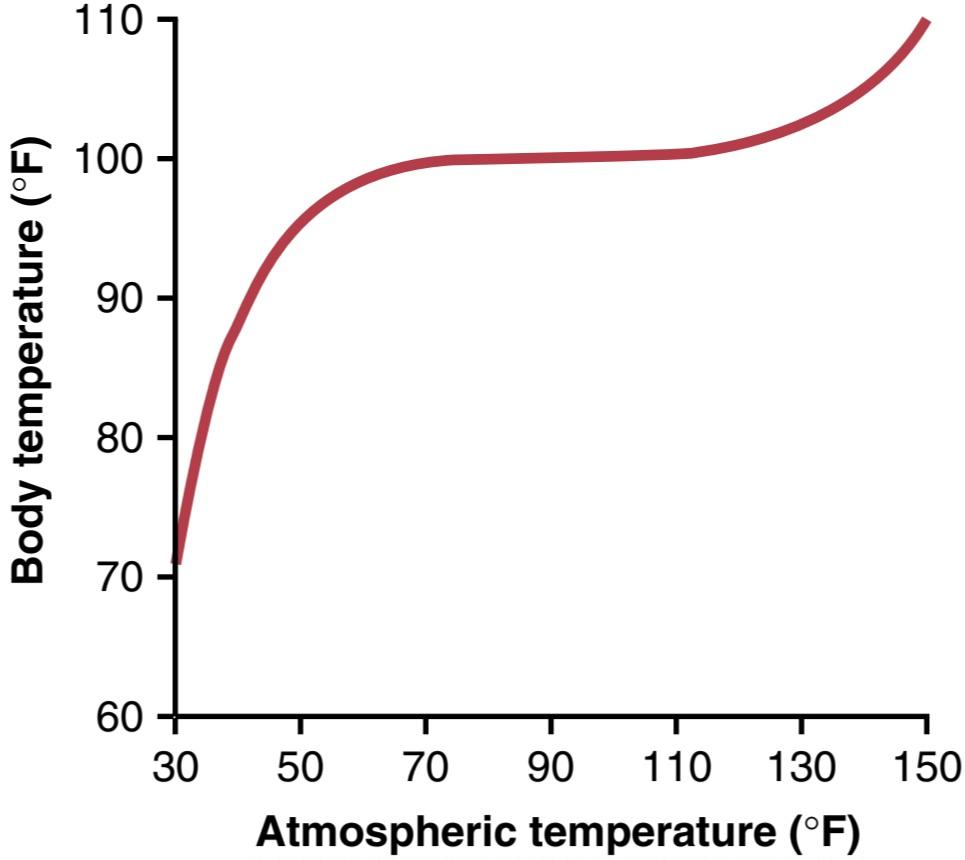
Figure 74-6. Effect of high and low atmospheric temperatures of several hours’ duration, under dry conditions, on the internal body core temperature (in °F). Note that the internal body temperature remains stable, despite wide changes in atmospheric temperature.
شکل 74-6. اثر دماهای بالا و پایین اتمسفر چند ساعته، در شرایط خشک، بر دمای هسته داخلی بدن (در درجه فارنهایت). توجه داشته باشید که با وجود تغییرات گسترده در دمای اتمسفر، دمای داخلی بدن ثابت می ماند.
ROLE OF THE ANTERIOR HYPOTHALAMIC- PREOPTIC AREA IN THERMOSTATIC DETECTION OF TEMPERATURE
The anterior hypothalamic-preoptic area contains large numbers of heat-sensitive neurons, as well as about one- third as many cold-sensitive neurons. These neurons are believed to function as temperature sensors for control- ling body temperature. The heat-sensitive neurons increase their firing rate 2- to 10-fold in response to a 10°-C increase in body temperature. The cold-sensitive neurons, by contrast, increase their firing rate when body temperature falls.
نقش ناحیه هیپوتالامیک قدامی- پره اپتیک در تشخیص ترموستاتیک دما
ناحیه قدامی هیپوتالاموس-پریاپتیک دارای تعداد زیادی نورون حساس به گرما و همچنین حدود یک سوم نورون های حساس به سرما است. اعتقاد بر این است که این نورون ها به عنوان حسگرهای دما برای کنترل دمای بدن عمل می کنند. نورون های حساس به گرما در پاسخ به افزایش 10 درجه سانتی گراد دمای بدن، سرعت شلیک خود را 2 تا 10 برابر افزایش می دهند. در مقابل، نورونهای حساس به سرما، با کاهش دمای بدن، سرعت شلیک خود را افزایش میدهند.
When the preoptic area is heated, the skin all over the body immediately breaks out in a profuse sweat, whereas the skin blood vessels over the entire body become greatly dilated. This response is an immediate reaction to cause the body to lose heat, thereby helping to return the body temperature toward the normal level. In addition, any excess body heat production is inhibited. Therefore, it is clear that the hypothalamic-preoptic area has the capability to serve as a thermostatic body temperature control center.
هنگامی که ناحیه پری اپتیک گرم می شود، پوست سراسر بدن بلافاصله عرق می کند، در حالی که رگ های خونی پوست در سراسر بدن به شدت گشاد می شوند. این واکنش یک واکنش فوری است که باعث می شود بدن گرما را از دست بدهد و در نتیجه به بازگشت دمای بدن به سطح طبیعی کمک می کند. علاوه بر این، تولید گرمای اضافی بدن نیز مهار می شود. بنابراین، واضح است که ناحیه هیپوتالاموس-پریاپتیک این قابلیت را دارد که به عنوان مرکز کنترل دمای بدن ترموستاتیک عمل کند.
DETECTION OF TEMPERATURE BY RECEPTORS IN THE SKIN AND DEEP BODY TISSUES
Although the signals generated by the temperature receptors of the hypothalamus are extremely powerful in con- trolling body temperature, receptors in other parts of the body play additional roles in temperature regulation. This is especially true of temperature receptors in the skin and in a few specific deep tissues of the body.
تشخیص دما توسط گیرنده های پوست و بافت های عمیق بدن
اگرچه سیگنال های تولید شده توسط گیرنده های دمایی هیپوتالاموس در کنترل دمای بدن بسیار قدرتمند هستند، گیرنده های سایر قسمت های بدن نقش بیشتری در تنظیم دما دارند. این امر به ویژه در مورد گیرنده های دما در پوست و در چند بافت عمیق خاص بدن صادق است.
Recall from the discussion of sensory receptors in Chapter 49 that the skin is endowed with both cold and warmth receptors. The skin has far more cold receptors than warmth receptors-in fact, 10 times as many in many parts of the skin. Therefore, peripheral detection of temperature mainly concerns detecting cool and cold instead of warm temperatures.
از بحث گیرنده های حسی در فصل 49 به یاد بیاورید که پوست دارای گیرنده های سرد و گرما است. پوست دارای گیرنده های سرمای بسیار بیشتری نسبت به گیرنده های گرما است – در واقع، در بسیاری از قسمت های پوست 10 برابر بیشتر است. بنابراین، تشخیص محیطی دما عمدتاً به تشخیص دماهای سرد و سرد به جای گرم مربوط می شود.
Although the molecular mechanisms for sensing changes in temperature are not well understood, experimental studies suggest that the transient receptor potential family of cation channels, found in somatosensory neurons and epidermal cells, may mediate thermal sensation over a wide range of skin temperatures.
اگرچه مکانیسمهای مولکولی برای سنجش تغییرات دما به خوبی شناخته نشدهاند، مطالعات تجربی نشان میدهند که خانواده گیرنده بالقوه گذرا کانالهای کاتیونی، که در نورونهای حسی جسمی و سلولهای اپیدرمی یافت میشوند، ممکن است باعث ایجاد حس گرمایی در طیف وسیعی از دمای پوست شوند.
When the skin is chilled over the entire body, immediate reflex effects are invoked and begin to increase the temperature of the body in several ways: (1) by providing a strong stimulus to cause shivering, with a resultant increase in the rate of body heat production; (2) by inhibiting sweating, if this is already occurring; and (3) by promoting skin vasoconstriction to diminish loss of body heat from the skin.
هنگامی که پوست در تمام بدن سرد می شود، اثرات رفلکس فوری اعمال می شود و شروع به افزایش دمای بدن به روش های مختلف می کند: (1) با ایجاد یک محرک قوی برای ایجاد لرز، و در نتیجه افزایش سرعت تولید گرمای بدن. (2) با مهار تعریق، اگر این اتفاق قبلاً رخ داده باشد. و (3) با ترویج انقباض عروق پوست برای کاهش از دست دادن گرمای بدن از پوست.
Deep body temperature receptors are found mainly in the spinal cord, in the abdominal viscera, and in or around the great veins in the upper abdomen and thorax. These deep receptors function differently from the skin receptors because they are exposed to the body core temperature rather than the body surface temperature. Yet, like the skin temperature receptors, they detect mainly cold rather than warmth. It is probable that both the skin and the deep body receptors are concerned with preventing hypothermia—that is, preventing low body temperature.
گیرنده های عمقی دمای بدن عمدتا در نخاع، احشاء شکم و در داخل یا اطراف سیاهرگ های بزرگ در قسمت فوقانی شکم و قفسه سینه یافت می شوند. این گیرنده های عمقی عملکرد متفاوتی با گیرنده های پوستی دارند زیرا به جای دمای سطح بدن در معرض دمای هسته بدن قرار دارند. با این حال، مانند گیرنده های دمای پوست، آنها عمدتاً سرما را به جای گرما تشخیص می دهند. این احتمال وجود دارد که هم پوست و هم گیرنده های عمقی بدن به جلوگیری از هیپوترمی – یعنی جلوگیری از دمای پایین بدن اهمیت می دهند.
POSTERIOR HYPOTHALAMUS INTEGRATES CENTRAL AND PERIPHERAL TEMPERATURE SENSORY SIGNALS
Even though many temperature sensory signals arise in peripheral receptors, these signals contribute to body temperature control mainly through the hypothalamus. The area of the hypothalamus that they stimulate is located bilaterally in the posterior hypothalamus approximately at the level of the mammillary bodies. The temperature sensory signals from the anterior hypothalamic-preoptic area are also transmitted into this posterior hypothalamic area. Here the signals from the preoptic area and the signals from elsewhere in the body are combined and integrated to control the heat-producing and heat-conserving reactions of the body.
هیپوتالاموس خلفی سیگنال های حسی دمای مرکزی و محیطی را ادغام می کند
اگرچه بسیاری از سیگنالهای حسی دما در گیرندههای محیطی ایجاد میشوند، این سیگنالها عمدتاً از طریق هیپوتالاموس به کنترل دمای بدن کمک میکنند. ناحیه هیپوتالاموس که آنها را تحریک می کنند به صورت دوطرفه در هیپوتالاموس خلفی تقریباً در سطح اجسام پستاندار قرار دارد. سیگنال های حسی دما از ناحیه هیپوتالاموس-پریاپتیک قدامی نیز به این ناحیه هیپوتالاموس خلفی منتقل می شود. در اینجا سیگنالهای ناحیه پیشاپتیک و سیگنالهای سایر نقاط بدن با هم ترکیب و ادغام میشوند تا واکنشهای تولید گرما و حفظ حرارت بدن را کنترل کنند.
NEURONAL EFFECTOR MECHANISMS THAT DECREASE OR INCREASE BODY TEMPERATURE
When the hypothalamic temperature centers detect that the body temperature is either too high or too low, they institute appropriate temperature-decreasing or temperature-increasing procedures. The reader is prob- ably familiar with most of these procedures from personal experience, but special features are described in the following sections.
مکانیسمهای اثر عصبی که دمای بدن را کاهش یا افزایش میدهند
هنگامی که مراکز دمای هیپوتالاموس تشخیص می دهند که دمای بدن خیلی بالا یا خیلی پایین است، روش های مناسب کاهش یا افزایش دما را انجام می دهند. خواننده احتمالاً با بیشتر این روشها از تجربه شخصی آشناست، اما ویژگیهای ویژهای در بخشهای بعدی توضیح داده میشود.
Temperature-Decreasing Mechanisms When the Body Is Too Hot
The temperature control system uses three important mechanisms to reduce body heat when the body temperature becomes too great:
مکانیسم های کاهش دما وقتی بدن خیلی گرم است
سیستم کنترل دما از سه مکانیسم مهم برای کاهش حرارت بدن در زمانی که دمای بدن خیلی زیاد می شود استفاده می کند:
1. Vasodilation of skin blood vessels. In almost all areas of the body, the skin blood vessels become intensely dilated. This dilation is caused by inhibition of the sympathetic centers in the posterior hypothalamus that cause vasoconstriction. Full vasodilation can increase the rate of heat transfer to the skin as much as eightfold.
1. گشاد شدن عروق خونی پوست. تقریباً در تمام نواحی بدن، رگ های خونی پوست به شدت گشاد می شوند. این اتساع ناشی از مهار مراکز سمپاتیک در هیپوتالاموس خلفی است که باعث انقباض عروق می شود. اتساع کامل عروق می تواند سرعت انتقال حرارت به پوست را تا هشت برابر افزایش دهد.
2. Sweating. The effect of increased body temperature to cause sweating is demonstrated by the blue curve in Figure 74-7, which shows a sharp increase in the rate of evaporative heat loss resulting from sweating when the body core temperature rises above the critical level of 37.1°C (98.8°F). An additional 1°C increase in body temperature causes enough sweating to remove 10 times the basal rate of body heat production.
2. عرق کردن. تأثیر افزایش دمای بدن در ایجاد تعریق با منحنی آبی در شکل 74-7 نشان داده شده است که افزایش شدید نرخ اتلاف حرارت تبخیری ناشی از تعریق را هنگامی که دمای هسته بدن بالاتر از سطح بحرانی 37.1 درجه سانتیگراد (98.8 درجه فارنهایت) افزایش می یابد، نشان می دهد. افزایش 1 درجه سانتیگراد اضافی در دمای بدن باعث تعریق کافی برای حذف 10 برابر میزان پایه تولید گرمای بدن می شود.
3. Decrease in heat production. The mechanisms that cause excess heat production, such as shivering and chemical thermogenesis, are strongly inhibited.
3. کاهش تولید گرما. مکانیسم هایی که باعث تولید گرمای اضافی می شوند، مانند لرز و گرمازایی شیمیایی، به شدت مهار می شوند.
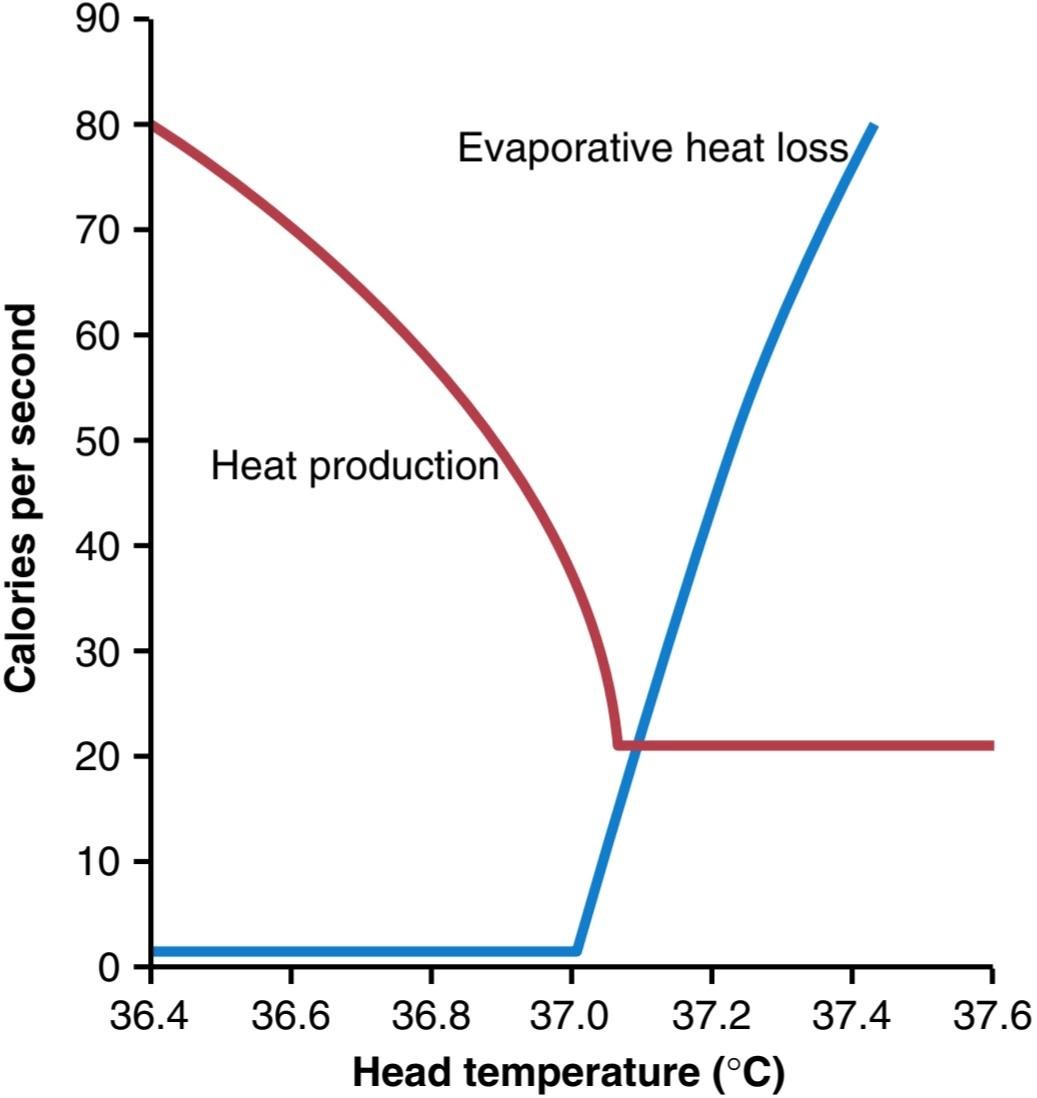
Figure 74-7. Effect of hypothalamic temperature on evaporative heat loss from the body and on heat production caused primarily by muscle activity and shivering (in °C). This figure demonstrates the extremely critical temperature level at which increased heat loss begins and heat production reaches a minimum stable level.
شکل 74-7. تأثیر دمای هیپوتالاموس بر اتلاف حرارت تبخیری از بدن و تولید گرما که عمدتاً در اثر فعالیت عضلانی و لرز ایجاد میشود (در درجه سانتیگراد). این شکل سطح دمای بسیار بحرانی را نشان می دهد که در آن افزایش اتلاف گرما شروع می شود و تولید گرما به حداقل سطح پایدار می رسد.
Temperature-Increasing Mechanisms When the Body Is Too Cold
When the body is too cold, the temperature control system institutes procedures opposite of those when the body is too hot:
مکانیسم های افزایش دما وقتی بدن خیلی سرد است
هنگامی که بدن بیش از حد سرد است، سیستم کنترل دما روش هایی را بر خلاف روش هایی که بدن بیش از حد گرم است ایجاد می کند:
1. Skin vasoconstriction throughout the body. This vasoconstriction is caused by stimulation of the posterior hypothalamic sympathetic centers.
1. انقباض عروق پوست در سراسر بدن. این انقباض عروقی در اثر تحریک مراکز سمپاتیک هیپوتالاموس خلفی ایجاد می شود.
2. Piloerection. Piloerection means hairs “standing on end.” Sympathetic stimulation causes the arrector pili muscles attached to the hair follicles to contract, which brings the hairs to an upright stance and produces “goose bumps” on the skin at the base of the hairs. This mechanism is not important in human beings, but in many animals, upright projection of the hairs allows them to entrap a thick layer of “insulator air” next to the skin, so transfer of heat to the surroundings is greatly depressed.
2. Piloerection. Piloerection به معنای موها “ایستاده به انتهای” است. تحریک سمپاتیک باعث انقباض ماهیچههای منقبض کننده پیلی متصل به فولیکولهای مو میشود که موها را به حالت عمودی میآورد و “برجستگیهای غازی” روی پوست در پایه موها ایجاد میکند. این مکانیسم در انسان مهم نیست، اما در بسیاری از حیوانات، برآمدگی عمودی موها به آنها این امکان را می دهد که لایه ضخیمی از “هوای عایق” را در کنار پوست به دام بیندازند، بنابراین انتقال گرما به محیط اطراف به شدت کاهش می یابد.
3. Increase in thermogenesis (heat production). Heat production by the metabolic systems is increased by promoting shivering, sympathetic excitation of heat production, and thyroxine secretion. These methods of increasing heat require additional explanation, which is provided in the following sections.
3. افزایش ترموژنز (تولید گرما). تولید گرما توسط سیستم های متابولیک با ایجاد لرز، تحریک سمپاتیک تولید گرما و ترشح تیروکسین افزایش می یابد. این روش های افزایش حرارت نیاز به توضیح بیشتری دارد که در قسمت های بعدی ارائه می شود.
Hypothalamic Stimulation of Shivering. Located in the dorsomedial portion of the posterior hypothalamus near the wall of the third ventricle is an area called the primary motor center for shivering. This area is normally inhibited by signals from the heat center in the anterior hypothalamic-preoptic area but is excited by cold signals from the skin and spinal cord. Therefore, as shown by the sudden increase in “heat production” (see the red curve in Figure 74-7), this center becomes activated when the body temperature falls even a fraction of a degree below a critical temperature level. It then transmits signals that cause shivering through bilateral tracts down the brain stem, into the lateral columns of the spinal cord, and finally to the anterior motor neurons. These signals are nonrhythmic and do not cause the actual muscle shaking. Instead, they increase the tone of the skeletal muscles throughout the body by facilitating the activity of the anterior motor neurons. When the tone rises above a certain critical level, shivering begins. This reaction probably results from feedback oscillation of the muscle spindle stretch reflex mechanism, which is discussed in Chapter 55. During maximum shivering, body heat production can rise to four to five times normal.
تحریک هیپوتالاموس لرز. در قسمت پشتی هیپوتالاموس خلفی در نزدیکی دیواره بطن سوم ناحیه ای به نام مرکز حرکتی اولیه برای لرز قرار دارد. این ناحیه معمولاً توسط سیگنال های مرکز گرما در ناحیه هیپوتالاموس-پریاپتیک قدامی مهار می شود، اما با سیگنال های سرد از پوست و نخاع تحریک می شود. بنابراین، همانطور که با افزایش ناگهانی “تولید گرما” نشان داده شده است (به منحنی قرمز در شکل 74-7 مراجعه کنید)، این مرکز زمانی فعال می شود که دمای بدن حتی کسری از درجه به زیر سطح دمای بحرانی کاهش یابد. سپس سیگنالهایی را منتقل میکند که باعث ایجاد لرز از طریق دستگاههای دوطرفه در پایین ساقه مغز، به ستونهای جانبی نخاع و در نهایت به نورونهای حرکتی قدامی میشود. این سیگنال ها غیر ریتمیک هستند و باعث لرزش واقعی عضلات نمی شوند. در عوض، با تسهیل فعالیت نورون های حرکتی قدامی، تون عضلات اسکلتی را در سراسر بدن افزایش می دهند. هنگامی که لحن از یک سطح بحرانی خاص بالاتر می رود، لرز شروع می شود. این واکنش احتمالاً ناشی از نوسان بازخورد مکانیسم بازتاب کشش دوک عضلانی است که در فصل 55 مورد بحث قرار گرفته است. در طول حداکثر لرز، تولید گرمای بدن می تواند به چهار تا پنج برابر نرمال افزایش یابد.
Sympathetic “Chemical” Excitation of Heat Production. As noted in Chapter 73, an increase in either sympathetic stimulation or circulating norepinephrine and epinephrine in the blood can rapidly increase the rate of cellular metabolism. This effect is called chemical thermogenesis, or nonshivering thermogenesis. It results at least partially from the ability of norepinephrine and epinephrine to uncouple oxidative phosphorylation, which means that excess foodstuffs are oxidized and thereby release energy in the form of heat but do not cause adenosine triphosphate to be formed.
تحریک سمپاتیک “شیمیایی” تولید گرما. همانطور که در فصل 73 اشاره شد، افزایش تحریک سمپاتیک یا گردش نوراپی نفرین و اپی نفرین در خون می تواند سرعت متابولیسم سلولی را به سرعت افزایش دهد. این اثر ترموژنز شیمیایی یا گرمازایی بدون لرز نامیده می شود. حداقل تا حدی ناشی از توانایی نوراپی نفرین و اپی نفرین در جدا کردن فسفوریلاسیون اکسیداتیو است، به این معنی که مواد غذایی اضافی اکسید می شوند و در نتیجه انرژی را به شکل گرما آزاد می کنند اما باعث تشکیل آدنوزین تری فسفات نمی شوند.
The degree of chemical thermogenesis that occurs in an animal is almost directly proportional to the amount of brown fat in the animal’s tissues. This type of fat contains large numbers of special mitochondria where uncoupled oxidation occurs, as described in Chapter 73. Brown fat is richly supplied with sympathetic nerves that release norepinephrine, which stimulates tissue expression of mitochondrial uncoupling protein 1 (UCP1, also called thermogenin) and increases thermogenesis.
درجه حرارت زایی شیمیایی که در حیوان رخ می دهد تقریباً مستقیماً با مقدار چربی قهوه ای در بافت های حیوان متناسب است. این نوع چربی حاوی تعداد زیادی میتوکندری ویژه است که در آن اکسیداسیون بدون جفت اتفاق می افتد، همانطور که در فصل 73 توضیح داده شد. چربی قهوه ای سرشار از اعصاب سمپاتیک است که نوراپی نفرین را آزاد می کند، که بیان بافتی پروتئین جداکننده میتوکندری 1 (UCP1، که ترموژنین نیز نامیده می شود) را تحریک می کند و thermogenin را افزایش می دهد.
Acclimatization greatly affects the intensity of chemical thermogenesis; some animals, such as rats, that have been exposed to a cold environment for several weeks exhibit a 100% to 500% increase in heat production when acutely exposed to cold, in contrast to the unacclimatized animal, which responds with an increase of perhaps onethird as much. This increased thermogenesis also leads to a corresponding increase in food intake.
سازگاری تا حد زیادی بر شدت گرمازایی شیمیایی تأثیر می گذارد. برخی از حیوانات، مانند موشها که برای چندین هفته در معرض یک محیط سرد قرار گرفتهاند، در مواجهه شدید با سرما، 100 تا 500 درصد افزایش تولید گرما را نشان میدهند، بر خلاف حیوانی که هوای مطبوع نداشته است، که احتمالاً یک سوم افزایش مییابد. این افزایش ترموژنز همچنین منجر به افزایش متناظر در مصرف غذا می شود.
In adult human beings, who have almost no brown fat, it is rare for chemical thermogenesis to increase the rate of heat production more than 10% to 15%. However, in infants, who do have a small amount of brown fat in their interscapular space, chemical thermogenesis can increase the rate of heat production 100%, which is probably an important factor in maintaining normal body temperature in neonates.
در انسان بالغ، که تقریباً فاقد چربی قهوه ای است، به ندرت اتفاق می افتد که گرمازایی شیمیایی میزان تولید گرما را بیش از 10 تا 15 درصد افزایش دهد. با این حال، در نوزادانی که مقدار کمی چربی قهوه ای در فضای بین کتفی خود دارند، ترموژنز شیمیایی می تواند میزان تولید گرما را 100 درصد افزایش دهد که احتمالاً عامل مهمی در حفظ دمای طبیعی بدن در نوزادان است.
Increased Thyroxine Output as a Long-Term Cause of Increased Heat Production. Cooling the anterior hypothalamic-preoptic area also increases production of the neurosecretory hormone thyrotropin-releasing hormone by the hypothalamus. This hormone is carried by way of the hypothalamic portal veins to the anterior pituitary gland, where it stimulates secretion of thyroid- stimulating hormone.
افزایش تولید تیروکسین به عنوان یک علت بلندمدت افزایش تولید گرما. خنک کردن ناحیه قدامی هیپوتالاموس-پریاپتیک نیز باعث افزایش تولید هورمون ترشح کننده عصبی هورمون آزاد کننده تیروتروپین توسط هیپوتالاموس می شود. این هورمون از طریق وریدهای پورتال هیپوتالاموس به غده هیپوفیز قدامی منتقل می شود و در آنجا ترشح هورمون محرک تیروئید را تحریک می کند.
Thyroid-stimulating hormone in turn stimulates increased output of thyroxine by the thyroid gland, as explained in Chapter 77. The increased thyroxine activates uncoupling protein and increases the rate of cellular metabolism throughout the body, which is yet another mechanism of chemical thermogenesis. This increase in metabolism does not occur immediately but requires several weeks’ exposure to cold to make the thyroid gland hypertrophy and reach its new level of thyroxine secretion.
همانطور که در فصل 77 توضیح داده شد، هورمون محرک تیروئید به نوبه خود باعث افزایش تولید تیروکسین توسط غده تیروئید می شود. این افزایش متابولیسم بلافاصله اتفاق نمی افتد، اما برای ایجاد هیپرتروفی غده تیروئید و رسیدن به سطح جدید ترشح تیروکسین، نیاز به چندین هفته قرار گرفتن در معرض سرما دارد.
Exposure of animals to extreme cold for several weeks can cause their thyroid glands to increase in size 20% to 40%. However, human beings seldom allow themselves to be exposed to the same degree of cold as that to which many animals are often subjected. Therefore, we still do not know, quantitatively, how important the thyroid mechanism of adaptation to cold is in the human being.
قرار گرفتن حیوانات در معرض سرمای شدید برای چند هفته می تواند باعث افزایش اندازه غده تیروئید آنها 20 تا 40 درصد شود. با این حال، انسان به ندرت به خود اجازه می دهد که در معرض همان درجه سرمایی قرار گیرد که اغلب حیوانات در معرض آن هستند. بنابراین، ما هنوز از نظر کمی نمی دانیم که مکانیسم تیروئید سازگاری با سرما در انسان چقدر اهمیت دارد.
Isolated measurements have shown that metabolic rates increase in military personnel residing for several months in the arctic; some of the Inuit, the indigenous people who inhabit the Arctic regions of Alaska, Canada, or Greenland, also have abnormally high basal metabolic rates. Further, the continuous stimulatory effect of cold on the thyroid gland may explain the much higher incidence of toxic thyroid goiters in people who live in cold climates than in those who live in warm climates.
اندازه گیری های جدا شده نشان داده است که میزان متابولیسم در پرسنل نظامی که برای چندین ماه در قطب شمال ساکن هستند افزایش می یابد. برخی از اینوئیتها، مردم بومی که در نواحی قطبی آلاسکا، کانادا یا گرینلند زندگی میکنند، نرخ متابولیسم پایه غیرطبیعی بالایی دارند. علاوه بر این، اثر تحریکی مداوم سرما بر غده تیروئید ممکن است بروز بسیار بیشتر گواتر سمی تیروئید را در افرادی که در آب و هوای سرد زندگی می کنند نسبت به افرادی که در آب و هوای گرم زندگی می کنند توضیح دهد.
“SET POINT” FOR TEMPERATURE CONTROL
In the example of Figure 74-7, it is clear that at a critical body core temperature of about 37.1°C (98.8°F), drastic changes occur in the rates of both heat loss and heat pro- duction. At temperatures above this level, the rate of heat loss is greater than that of heat production, so the body temperature falls and approaches the 37.1°C level. At temperatures below this level, the rate of heat production is greater than that of heat loss, so the body temperature rises and again approaches the 37.1°C level. This crucial temperature level is called the “set point” of the temperature control mechanism-that is, all the temperature control mechanisms continually attempt to bring the body temperature back to this set point level.
“نقطه تنظیم” برای کنترل دما
در مثال شکل 74-7، واضح است که در دمای بحرانی هسته بدن حدود 37.1 درجه سانتیگراد (98.8 درجه فارنهایت)، تغییرات شدیدی در نرخ اتلاف گرما و تولید گرما رخ می دهد. در دماهای بالاتر از این سطح، سرعت از دست دادن گرما بیشتر از تولید گرما است، بنابراین دمای بدن کاهش می یابد و به سطح 37.1 درجه سانتی گراد نزدیک می شود. در دماهای کمتر از این سطح، میزان تولید گرما بیشتر از از دست دادن گرما است، بنابراین دمای بدن افزایش می یابد و دوباره به سطح 37.1 درجه سانتی گراد نزدیک می شود. این سطح مهم دمایی «نقطه تنظیم» مکانیسم کنترل دما نامیده میشود، یعنی تمام مکانیسمهای کنترل دما به طور مداوم تلاش میکنند تا دمای بدن را به این سطح تنظیم شده برگردانند.
Feedback Gain for Body Temperature Control. As discussed in Chapter 1, feedback gain is a measure of the effectiveness of a control system. In the case of body temperature control, it is important for the internal core temperature to change as little as possible, even though the environmental temperature might change greatly from day to day or even hour to hour. The feedback gain of the temperature control system is equal to the ratio of the change in environmental temperature to the change in body core temperature minus 1.0 (see Chapter 1 for this formula). Experiments have shown that the body temperature of humans changes about 1°C for each 25°- to 30°C-change in environmental temperature. Therefore, the feedback gain of the total mechanism for body temperature control averages about 27 (28/1.0 – 1.0 = 27), which is an extremely high gain for a biological control system (the baroreceptor arterial pressure control system, by comparison, has a feedback gain of <2).
افزایش بازخورد برای کنترل دمای بدن. همانطور که در فصل 1 مورد بحث قرار گرفت، سود بازخورد معیاری برای سنجش اثربخشی یک سیستم کنترل است. در مورد کنترل دمای بدن، مهم است که دمای هسته داخلی تا حد ممکن کمتر تغییر کند، حتی اگر دمای محیط ممکن است از روز به روز یا حتی ساعت به ساعت بسیار تغییر کند. سود بازخورد سیستم کنترل دما برابر است با نسبت تغییر دمای محیط به تغییر دمای هسته بدن منهای 1.0 (برای این فرمول به فصل 1 مراجعه کنید). آزمایشات نشان داده است که دمای بدن انسان به ازای هر 25 تا 30 درجه سانتی گراد تغییر دمای محیط حدود 1 درجه سانتی گراد تغییر می کند. بنابراین، افزایش بازخورد مکانیسم کل برای کنترل دمای بدن به طور متوسط حدود 27 است (28/1.0 – 1.0 = 27)، که یک سود بسیار بالا برای یک سیستم کنترل بیولوژیکی است (سیستم کنترل فشار شریانی بارورسپتور، در مقایسه، دارای بازخورد کمتر از 2 است).
Skin Temperature Can Slightly Alter the Set Point for Core Temperature Control
The critical temperature set point in the hypothalamus above which sweating begins and below which shivering begins is determined mainly by the degree of activity of the heat temperature receptors in the anterior hypothalamic- preoptic area. However, temperature signals from the peripheral areas of the body, especially from the skin and certain deep body tissues (e.g., spinal cord and abdominal viscera), also contribute slightly to body temperature regulation by altering the set point of the hypothalamic temperature control center. This effect is shown in Figures 74-8 and 74-9.
دمای پوست می تواند مقدار تنظیم شده برای کنترل دمای هسته را کمی تغییر دهد
نقطه تنظیم دمای بحرانی در هیپوتالاموس که بالای آن تعریق شروع میشود و زیر آن لرز شروع میشود، عمدتاً با درجه فعالیت گیرندههای دمای گرما در ناحیه هیپوتالاموس-پریاپتیک قدامی تعیین میشود. با این حال، سیگنالهای دما از نواحی محیطی بدن، بهویژه از پوست و برخی بافتهای عمیق بدن (به عنوان مثال، نخاع و احشاء شکم)، نیز با تغییر نقطه تنظیم مرکز کنترل دمای هیپوتالاموس، کمی به تنظیم دمای بدن کمک میکنند. این اثر در شکل های 74-8 و 74-9 نشان داده شده است.
Figure 74-8 demonstrates the effect of different skin temperatures on the set point for sweating, showing that the set point increases as skin temperature decreases. Thus, for the person represented in this figure, the hypo- thalamic set point increased from 36.7°C when the skin temperature was higher than 33°C to a set point of 37.4°C when the skin temperature had fallen to 29°C. Therefore, when the skin temperature was high, sweating began at a lower hypothalamic temperature than when the skin temperature was low. One can readily understand the value of such a system because it is important that sweating be inhibited when the skin temperature is low; otherwise, the combined effect of low skin temperature and sweating could cause far too much loss of body heat.
شکل 74-8 اثر دماهای مختلف پوست را بر نقطه تنظیم تعریق نشان میدهد و نشان میدهد که با کاهش دمای پوست، نقطه تنظیم افزایش مییابد. بنابراین، برای فردی که در این شکل نشان داده شده است، نقطه تنظیم هیپوتالاموس از 36.7 درجه سانتیگراد زمانی که دمای پوست بالاتر از 33 درجه سانتیگراد بود به نقطه تنظیم 37.4 درجه سانتیگراد هنگامی که دمای پوست به 29 درجه سانتیگراد کاهش یافته بود، افزایش یافت. بنابراین، زمانی که دمای پوست بالا بود، تعریق در دمای پایینتر هیپوتالاموس نسبت به زمانی که دمای پوست پایین بود شروع شد. می توان ارزش چنین سیستمی را به آسانی درک کرد زیرا مهم است که وقتی دمای پوست پایین است از تعریق جلوگیری شود. در غیر این صورت، اثر ترکیبی دمای پایین پوست و تعریق می تواند باعث از دست دادن بیش از حد گرمای بدن شود.
A similar effect occurs in shivering, as shown in Figure 74-9. That is, when the skin becomes cold, it drives the hypothalamic centers to the shivering threshold even when the hypothalamic temperature is still on the hot side of normal. Here again, one can understand the value of the control system because a cold skin temperature would soon lead to a deeply depressed body temperature unless heat production were increased. Thus, a cold skin temperature actually “anticipates” a fall in internal body temperature and prevents it.
همانطور که در شکل 74-9 نشان داده شده است، اثر مشابهی در لرز رخ می دهد. به این معنا که وقتی پوست سرد می شود، مراکز هیپوتالاموس را به آستانه لرز سوق می دهد، حتی زمانی که دمای هیپوتالاموس هنوز در سمت گرم طبیعی است. در اینجا نیز می توان ارزش سیستم کنترل را درک کرد زیرا دمای پوست سرد به زودی منجر به کاهش شدید دمای بدن می شود مگر اینکه تولید گرما افزایش یابد. بنابراین، دمای سرد پوست در واقع کاهش دمای داخلی بدن را «پیشبینی» میکند و از آن جلوگیری میکند.
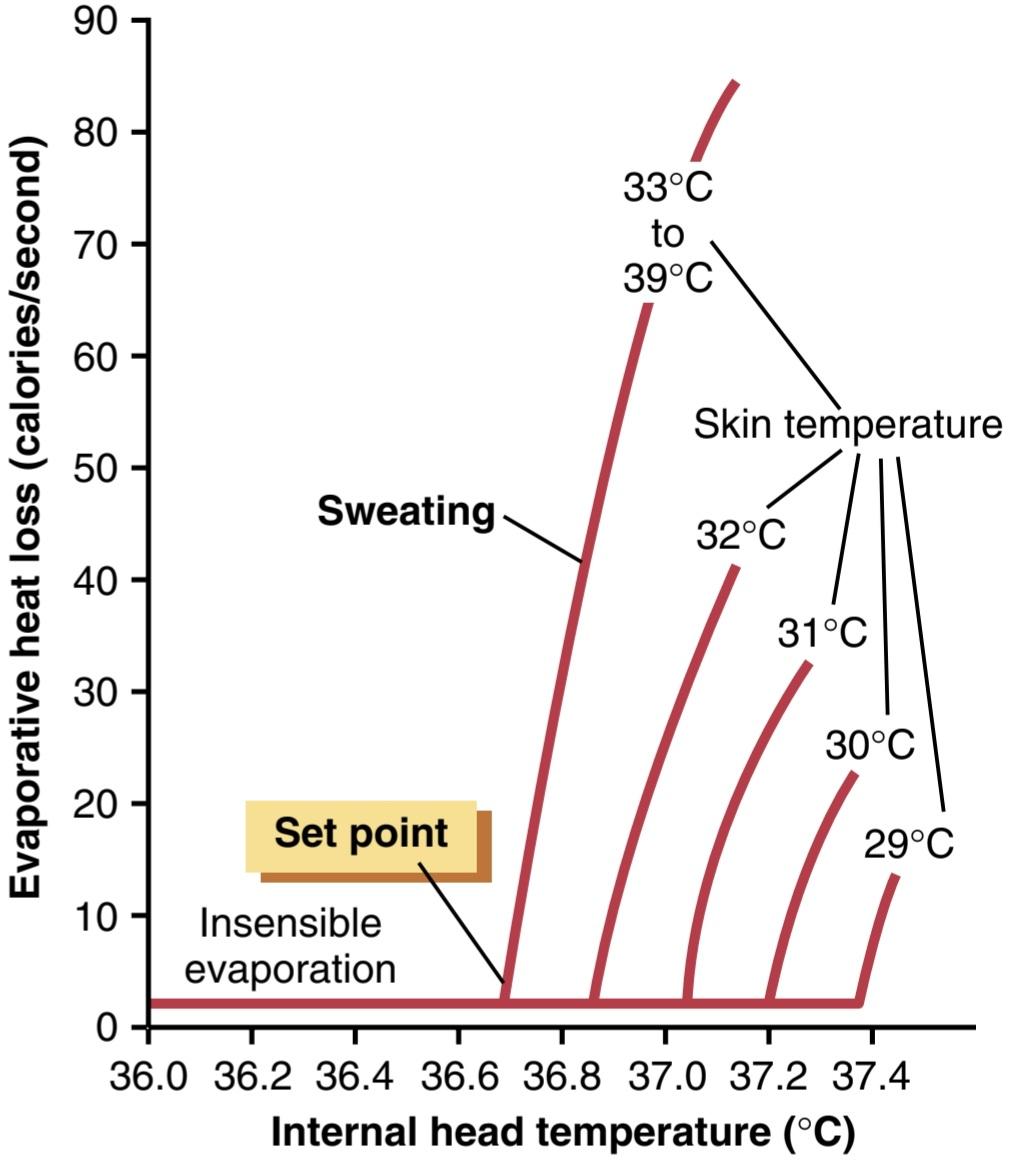
Figure 74-8. Effect of changes in the internal head temperature on the rate of evaporative heat loss from the body (in °C). Note that the skin temperature determines the set point level at which sweating begins. (Courtesy Dr. T.H. Benzinger.)
شکل 74-8. تأثیر تغییرات دمای داخلی سر بر میزان اتلاف حرارت تبخیری از بدن (در درجه سانتیگراد). توجه داشته باشید که دمای پوست تعیین کننده سطح نقطه تنظیمی است که در آن تعریق شروع می شود. (با احترام از دکتر T.H. Benzinger.)
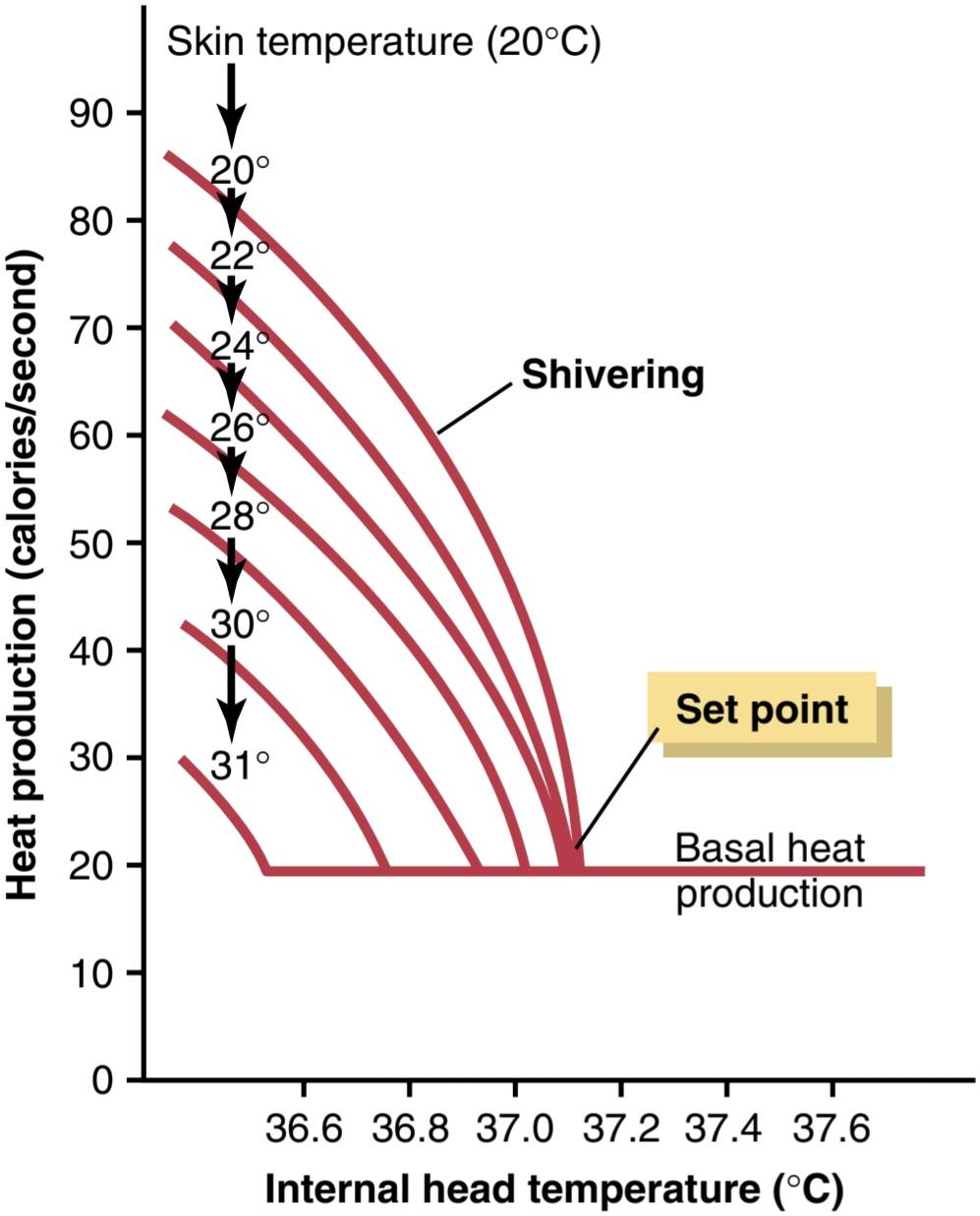
Figure 74-9. Effect of changes in the internal head temperature on the rate of heat production by the body (in °C). Note that the skin temperature determines the set point level at which shivering begins. (Courtesy Dr. T.H. Benzinger.)
شکل 74-9. تأثیر تغییرات دمای داخلی سر بر میزان تولید گرما توسط بدن (بر حسب درجه سانتیگراد). توجه داشته باشید که دمای پوست تعیین کننده سطح نقطه تنظیمی است که در آن لرز شروع می شود. (با احترام از دکتر T.H. Benzinger.)
BEHAVIORAL CONTROL OF BODY TEMPERATURE
Aside from the subconscious mechanisms for body temperature control, the body has another temperature- control mechanism that is even more potent-behavioral control of temperature.
کنترل رفتاری دمای بدن
جدا از مکانیسمهای ناخودآگاه برای کنترل دمای بدن، بدن مکانیسم دیگری برای کنترل دما دارد که کنترل رفتاری قویتر دما است.
Whenever the internal body temperature becomes too high, signals from the temperature-controlling areas in the brain give the person a psychic sensation of being overheated. Conversely, whenever the body becomes too cold, signals from the skin and probably also from some deep body receptors elicit the feeling of cold discomfort. Therefore, the person makes appropriate environmental adjustments to re-establish comfort, such as moving into a heated room or wearing well- insulated clothing in freezing weather. Behavioral control of temperature is the only really effective mechanism to maintain body heat control in severely cold environments.
هر زمان که دمای داخلی بدن بیش از حد بالا میرود، سیگنالهای نواحی کنترلکننده دما در مغز به فرد احساس گرمازدگی بیش از حد میدهد. برعکس، هر زمان که بدن بیش از حد سرد می شود، سیگنال هایی از پوست و احتمالاً برخی از گیرنده های عمقی بدن باعث احساس ناراحتی سرد می شوند. بنابراین، فرد تنظیمات محیطی مناسبی را برای برقراری مجدد آسایش انجام می دهد، مانند رفتن به یک اتاق گرم یا پوشیدن لباس های عایق بندی شده در هوای سرد. کنترل رفتاری دما تنها مکانیسم واقعا موثر برای حفظ کنترل گرمای بدن در محیط های به شدت سرد است.
Local Skin Temperature Reflexes
When a person places a foot under a hot lamp and leaves it there for a short time, local vasodilation and mild local sweating occur. Conversely, placing the foot in cold water causes local vasoconstriction and local cessation of sweating. These reactions are caused by local effects of temperature directly on the blood vessels and also by local cord reflexes conducted from skin receptors to the spinal cord and back to the same skin area and the sweat glands. The intensity of these local effects is, in addition, controlled by the central brain temperature controller, so their overall effect is proportional to the hypothalamic heat control signal times the local signal. Such reflexes can help prevent excessive heat exchange from locally cooled or heated portions of the body.
رفلکس های موضعی دمای پوست
هنگامی که فردی پای خود را زیر یک لامپ داغ قرار می دهد و آن را برای مدت کوتاهی در آنجا می گذارد، اتساع موضعی عروق و تعریق موضعی خفیف رخ می دهد. برعکس، قرار دادن پا در آب سرد باعث انقباض موضعی عروق و قطع موضعی تعریق می شود. این واکنش ها در اثر اثرات موضعی دما به طور مستقیم بر روی رگ های خونی و همچنین توسط بازتاب های موضعی طناب از گیرنده های پوستی به نخاع و برگشت به همان ناحیه پوست و غدد عرق ایجاد می شوند. علاوه بر این، شدت این اثرات موضعی توسط کنترلکننده دمای مرکزی مغز کنترل میشود، بنابراین اثر کلی آنها متناسب با سیگنال کنترل حرارت هیپوتالاموس بر سیگنال محلی است. چنین رفلکسهایی میتوانند به جلوگیری از تبادل حرارت بیش از حد از قسمتهای خنک یا گرم شده بدن کمک کنند.
Regulation of Internal Body Temperature Is Impaired by Cutting the Spinal Cord. If the spinal cord is severed in the neck above the sympathetic outflow from the cord, regulation of body temperature becomes extremely poor because the hypothalamus can no longer control either skin blood flow or the degree of sweating anywhere in the body. This is true even though the local temperature reflexes originating in the skin, spinal cord, and intra-abdominal receptors still exist. These reflexes are extremely weak in comparison with hypothalamic control of body temperature.
تنظیم دمای داخلی بدن با بریدن نخاع مختل می شود. اگر طناب نخاعی در گردن و بالای خروجی سمپاتیک از طناب قطع شود، تنظیم دمای بدن به شدت ضعیف می شود زیرا هیپوتالاموس دیگر نمی تواند جریان خون پوست یا درجه تعریق را در هیچ نقطه ای از بدن کنترل کند. این درست است حتی اگر رفلکس های دمایی موضعی که از پوست، نخاع و گیرنده های داخل شکمی منشا می گیرند، هنوز وجود دارند. این رفلکس ها در مقایسه با کنترل هیپوتالاموس دمای بدن بسیار ضعیف هستند.
In people with this condition, body temperature must be regulated principally by the patient’s psychic response to cold and hot sensations in the head region—that is, by behavioral control of clothing and by moving into an appropriate warm or cold environment.
در افراد مبتلا به این عارضه، درجه حرارت بدن باید اساساً توسط واکنش روانی بیمار به احساس سرد و گرم در ناحیه سر تنظیم شود – یعنی با کنترل رفتاری لباس و حرکت به یک محیط گرم یا سرد مناسب.
ABNORMALITIES OF BODY TEMPERATURE REGULATION
FEVER
Fever, which means a body temperature above the usual range of normal, can be caused by abnormalities in the brain or by toxic substances that affect the temperature- regulating centers. Some causes of fever (and also of subnormal body temperatures) are presented in Figure 74-10. They include bacterial or viral infections, brain tumors, and environmental conditions that may terminate in heatstroke.
ناهنجاری های تنظیم دمای بدن
تب
تب، که به معنای دمای بدن بالاتر از حد معمول طبیعی است، می تواند ناشی از ناهنجاری های مغز یا مواد سمی باشد که بر مراکز تنظیم دما تأثیر می گذارد. برخی از علل تب (و همچنین دمای غیر طبیعی بدن) در شکل 74-10 ارائه شده است. آنها شامل عفونت های باکتریایی یا ویروسی، تومورهای مغزی و شرایط محیطی هستند که ممکن است به گرمازدگی ختم شود.
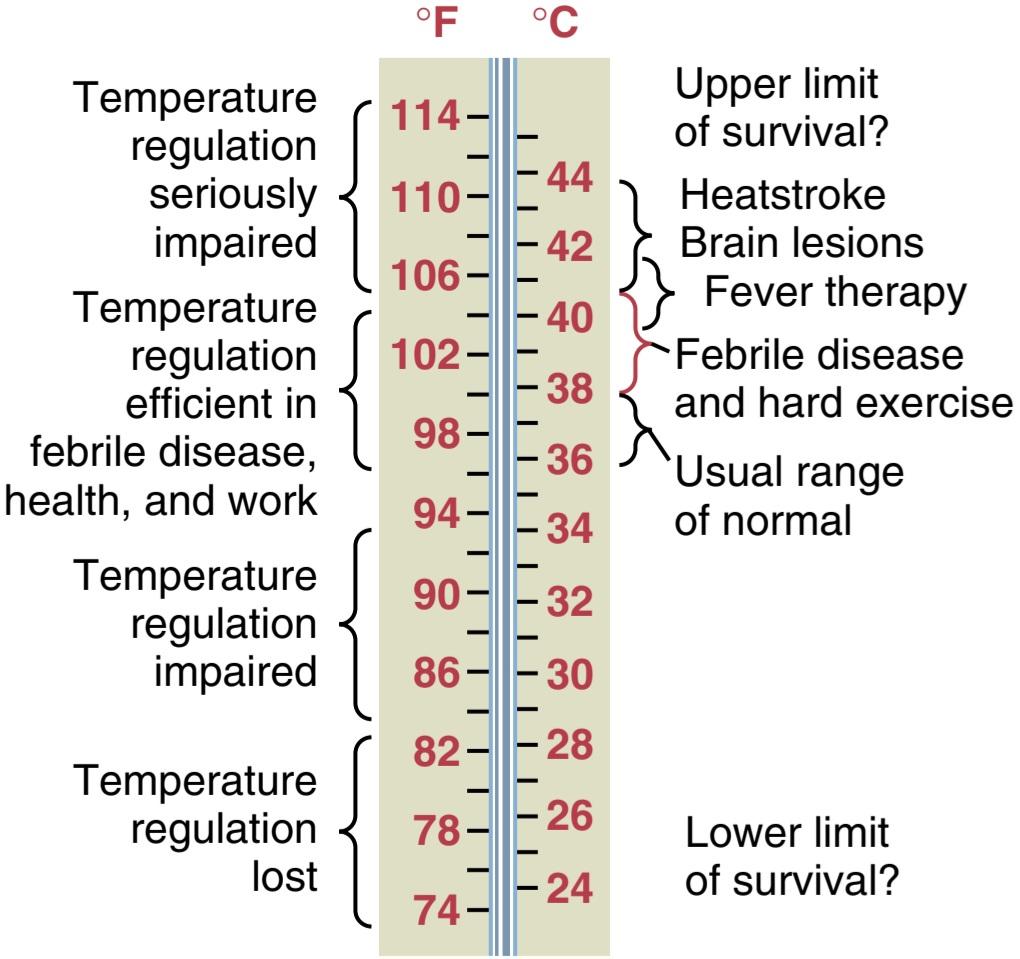
Figure 74-10. Body temperatures under different conditions. (Modified from DuBois EF: Fever. Springfield, IL: Charles C. Thomas, 1948.)
شکل 74-10. دمای بدن در شرایط مختلف (اصلاح شده از DuBois EF: Fever. Springfield, IL: Charles C. Thomas, 1948.)
Resetting the Hypothalamic Temperature- Regulating Center in Febrile Diseases- Effect of Pyrogens
Many proteins, breakdown products of proteins, and certain other substances, especially lipopolysaccharide toxins released from bacterial cell membranes, can cause the set point of the hypothalamic thermostat to rise. Substances that cause this effect are called pyrogens.
تنظیم مجدد دمای هیپوتالاموس – مرکز تنظیم کننده در بیماری های تب – اثر پیروژن ها
بسیاری از پروتئین ها، محصولات تجزیه پروتئین ها و برخی مواد دیگر، به ویژه سموم لیپوپلی ساکارید آزاد شده از غشای سلولی باکتری ها، می توانند باعث افزایش نقطه تنظیم ترموستات هیپوتالاموس شوند. موادی که این اثر را ایجاد می کنند، پیروژن نامیده می شوند.
Pyrogens released from toxic bacteria or those released from degenerating body tissues cause fever during disease conditions. When the set point of the hypothalamic temperature-regulating center becomes higher than normal, all the mechanisms for raising the body temperature are brought into play, including heat conservation and increased heat production. Within a few hours after the set point has been increased, the body temperature also approaches this level, as shown in Figure 74-11.
پیروژنهای آزاد شده از باکتریهای سمی یا آنهایی که از بافتهای بدن در حال انحطاط آزاد میشوند باعث ایجاد تب در شرایط بیماری میشوند. هنگامی که نقطه تنظیم مرکز تنظیم دمای هیپوتالاموس بالاتر از حد طبیعی می شود، تمام مکانیسم های افزایش دمای بدن از جمله حفظ گرما و افزایش تولید گرما وارد عمل می شوند. همانطور که در شکل 74-11 نشان داده شده است، ظرف چند ساعت پس از افزایش نقطه تنظیم، دمای بدن نیز به این سطح نزدیک می شود.

Figure 74-11. Effects of changing the set point of the hypothalamic temperature controller.
شکل 74-11. اثرات تغییر نقطه تنظیم کنترل کننده دمای هیپوتالاموس
Mechanism of Action of Pyrogens in Causing Fever- Role of Cytokines. Experiments in animals have shown that some pyrogens, when injected into the hypothalamus, can act directly and immediately on the hypothalamic temperature-regulating center to increase its set point. Other pyrogens function indirectly and may re- quire several hours of latency before causing their effects. This is true of many of the bacterial pyrogens, especially the endotoxins from gram-negative bacteria.
مکانیسم اثر پیروژن ها در ایجاد تب – نقش سیتوکین ها. آزمایشها روی حیوانات نشان دادهاند که برخی از تبزاها، وقتی به هیپوتالاموس تزریق میشوند، میتوانند مستقیماً و بلافاصله روی مرکز تنظیمکننده دمای هیپوتالاموس عمل کنند تا نقطه تنظیم آن را افزایش دهند. سایر پیروژن ها به طور غیرمستقیم عمل می کنند و ممکن است قبل از ایجاد اثرات خود به چند ساعت تاخیر نیاز داشته باشند. این در مورد بسیاری از پیروژن های باکتریایی، به ویژه اندوتوکسین های باکتری های گرم منفی صادق است.
When bacteria or breakdown products of bacteria are present in the tissues or in the blood, they are phagocytized by the blood leukocytes, by tissue macrophages, and by large granular killer lymphocytes, as discussed in Chapter 34. All these cells digest the bacterial products and then release cytokines, a diverse group of peptide-signaling molecules involved in the innate and adaptive immune responses. One of the most important of these cytokines in causing fever is interleukin-1 (IL-1), also called leukocyte pyrogen or endogenous pyrogen. IL-1 is released from macrophages into the body fluids and, upon reaching the hypothalamus, almost immediately activates the processes to produce fever, sometimes increasing the body temperature a noticeable amount in only 8 to 10 minutes. As little as one ten-millionth of a gram of endotoxin lipopolysaccharide from bacteria, acting in concert with the blood leukocytes, tissue macrophages, and killer lymphocytes, can cause fever. The amount of IL-1 that is formed in response to lipopolysaccharide to cause fever is only a few nanograms.
هنگامی که باکتری ها یا محصولات تجزیه باکتری ها در بافت ها یا خون وجود دارند، توسط لکوسیت های خون، توسط ماکروفاژهای بافتی، و توسط لنفوسیت های کشنده دانه دانه بزرگ، همانطور که در فصل 34 بحث شد، فاگوسیته می شوند. پاسخ ها یکی از مهم ترین این سیتوکین ها در ایجاد تب، اینترلوکین-1 (IL-1) است که به آن پیروژن لکوسیت یا پیروژن درون زا نیز می گویند. IL-1 از ماکروفاژها به داخل مایعات بدن آزاد می شود و با رسیدن به هیپوتالاموس، تقریباً بلافاصله فرآیندهای تولید تب را فعال می کند و گاهی اوقات دمای بدن را به میزان قابل توجهی در عرض 8 تا 10 دقیقه افزایش می دهد. تنها ده میلیونم گرم لیپوپلی ساکارید آندوتوکسین از باکتری ها که در هماهنگی با لکوسیت های خون، ماکروفاژهای بافتی و لنفوسیت های کشنده عمل می کند، می تواند باعث تب شود. مقدار IL-1 که در پاسخ به لیپوپلی ساکارید برای ایجاد تب تشکیل می شود، تنها چند نانوگرم است.
Several experiments have suggested that IL-1 causes fever by first inducing formation of one of the prostaglandins, mainly prostaglandin E2, or a similar substance, which acts in the hypothalamus to elicit the fever reaction. When prostaglandin formation is blocked by drugs, the fever is either completely abrogated or at least reduced. In fact, this may be the explanation for the manner in which aspirin reduces fever because aspirin impedes the formation of prostaglandins from arachidonic acid. Drugs such as aspirin that reduce fever are called antipyretics.
چندین آزمایش نشان دادهاند که IL-1 با ایجاد تب در ابتدا باعث ایجاد یکی از پروستاگلاندینها، عمدتاً پروستاگلاندین E2، یا ماده مشابهی میشود که در هیپوتالاموس برای ایجاد واکنش تب عمل میکند. هنگامی که تشکیل پروستاگلاندین توسط داروها مسدود می شود، تب یا به طور کامل از بین می رود یا حداقل کاهش می یابد. در واقع، این ممکن است توضیحی برای روشی باشد که آسپرین در آن تب را کاهش می دهد، زیرا آسپرین مانع تشکیل پروستاگلاندین ها از اسید آراشیدونیک می شود. داروهایی مانند آسپرین که تب را کاهش می دهند، ضد تب نامیده می شوند.
Fever Caused by Brain Lesions. When a brain surgeon operates in the region of the hypothalamus, severe fever almost always occurs; rarely, the opposite effect, hypothermia, occurs, demonstrating both the potency of the hypothalamic mechanisms for body temperature control and the ease with which abnormalities of the hypothalamus can alter the set point of temperature control. Another condition that frequently causes prolonged high temperature is compression of the hypothalamus by a brain tumor.
تب ناشی از ضایعات مغزی. هنگامی که یک جراح مغز در ناحیه هیپوتالاموس عمل می کند، تقریباً همیشه تب شدید رخ می دهد. به ندرت، اثر معکوس، هیپوترمی، رخ می دهد، که هم قدرت مکانیسم های هیپوتالاموس را برای کنترل دمای بدن نشان می دهد و هم به راحتی که ناهنجاری های هیپوتالاموس می تواند نقطه تنظیم دما را تغییر دهد. وضعیت دیگری که اغلب باعث افزایش طولانی مدت دمای بدن می شود، فشرده شدن هیپوتالاموس توسط تومور مغزی است.
Characteristics of Febrile Conditions
Chills. When the set point of the hypothalamic temperature-control center is suddenly changed from the normal level to higher than normal (as a result of tissue destruction, pyrogenic substances, or dehydration), the body temperature usually takes several hours to reach the new temperature set point.
ویژگی های شرایط تب
لرز. هنگامی که نقطه تنظیم مرکز کنترل دمای هیپوتالاموس به طور ناگهانی از سطح نرمال به بالاتر از حد طبیعی تغییر می کند (در نتیجه تخریب بافت، مواد تب زا یا کم آبی)، دمای بدن معمولاً چندین ساعت طول می کشد تا به نقطه تنظیم دمای جدید برسد.
Figure 74-11 demonstrates the effect of suddenly increasing the temperature set point to a level of 103°F. Be- cause the blood temperature is now less than the set point of the hypothalamic temperature controller, the usual responses that cause elevation of body temperature occur. During this period, the person experiences chills and feels extremely cold, even though his or her body temperature may already be above normal. Also, the skin becomes cold because of vasoconstriction and the person shivers. Chills can continue until the body temperature reaches the hypothalamic set point of 103°F. Then the person no longer experiences chills but instead feels neither cold nor hot. As long as the factor that is causing the higher set point of the hypothalamic temperature controller is present, the body temperature is regulated more or less in the normal manner, but at the high temperature set point level.
شکل 74-11 اثر افزایش ناگهانی نقطه تنظیم دما را تا سطح 103 درجه فارنهایت نشان می دهد. از آنجایی که دمای خون اکنون کمتر از نقطه تنظیم شده کنترل کننده دمای هیپوتالاموس است، واکنش های معمولی که باعث افزایش دمای بدن می شود، رخ می دهد. در این دوره، فرد دچار لرز و احساس سرمای شدید میشود، حتی اگر دمای بدن او در حال حاضر بالاتر از حد نرمال باشد. همچنین پوست به دلیل انقباض عروق سرد می شود و فرد می لرزد. لرز می تواند تا زمانی که دمای بدن به نقطه تنظیم هیپوتالاموس 103 درجه فارنهایت برسد ادامه یابد. سپس فرد دیگر لرز را تجربه نمی کند، اما در عوض احساس سرما و گرما نمی کند. تا زمانی که عاملی که باعث ایجاد نقطه تنظیم بالاتر کنترل کننده دمای هیپوتالاموس می شود وجود داشته باشد، دمای بدن کم و بیش به روش عادی تنظیم می شود، اما در سطح نقطه تنظیم دمای بالا.
Crisis, or “Flush.” If the factor that is causing the high temperature is removed, the set point of the hypothalamic temperature controller will be reduced to a lower value- perhaps even back to the normal level, as shown in Figure 74-11. In this case, the body temperature is still 103°F, but the hypothalamus is attempting to regulate the temperature to 98.6°F. This situation is analogous to excessive heating of the anterior hypothalamic-preoptic area, which causes intense sweating and the sudden development of hot skin because of vasodilation everywhere. This sudden change of events in a febrile state is known as the “crisis” or, more appropriately, the “flush.” In the days before the advent of antibiotics, the crisis was always anxiously awaited because once this occurred, the doctor assumed that the patient’s temperature would soon begin falling.
بحران یا «فلاش». اگر عاملی که باعث دمای بالا می شود حذف شود، نقطه تنظیم کنترل کننده دمای هیپوتالاموس به مقدار کمتری کاهش می یابد – شاید حتی به سطح نرمال، همانطور که در شکل 74-11 نشان داده شده است. در این حالت، دمای بدن هنوز 103 درجه فارنهایت است، اما هیپوتالاموس در تلاش است تا دما را تا 98.6 درجه فارنهایت تنظیم کند. این وضعیت مشابه گرم شدن بیش از حد ناحیه هیپوتالاموس-پریاپتیک قدامی است که باعث تعریق شدید و ایجاد ناگهانی پوست داغ به دلیل اتساع عروق در همه جا می شود. این تغییر ناگهانی وقایع در یک حالت تب دار به عنوان “بحران” یا به عبارت مناسب تر، “فلاش” شناخته می شود. در روزهای قبل از ظهور آنتیبیوتیکها، همیشه منتظر بحران بود، زیرا وقتی این اتفاق افتاد، پزشک تصور میکرد که دمای بیمار به زودی شروع به کاهش میکند.
Heatstroke
The upper limit of air temperature that one can stand de- pends to a great extent on whether the air is dry or wet. If the air is dry and sufficient convection air currents are flowing to promote rapid evaporation from the body, a person can withstand several hours of air temperature at 130°F. Conversely, if the air is 100% humidified or if the body is in water, the body temperature begins to rise whenever the environmental temperature rises above about 94°F. If the person is performing heavy work, the critical environmental temperature above which heatstroke is likely to occur may be as low as 85°F to 90°F.
گرمازدگی
حد بالایی دمای هوا که فرد می تواند تحمل کند تا حد زیادی به خشک یا مرطوب بودن هوا بستگی دارد. اگر هوا خشک باشد و جریان هوای همرفتی کافی برای تبخیر سریع از بدن جریان داشته باشد، یک فرد میتواند چندین ساعت دمای هوا در 130 درجه فارنهایت را تحمل کند. برعکس، اگر هوا 100% مرطوب باشد یا اگر بدن در آب باشد، هر زمان که دمای محیط از حدود 94 درجه فارنهایت بالاتر رفت، دمای بدن شروع به افزایش میکند. اگر فرد در حال انجام کارهای سنگین باشد، دمای محیطی بحرانی که بالاتر از آن احتمال وقوع گرمازدگی وجود دارد ممکن است از 85 درجه فارنهایت تا 90 درجه فارنهایت باشد.
When the body temperature rises beyond a critical temperature, into the range of 105°F to 108°F, heatstroke is likely to develop. The symptoms include dizziness, abdominal distress, sometimes accompanied by vomiting, sometimes delirium, and eventually loss of consciousness if the body temperature is not soon decreased. These symptoms are often exacerbated by a degree of circulatory shock brought on by excessive loss of fluid and electrolytes in the sweat.
هنگامی که دمای بدن فراتر از دمای بحرانی، در محدوده 105 درجه فارنهایت تا 108 درجه فارنهایت افزایش می یابد، گرمازدگی احتمالا ایجاد می شود. علائم شامل سرگیجه، ناراحتی شکمی، گاهی همراه با استفراغ، گاهی هذیان و در نهایت از دست دادن هوشیاری در صورت عدم کاهش سریع دمای بدن است. این علائم اغلب با درجهای از شوک گردش خون ناشی از از دست دادن بیش از حد مایعات و الکترولیتها در عرق تشدید میشوند.
The hyperpyrexia is also exceedingly damaging to the body tissues, especially the brain, and is responsible for many of the effects. In fact, even a few minutes of very high body temperature can sometimes be fatal. For this reason, some authorities recommend immediate treatment of heat- stroke by placing the person in a cold-water bath. Because a cold-water bath often induces uncontrollable shivering, with a considerable increase in the rate of heat production, a muscle relaxant may be administered in some cases. Others have suggested that sponge or spray cooling of the skin along with blowing cool air over the moist skin may be more effective and more practical for rapidly decreasing the body core temperature.
هیپرپیرکسی همچنین به بافت های بدن، به ویژه مغز، بسیار آسیب می رساند و مسئول بسیاری از اثرات است. در واقع، حتی چند دقیقه دمای بدن بسیار بالا گاهی اوقات می تواند کشنده باشد. به همین دلیل، برخی از مقامات درمان فوری گرمازدگی را با قرار دادن فرد در حمام آب سرد توصیه می کنند. از آنجایی که حمام آب سرد اغلب باعث ایجاد لرز غیرقابل کنترل می شود، با افزایش قابل توجه سرعت تولید گرما، ممکن است در برخی موارد شل کننده عضلانی تجویز شود. برخی دیگر پیشنهاد کرده اند که خنک کردن پوست با اسفنج یا اسپری همراه با دمیدن هوای خنک روی پوست مرطوب ممکن است برای کاهش سریع دمای مرکزی بدن موثرتر و کاربردی تر باشد.
Harmful Effects of High Temperature. The pathological findings in a person who dies of hyperpyrexia are local hemorrhages and parenchymatous degeneration of cells throughout the entire body, but especially in the brain. Once neuronal cells are destroyed, they can never be replaced. Also, damage to the liver, kidneys, and other organs can often be severe enough that failure of one or more of these organs eventually causes death, but sometimes not until several days after the heatstroke occurs.
اثرات مضر دمای بالا. یافته های پاتولوژیک در فردی که در اثر هیپرپیرکسی می میرد، خونریزی های موضعی و تخریب پارانشیماتوز سلول ها در سراسر بدن، به ویژه در مغز است. هنگامی که سلول های عصبی از بین می روند، هرگز نمی توان آنها را جایگزین کرد. همچنین، آسیب به کبد، کلیهها و سایر اندامها اغلب میتواند به اندازهای شدید باشد که از کار افتادن یک یا چند اندام در نهایت منجر به مرگ شود، اما گاهی اوقات تا چند روز پس از گرمازدگی رخ نمیدهد.
Acclimatization to Heat. It can be extremely important to acclimatize people to extreme heat. Examples of people requiring acclimatization are soldiers on duty in the tropics and miners working in the 2-mile-deep gold mines of South Africa, where the temperature approaches body temperature and the humidity approaches 100%. A person exposed to heat for several hours each day while performing a reasonably heavy workload will develop increased tolerance to hot and humid conditions in 1 to 3 weeks.
سازگاری با گرما. سازگاری افراد با گرمای شدید می تواند بسیار مهم باشد. نمونه هایی از افرادی که نیاز به سازگاری دارند، سربازان وظیفه در مناطق استوایی و معدنچیانی هستند که در معادن طلای آفریقای جنوبی به عمق 2 مایل کار می کنند، جایی که دما به دمای بدن و رطوبت به 100٪ می رسد. فردی که هر روز چندین ساعت در معرض گرما قرار می گیرد در حالی که حجم کار نسبتاً سنگینی را انجام می دهد، طی 1 تا 3 هفته تحمل بیشتری نسبت به شرایط گرم و مرطوب پیدا می کند.
Among the most important physiological changes that occur during this acclimatization process are an approximately twofold increase in the maximum rate of sweating, an increase in plasma volume, and diminished loss of salt in the sweat and urine to almost none; the last two effects result from increased secretion of aldosterone by the adrenal glands.
از جمله مهمترین تغییرات فیزیولوژیکی که در طول این فرآیند سازگاری رخ می دهد، افزایش تقریباً دو برابری در حداکثر سرعت تعریق، افزایش حجم پلاسما، و کاهش از دست دادن نمک در عرق و ادرار به تقریباً هیچ است. دو اثر آخر ناشی از افزایش ترشح آلدوسترون توسط غدد فوق کلیوی است.
Exposure of the Body to Extreme Cold
Unless treated immediately, a person exposed to ice water for 20 to 30 minutes ordinarily dies because of heart standstill or heart fibrillation. By that time, the internal body temperature will have fallen to about 77°F. If warmed rapidly by the application of external heat, the person’s life can often be saved.
قرار گرفتن بدن در معرض سرمای شدید
فردی که به مدت 20 تا 30 دقیقه در معرض آب یخ قرار می گیرد، معمولاً به دلیل سکون قلب یا فیبریلاسیون قلب می میرد، مگر اینکه فوراً درمان شود. در آن زمان، دمای داخلی بدن به حدود 77 درجه فارنهایت کاهش خواهد یافت. اگر با اعمال گرمای خارجی به سرعت گرم شود، اغلب می توان زندگی فرد را نجات داد.
Loss of Temperature Regulation at Low Temperatures. As noted in Figure 74-10, once the body temperature has fallen below about 85°F, the ability of the hypothalamus to regulate temperature is lost; it is greatly impaired even when the body temperature falls below about 94°F. Part of the reason for this diminished temperature regulation is that the rate of chemical heat production in each cell is depressed almost twofold for each 10°F decrease in body temperature. Also, sleepiness develops (later followed by coma), which depresses the activity of the central nervous system heat control mechanisms and prevents shivering.
از دست دادن تنظیم دما در دماهای پایین. همانطور که در شکل 74-10 اشاره شد، زمانی که دمای بدن به زیر 85 درجه فارنهایت کاهش یابد، توانایی هیپوتالاموس برای تنظیم دما از بین می رود. حتی زمانی که دمای بدن به کمتر از 94 درجه فارنهایت می رسد، به شدت آسیب می بیند. بخشی از دلیل این کاهش تنظیم دما این است که میزان تولید گرمای شیمیایی در هر سلول تقریباً دو برابر کاهش می یابد به ازای هر 10 درجه فارنهایت کاهش دمای بدن. همچنین، خوابآلودگی ایجاد میشود (بعدها به کما میآیند)، که فعالیت مکانیسمهای کنترل حرارت سیستم عصبی مرکزی را کاهش میدهد و از لرز جلوگیری میکند.
Frostbite. When the body is exposed to extremely low temperatures, surface areas can freeze, which is a phenomenon called frostbite. Frostbite occurs especially in the lobes of the ears and in the digits of the hands and feet. If the freeze has been sufficient to cause extensive formation of ice crystals in the cells, permanent damage usually results, such as permanent circulatory impairment and local tissue damage. Gangrene often follows thawing, and the frostbit- ten areas must be removed surgically.
سرمازدگی. هنگامی که بدن در معرض دمای بسیار پایین قرار می گیرد، نواحی سطحی می توانند یخ بزنند که پدیده ای به نام سرمازدگی است. سرمازدگی به ویژه در لوب گوش ها و در انگشتان دست و پا رخ می دهد. اگر انجماد برای ایجاد کریستالهای یخ در سلولها کافی باشد، معمولاً آسیب دائمی مانند اختلال گردش خون دائمی و آسیب بافت موضعی ایجاد میشود. قانقاریا اغلب بدنبال ذوب شدن است و نواحی سرمازدگی باید با جراحی برداشته شوند.
Cold-Induced Vasodilation Is a Final Protection Against Frostbite at Almost Freezing Temperatures. When the temperature of tissues falls almost to freezing, the smooth muscle in the vascular wall becomes paralyzed because of the cold, and sudden vasodilation occurs, often manifested by a flush of the skin. This mechanism helps prevent frost- bite by delivering warm blood to the skin. This mechanism is far less developed in humans than in most animals that live in the cold all the time.
اتساع عروق ناشی از سرما یک محافظت نهایی در برابر سرمازدگی در دمای تقریباً انجماد است. هنگامی که دمای بافت ها تقریباً به انجماد می رسد، عضله صاف دیواره عروقی به دلیل سرما فلج می شود و اتساع ناگهانی عروق رخ می دهد که اغلب با برافروختگی پوست ظاهر می شود. این مکانیسم با رساندن خون گرم به پوست به جلوگیری از سرمازدگی کمک می کند. این مکانیسم در انسان بسیار کمتر از حیواناتی است که همیشه در سرما زندگی می کنند.
Artificial Hypothermia. It is easy to decrease the temperature of a person by first administering a strong sedative to depress the reactivity of the hypothalamic temperature controller and then cooling the person with ice or cooling blankets until the temperature falls. The temperature can then be maintained below 90°F for several days to a week or more by continual sprinkling of cool water or alcohol on the body. Such artificial cooling has been used during heart surgery so that the heart can be stopped artificially for many minutes at a time. Cooling to this extent does not cause tissue damage, but it does slow the heart and greatly depresses cell metabolism so that the body’s cells can survive 30 minutes to more than 1 hour without blood flow during the surgical procedure.
هیپوترمی مصنوعی. به راحتی می توان دمای فرد را با تجویز یک آرام بخش قوی برای کاهش واکنش کنترل کننده دمای هیپوتالاموس و سپس خنک کردن فرد با یخ یا پتوهای خنک کننده تا زمانی که دما کاهش یابد، کاهش داد. سپس می توان دما را زیر 90 درجه فارنهایت برای چند روز تا یک هفته یا بیشتر با پاشیدن مداوم آب خنک یا الکل روی بدن حفظ کرد. چنین خنک کننده مصنوعی در حین جراحی قلب استفاده شده است به طوری که قلب می تواند به طور مصنوعی برای دقایق زیادی در یک زمان متوقف شود. خنک کردن تا این حد باعث آسیب بافتی نمی شود، اما قلب را کند می کند و متابولیسم سلولی را به شدت کاهش می دهد به طوری که سلول های بدن می توانند 30 دقیقه تا بیش از 1 ساعت بدون جریان خون در طول عمل جراحی زنده بمانند.
کلیک کنید «Bibliography: فهرست کتب مربوطه»
Angilletta MJ Jr, Youngblood JP, Neel LK, VandenBrooks JM: The neuroscience of adaptive thermoregulation. Neurosci Lett 692:127, 2019.
Betz MJ, Enerbäck S: Targeting thermogenesis in brown fat and muscle to treat obesity and metabolic disease. Nat Rev Endocrinol 14:77, 2018.
Blessing W, McAllen R, McKinley M: Control of the cutaneous circulation by the central nervous system. Compr Physiol 6:1161, 2016.
Blomqvist A, Engblom D: Neural mechanisms of inflammation- induced fever. Neuroscientist 24:381, 2018.
Chouchani ET, Kazak L, Spiegelman BM: New advances in adaptive thermogenesis: UCP1 and beyond. Cell Metab. 29:27, 2019.
Crandall CG, Wilson TE: Human cardiovascular responses to passive heat stress. Compr 5:17, 2015.
Epstein Y, Yanovich R: Heatstroke. N Engl J Med 380:2449, 2019. Evans SS, Repasky EA, Fisher DT: Fever and the thermal regulation of immunity: the immune system feels the heat. Nat Rev Immunol 15:335, 2015.
Fernández-Verdejo R, Marlatt KL, Ravussin E, Galgani JE: Contribution of brown adipose tissue to human energy metabolism. Mol Aspects Med 68:82, 2019.
Filingeri D: Neurophysiology of skin thermal sensations. Compr Physiol 6:1429, 2016.
Hoffstaetter U, Bagriantsev SN, Gracheva EO: TRPS: a molecular toolkit for thermosensory adaptations. Pflugers Arch 470:745, 2018.
Leon LR, Bouchama A: Heat stroke. Compr Physiol 5:611, 2015.
Madden CJ, Morrison SF: Central nervous system circuits that control body temperature. Neurosci Lett 696:225, 2019.
Roth J, Blatteis CM: Mechanisms of fever production and lysis: lessons from experimental LPS fever. Compr Physiol 4:1563, 2014.
Señarís R, Ordás P, Reimúndez A, Viana F: Mammalian cold TRP channels: impact on thermoregulation and energy homeostasis. Pflugers Arch 470:761, 2018.
Siemens J, Kamm GB: Cellular populations and thermosensing mechanisms of the hypothalamic thermoregulatory center. Pflugers Arch 470:809, 2018.
Storey KB, Storey JM: Molecular physiology of freeze tolerance in vertebrates. Physiol Rev 97:623, 2017.
Tan CL, Knight ZA: Regulation of body temperature by the nervous system. Neuron 98:31, 2018.
🚀 با ما همراه شوید!
تازهترین مطالب و آموزشهای مغز و اعصاب را از دست ندهید. با فالو کردن کانال تلگرام آیندهنگاران مغز، از ما حمایت کنید!