
علوم اعصاب پروس؛ حواس شیمیایی: حس بویایی و حس چشایی


دعای مطالعه [ نمایش ]
بِسْمِ الله الرَّحْمنِ الرَّحیمِ
اَللّهُمَّ اَخْرِجْنى مِنْ ظُلُماتِ الْوَهْمِ
خدايا مرا بيرون آور از تاريكىهاى وهم،
وَ اَكْرِمْنى بِنُورِ الْفَهْمِ
و به نور فهم گرامى ام بدار،
اَللّهُمَّ افْتَحْ عَلَيْنا اَبْوابَ رَحْمَتِكَ
خدايا درهاى رحمتت را به روى ما بگشا،
وَانْشُرْ عَلَيْنا خَزائِنَ عُلُومِكَ بِرَحْمَتِكَ يا اَرْحَمَ الرّاحِمينَ
و خزانههاى علومت را بر ما باز كن به امید رحمتت اى مهربانترين مهربانان.
آیندهنگاران مغز: «ما مغز را میشناسیم، تا آینده را بسازیم.»
کتاب «علوم اعصاب» اثر پروس و همکاران بهعنوان یکی از جامعترین و معتبرترین منابع در حوزه علوم اعصاب (Neuroscience)، همچنان مرجع کلیدی برای درک پیچیدگیهای مغز و سیستم عصبی است. این اثر با بهرهگیری از تازهترین پژوهشها و توضیحات دقیق درباره سازوکارهای عصبی، پلی میان دانش پایه علوم اعصاب و کاربردهای بالینی ایجاد میکند و نقشی بیبدیل در آموزش، پژوهش و ارتقای دانش مغز و اعصاب ایفا مینماید.
ترجمه دقیق و علمی این شاهکار توسط برند علمی «آیندهنگاران مغز» به مدیریت داریوش طاهری، دسترسی فارسیزبانان به مرزهای نوین دانش علوم اعصاب را ممکن ساخته و رسالتی علمی برای ارتقای آموزش، فهم عمیقتر عملکرد مغز و سیستم عصبی و توسعه روشهای نوین در حوزه سلامت عصبی فراهم آورده است.
» کتاب مبانی علوم اعصاب پروس
» » فصل ۱۵؛ حواس شیمیایی؛ قسمت اول
» Neuroscience; Dale Purves, et al.
»» Chapter 15; The Chemical Senses
در حال ویرایش

Overview
THREE SENSORY SYSTEMS ARE ASSOCIATED with the nose and mouth: the olfactory (smell), vomeronasal (pheromone sensation), and gustatory (taste) systems. Each detects chemicals in the environment. The olfactory system detects airborne molecules called odorants that provide information about animals and plants, help identify food and noxious substances, as well as signals regarding self versus others. Olfactory information thus influences social interactions, reproduction, defensive responses, and feeding. In most mammals except, notably, humans-a second chemosensory system, the vomeronasal system, detects airborne odors from predators, prey, and potential mates. The gustatory system detects ingested tastants (primarily wateror fatsoluble molecules) that provide information about the quality, quantity, and safety of ingested food. For smell, vomeronasal chemosensation, and most aspects of taste, the initiation of sensory transduction relies on G-protein coupled receptors (GPCRs) and second-messenger mediated signaling. In each system, there are a large number of receptor genes that encode GPCRs with capacity to bind specific odorants or tastants. The stimulus selectivity for olfactory receptor molecules remains mostly unknown; however, specific vomeronasal receptor molecules are selective either for sex specific odorants in males versus females or for odorants of predators versus prey. Specific dimeric combinations of taste receptor molecules are selective for the five basic classes of taste stimuli. Information from primary sensory receptors in the nose or tongue is relayed to CNS regions that guide a broad range of social and defensive behaviors. Despite this anatomical knowledge, the central representation of conscious olfactory perception remains uncertain. The central representation of vomeronasal information activates hypothalamic and amygdala circuitry to influence sexual, homeostatic, or predator-avoidance behaviors. The central representation of taste is by far the best understood of the chemical senses: Information about each of the five major taste categories is preserved as five representations from the tongue in the insular cortex, where taste is processed. From an evolutionary perspective, the chemical senses particularly olfaction and vomeronasal sensation are deemed to be the “oldest” or “most primitive,” yet they are in many ways the least understood of the sensory modalities.
مرور کلی
سه سیستم حسی با بینی و دهان مرتبط هستند: سیستمهای بویایی (بویایی)، وومرونازال (حس فرومون) و چشایی (چشایی). هر کدام مواد شیمیایی موجود در محیط را تشخیص میدهند. سیستم بویایی مولکولهای موجود در هوا به نام بوها را تشخیص میدهد که اطلاعاتی در مورد حیوانات و گیاهان ارائه میدهند، به شناسایی غذا و مواد مضر و همچنین سیگنالهایی در مورد خود در مقابل دیگران کمک میکنند. بنابراین اطلاعات بویایی بر تعاملات اجتماعی، تولید مثل، پاسخهای دفاعی و تغذیه تأثیر میگذارد. در اکثر پستانداران به جز، به ویژه انسان، یک سیستم شیمیایی-حسی دوم، سیستم وومرونازال، بوهای موجود در هوا را از شکارچیان، طعمهها و جفتهای بالقوه تشخیص میدهد. سیستم چشایی، طعمهای بلعیده شده (عمدتاً مولکولهای محلول در آب یا چربی) را تشخیص میدهد که اطلاعاتی در مورد کیفیت، کمیت و ایمنی غذای بلعیده شده ارائه میدهند. برای بو، حس شیمیایی وومرونازال و بیشتر جنبههای چشایی، شروع انتقال حسی به گیرندههای جفتشده با پروتئین G (GPCRs) و سیگنالدهی واسطهگریشده توسط پیامرسان ثانویه متکی است. در هر سیستم، تعداد زیادی ژن گیرنده وجود دارد که GPCRهایی را با ظرفیت اتصال به بوها یا طعمدهندههای خاص رمزگذاری میکنند. گزینشپذیری محرک برای مولکولهای گیرنده بویایی عمدتاً ناشناخته مانده است. با این حال، مولکولهای گیرنده خاص وومرونازال یا برای بوهای خاص جنس در مردان در مقابل زنان یا برای بوهای شکارچیان در مقابل طعمه گزینشی هستند. ترکیبات دیمری خاص مولکولهای گیرنده چشایی برای پنج دسته اصلی محرکهای چشایی گزینشی هستند. اطلاعات از گیرندههای حسی اولیه در بینی یا زبان به نواحی CNS منتقل میشود که طیف وسیعی از رفتارهای اجتماعی و دفاعی را هدایت میکنند. با وجود این دانش آناتومیکی، بازنمایی مرکزی درک بویایی آگاهانه همچنان نامشخص است. بازنمایی مرکزی اطلاعات وومرونازال، مدارهای هیپوتالاموس و آمیگدال را فعال میکند تا بر رفتارهای جنسی، هموستاتیک یا اجتناب از شکارچی تأثیر بگذارد. بازنمایی مرکزی چشایی تاکنون شناختهشدهترین حس شیمیایی بوده است: اطلاعات مربوط به هر یک از پنج دسته اصلی چشایی به صورت پنج بازنمایی از زبان در قشر اینسولار، جایی که چشایی پردازش میشود، حفظ میشود. از دیدگاه تکاملی، حسهای شیمیایی، به ویژه حس بویایی و حس ومرونازال، «قدیمیترین» یا «ابتداییترین» حسها تلقی میشوند، با این حال از بسیاری جهات، کمترین شناخت را از روشهای حسی دارند.
Organization of the Olfactory System
The olfactory system the most thoroughly studied component of the chemosensory triad processes information about the identity, concentration, and quality of a wide range of airborne, volatile chemical stimuli called odorants. Odorants interact with olfactory receptor neurons found in an epithelial sheet, the olfactory epithelium, that lines the interior of the nose (Figure 15.1A,B). Axons arising from receptor cells project through the cribiform plate (a thin perforated region of the skull that separates the olfactory epithelium from the brain) directly to neurons in the olfactory bulb, which in turn sends projections to the pyriform cortex in the temporal lobe, as well as to other structures in the forebrain, via an axon pathway known as the olfactory tract (Figure 15.1C,D).
سازماندهی سیستم بویایی
سیستم بویایی – که کاملترین جزء مورد مطالعه در سهگانه شیمیایی-حسی است، اطلاعات مربوط به هویت، غلظت و کیفیت طیف وسیعی از محرکهای شیمیایی فرار موجود در هوا به نام بوها را پردازش میکند. بوها با نورونهای گیرنده بویایی که در یک صفحه اپیتلیال، اپیتلیوم بویایی، که قسمت داخلی بینی را میپوشاند، یافت میشوند، تعامل دارند (شکل 15.1A، B). آکسونهای ناشی از سلولهای گیرنده از طریق صفحه کریبیفرم (یک ناحیه سوراخدار نازک از جمجمه که اپیتلیوم بویایی را از مغز جدا میکند) مستقیماً به نورونهای پیاز بویایی میروند، که به نوبه خود از طریق یک مسیر آکسونی معروف به دستگاه بویایی، به قشر پیریفورم در لوب گیجگاهی و همچنین به سایر ساختارهای مغز پیشین، پروجکشن ارسال میکند (شکل 15.1C، D).
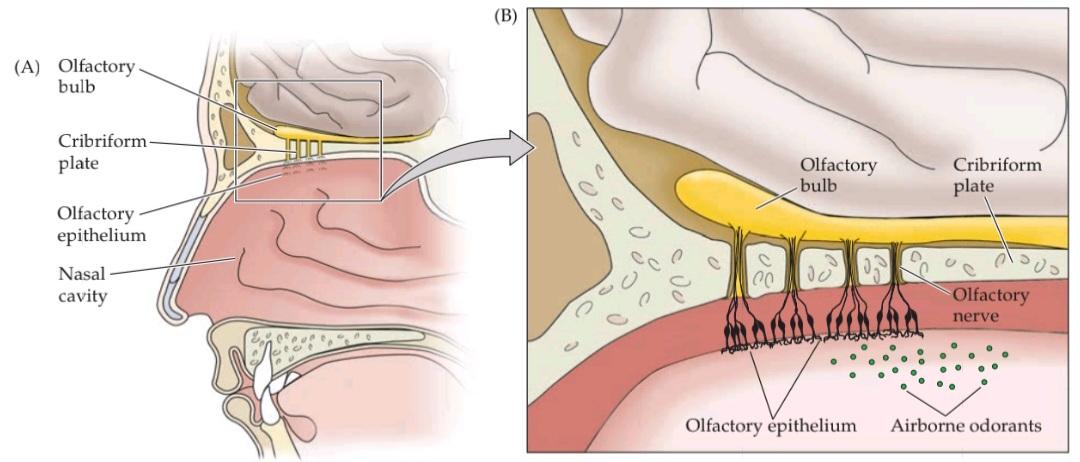
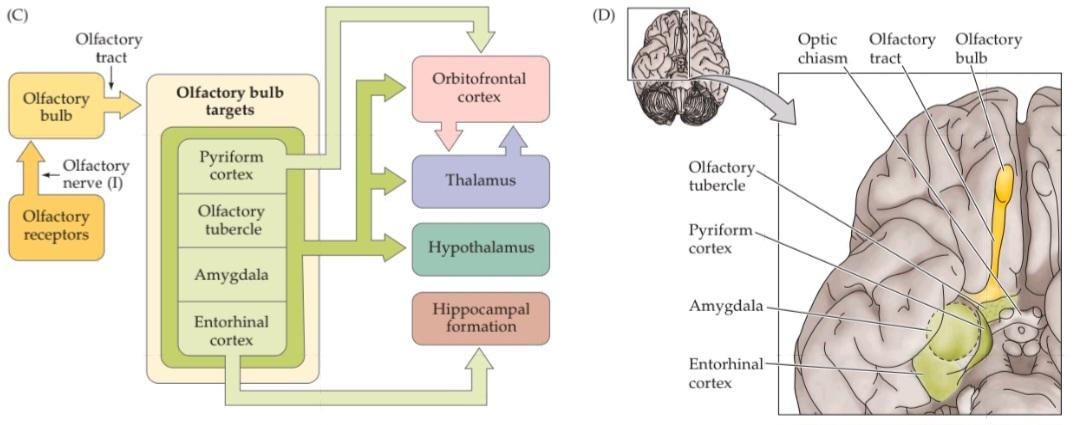

FIGURE 15.1 Organization of the human olfactory system. (A) Peripheral and central components of the primary olfactory pathway. (B) Enlargement of region boxed in (A), showing the relationship between the olfactory epithelium (which contains the ORNS) and the olfactory bulb (the central target of ORNS). (C) The basic pathways for processing olfactory information. (D) Central components and basic connections of the olfactory system. (E) Functional MRI images of coronal sections through the human brain at the level of (1) the orbitofrontal cortex, (2) the pyriform cortex and olfactory bulbs, and (3) the amygdala. Maximum focal activation in response to odor presentation (in this case correlated either with pleasantness [1] or intensity [2,3]), is seen in the orbitofrontal and pyriform cortices as well as in the amygdala. (E from Rolls et al., 2003.)
شکل ۱۵.۱ سازماندهی سیستم بویایی انسان. (الف) اجزای محیطی و مرکزی مسیر بویایی اولیه. (ب) بزرگ شدن ناحیه مشخص شده در کادر (الف)، که رابطه بین اپیتلیوم بویایی (که شامل ORNS است) و پیاز بویایی (هدف مرکزی ORNS) را نشان میدهد. (ج) مسیرهای اساسی برای پردازش اطلاعات بویایی. (د) اجزای مرکزی و اتصالات اساسی سیستم بویایی. (ه) تصاویر MRI عملکردی از مقاطع کرونالی مغز انسان در سطح (1) قشر اوربیتوفرونتال، (2) قشر پیریفورم و پیازهای بویایی، و (3) آمیگدال. حداکثر فعالسازی کانونی در پاسخ به ارائه بو (در این مورد با خوشایندی [1] یا شدت [2،3] مرتبط است)، در قشرهای اوربیتوفرونتال و پیریفورم و همچنین در آمیگدال مشاهده میشود. (ای از رولز و همکاران، ۲۰۰۳.)
The olfactory system is unique among the sensory systems in that it does not include a thalamic relay from primary receptors en route to a cortical region that processes the sensory information. Instead, after synapses are made by axon terminals of olfactory receptor neurons onto projection neurons in the olfactory bulb, olfactory sensory information is relayed to and then processed in the pyriform cortex, a three-layered archicortex dedicated to olfaction and considered to be phylogenetically older than the six layered neocortex. Although this initial pathway bypasses the thalamus, the thalamus does play an important role in subsequent stages of olfaction. Olfactory information from pyriform cortex is relayed to the thalamus en route to association areas in the neocortex, where further processing occurs (see Figure 15.1C). Together, the pyriform cortex and the multimodal sensory association areas of the neocortex are thought to be essential for the conscious appreciation of odorants as well as the association of odors with other sensory characteristics of environmental stimuli. The olfactory bulb relays information directly to several other targets in addition to the pyriform cortex, including the hypothalamus and amygdala (see Figure 15.1C,D). The neural computations that occur in these regions influence motor, visceral, and emotional reactions to chemosensory stimuli, particularly those relevant to feeding, reproduction, and aggression (Figure 15.1E).
سیستم بویایی در بین سیستمهای حسی منحصر به فرد است زیرا شامل یک رله تالاموس از گیرندههای اولیه در مسیر به ناحیه قشری که اطلاعات حسی را پردازش میکند، نیست. در عوض، پس از اینکه سیناپسها توسط پایانههای آکسون نورونهای گیرنده بویایی به نورونهای برونریزی در پیاز بویایی ساخته میشوند، اطلاعات حسی بویایی به قشر پیریفورم، یک قشر سه لایه که به بویایی اختصاص دارد و از نظر فیلوژنتیکی قدیمیتر از نئوکورتکس شش لایه در نظر گرفته میشود، منتقل و سپس در آن پردازش میشوند. اگرچه این مسیر اولیه از تالاموس عبور میکند، اما تالاموس نقش مهمی در مراحل بعدی بویایی ایفا میکند. اطلاعات بویایی از قشر پیریفورم به تالاموس در مسیر به نواحی ارتباطی در نئوکورتکس منتقل میشود، جایی که پردازش بیشتر رخ میدهد (شکل 15.1C را ببینید). تصور میشود که قشر پیریفورم و نواحی ارتباطی حسی چندوجهی نئوکورتکس با هم برای درک آگاهانه بوها و همچنین ارتباط بوها با سایر ویژگیهای حسی محرکهای محیطی ضروری هستند. پیاز بویایی علاوه بر قشر پیریفورم، اطلاعات را مستقیماً به چندین هدف دیگر، از جمله هیپوتالاموس و آمیگدال، منتقل میکند (شکل 15.1C، D را ببینید). محاسبات عصبی که در این مناطق رخ میدهد، بر واکنشهای حرکتی، احشایی و عاطفی به محرکهای شیمیایی-حسی، به ویژه آنهایی که مربوط به تغذیه، تولید مثل و پرخاشگری هستند، تأثیر میگذارد (شکل 15.1E).
Despite its phylogenetic age and the unusual trajectory of olfactory information to the neocortex, the olfactory system abides by the same principle that governs other sensory modalities: Sensory stimuli in this case, airborne chemicals-interact with receptors at the periphery and are transduced and encoded into electrical signals, which are relayed via synaptic transmission to higher order centers. Unlike other sensory systems, very little is known about the neural representation of olfactory information in the central nervous system. For example, the somatosensory and visual cortices described in the preceding chapters feature topographic maps of the relevant receptor surface, and the auditory cortex features a computational map of frequencies. Whether analogous maps exist in the pyriform cortex (or the olfactory bulb) is not yet known. Indeed, until recently it was difficult to imagine how sensory qualities might be represented in an orderly olfactory map (e.g., odor identity, intensity, or behavioral significance), or what features of chemosensory stimuli might be processed in parallel (as occurs in other sensory systems).
علیرغم قدمت فیلوژنتیکی و مسیر غیرمعمول اطلاعات بویایی به نئوکورتکس، سیستم بویایی از همان اصلی پیروی میکند که بر سایر روشهای حسی حاکم است: محرکهای حسی – در این مورد، مواد شیمیایی موجود در هوا – با گیرندههای محیطی تعامل دارند و به سیگنالهای الکتریکی تبدیل و رمزگذاری میشوند که از طریق انتقال سیناپسی به مراکز مرتبه بالاتر منتقل میشوند. برخلاف سایر سیستمهای حسی، اطلاعات بسیار کمی در مورد نمایش عصبی اطلاعات بویایی در سیستم عصبی مرکزی وجود دارد. به عنوان مثال، قشرهای حسی-پیکری و بینایی که در فصلهای قبل توضیح داده شدهاند، نقشههای توپوگرافی سطح گیرنده مربوطه را نشان میدهند و قشر شنوایی دارای یک نقشه محاسباتی از فرکانسها است. اینکه آیا نقشههای مشابهی در قشر پیریفورم (یا پیاز بویایی) وجود دارد یا خیر، هنوز مشخص نیست. در واقع، تا همین اواخر تصور اینکه چگونه میتوان ویژگیهای حسی را در یک نقشه بویایی منظم نمایش داد (مثلاً هویت بو، شدت یا اهمیت رفتاری) یا اینکه چه ویژگیهایی از محرکهای شیمیایی-حسی ممکن است به صورت موازی پردازش شوند (همانطور که در سایر سیستمهای حسی رخ میدهد) دشوار بود.
Olfactory Perception in Humans
In humans, olfaction is often considered the least acute of the senses, and many animals obviously possess far superior olfactory abilities. The greater chemosensory sophistication of such animals may be explained by increased numbers of olfactory receptor neurons and odorant receptor proteins in an expanded olfactory epithelium, as well as by a relatively larger portion of the forebrain devoted to olfaction (Figure 15.2). In a 70-kg human, the surface area of the olfactory epithelium is approximately 10 cm2; in contrast, in a rat it is 15 cm2, in a 3-kg cat it is about 20 cm2, in dogs it is 150 to 170 cm2, and in bloodhounds bred for their increased olfactory sensitivity it increases to 380 cm2.
ادراک بویایی در انسان
در انسان، بویایی اغلب به عنوان کمحواسترین حس در نظر گرفته میشود و بسیاری از حیوانات آشکارا از تواناییهای بویایی بسیار بالاتری برخوردارند. پیچیدگی بیشتر حس شیمیایی چنین حیواناتی را میتوان با افزایش تعداد نورونهای گیرنده بویایی و پروتئینهای گیرنده بو در یک اپیتلیوم بویایی گسترشیافته، و همچنین با اختصاص بخش نسبتاً بزرگتری از مغز پیشین به بویایی توضیح داد (شکل ۱۵.۲). در یک انسان ۷۰ کیلوگرمی، مساحت سطح اپیتلیوم بویایی تقریباً ۱۰ سانتیمتر مربع است؛ در مقابل، در یک موش صحرایی ۱۵ سانتیمتر مربع، در یک گربه ۳ کیلوگرمی حدود ۲۰ سانتیمتر مربع، در سگها ۱۵۰ تا ۱۷۰ سانتیمتر مربع و در سگهای شکاری خونگی که به دلیل افزایش حساسیت بویایی پرورش داده میشوند، به ۳۸۰ سانتیمتر مربع افزایش مییابد.


FIGURE 15.2 Odorant perception in mammals. (A) Comparison of the surface area (bars) of the olfactory epithelium and the number of ORNS in a human, a rat, a “typical” dog, and a bloodhound (bred for maximum olfactory discrimination). (B) Proportional sizes of the olfactory bulb in rat and human brains; the bulbs comprise relatively more of the fore- brain in rats than they do in humans. (A, data from Shier et al., 2004.)
شکل ۱۵.۲ ادراک بو در پستانداران. (الف) مقایسه مساحت سطح (میلهها) اپیتلیوم بویایی و تعداد ORNS در انسان، موش صحرایی، سگ «معمولی» و سگ بلاد هاند (که برای حداکثر تمایز بویایی پرورش داده شده است). (ب) اندازههای متناسب پیاز بویایی در مغز موش صحرایی و انسان؛ پیازهای بویایی در موشها نسبت به انسان، بخش نسبتاً بیشتری از مغز پیشین را تشکیل میدهند. (الف، دادههای Shier و همکاران، ۲۰۰۴.)

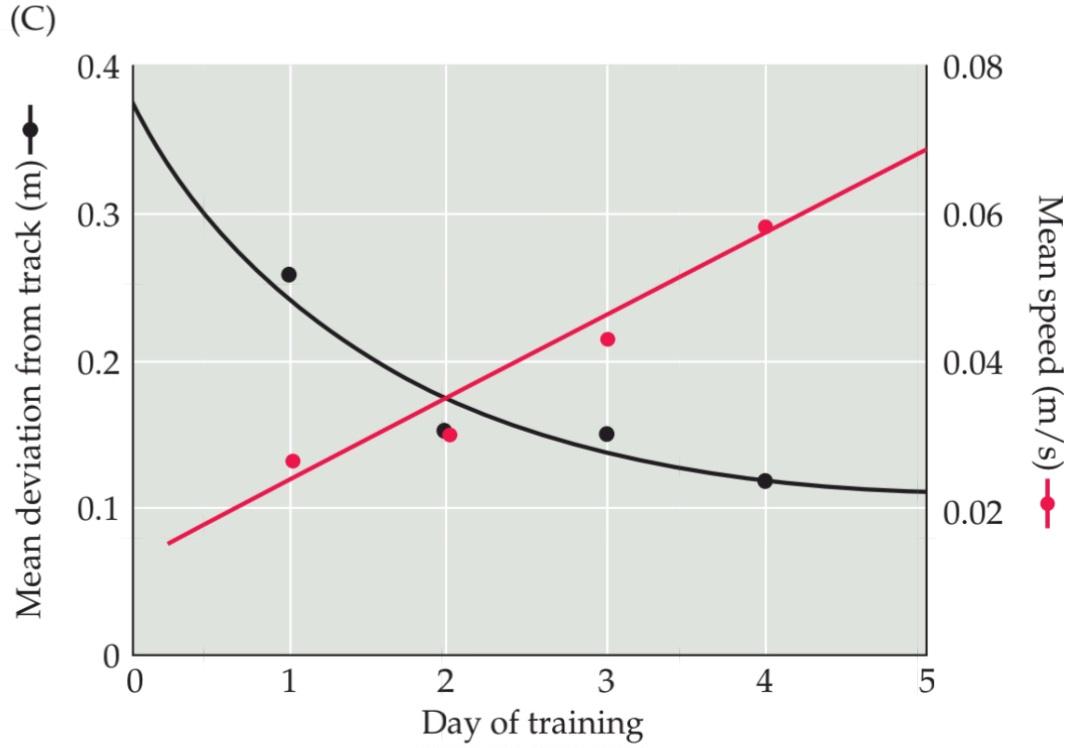
FIGURE 15.3 Humans can track scents at low concentrations over long distances. (A) The yellow line indicates the scent trail established by dragging a pheasant through a field (the pheasant, immobilized, is seen at the bottom of the picture). The red line indicates the path of a pointer tracking the scent. The dog’s tracking includes several orthogonal digressions, which are common when a new scent is present at relatively low concentrations in a complex odor environment. (B) The yellow line shows a scent trail established with chocolate essential oil; the red line indicates the trail of a human tracking the scent. Like the dog, the human makes orthogonal digressions. (C) Learning curves for human scent tracking. Over a short training period, humans can acquire great- er skill and accuracy tracking a scent at low concentrations (black trace). This improvement indicates that the olfactory system has the capacity for enhanced performance, perhaps by increased sensitivity to a learned signal over back ground ‘odor noise.” Humans also acquire greater speed in tracking scents at low concentration over a small number of trials (red trace). Apparently, olfactory sensation, like other sensory modalities, can be used in complex tasks in which performance speed as well as accuracy can be enhanced by repetition. (After Porter et al., 2007.)
شکل ۱۵.۳ انسانها میتوانند بوها را در غلظتهای پایین و در فواصل طولانی ردیابی کنند. (الف) خط زرد نشان دهندهی رد بویی است که با کشیدن یک قرقاول در یک مزرعه ایجاد شده است (قرقاول، بیحرکت، در پایین تصویر دیده میشود). خط قرمز نشان دهندهی مسیر یک نشانگر است که بو را ردیابی میکند. ردیابی سگ شامل چندین انحراف متعامد است که زمانی که یک بوی جدید در غلظتهای نسبتاً کم در یک محیط بویایی پیچیده وجود دارد، رایج است. (ب) خط زرد نشان دهندهی یک رد بویی است که با روغن اسانس شکلات ایجاد شده است؛ خط قرمز نشان دهندهی رد یک انسان است که بو را ردیابی میکند. انسان نیز مانند سگ، انحرافهای متعامد ایجاد میکند. (ج) منحنیهای یادگیری برای ردیابی بوی انسان. در طول یک دوره آموزشی کوتاه، انسانها میتوانند مهارت و دقت بیشتری در ردیابی یک بو در غلظتهای پایین (رد سیاه) کسب کنند. این بهبود نشان میدهد که سیستم بویایی ظرفیت افزایش عملکرد را دارد، شاید با افزایش حساسیت به یک سیگنال آموخته شده نسبت به «نویز بو»ی پسزمینه. انسانها همچنین در تعداد کمی از آزمایشها، سرعت بیشتری در ردیابی بوها در غلظت کم به دست میآورند (رد قرمز). ظاهراً، حس بویایی، مانند سایر روشهای حسی، میتواند در کارهای پیچیدهای مورد استفاده قرار گیرد که در آنها سرعت عملکرد و همچنین دقت با تکرار افزایش مییابد. (After Porter et al., 2007.)
With such a quantitative disadvantage, the human nose seems ill suited for certain tasks, such as following a scent to a specific target, that are second nature to a cat or dog.
با چنین نقص کمی، به نظر میرسد بینی انسان برای انجام وظایف خاصی، مانند دنبال کردن یک بو تا رسیدن به یک هدف خاص، که برای گربه یا سگ امری ذاتی است، مناسب نیست.
Nevertheless, humans can, when challenged, use their somewhat modest olfactory endowment to “sniff out” a scent trail. Moreover, we seem to use scent tracking strategies that are similar to those of our more olfactorally gifted counterparts: We pursue a tracking path that constantly bisects the linear scent trail (Figure 15.3A,B); we sniff frequently; our sniffing increases as scent tracking is learned; and our performance improves with practice (Figure 15.3C). Thus, although humans do not rely on olfaction as a major source of information, the human olfactory system has the capacity to use chemosensory information to track targets and locate items of interest in space.
با این وجود، انسانها میتوانند، در صورت مواجهه با چالش، از استعداد بویایی نسبتاً کم خود برای “بو کشیدن” یک مسیر بو استفاده کنند. علاوه بر این، به نظر میرسد ما از استراتژیهای ردیابی بو استفاده میکنیم که مشابه استراتژیهای همتایان با استعداد بویایی بیشتر ما است: ما یک مسیر ردیابی را دنبال میکنیم که دائماً مسیر بوی خطی را به دو قسمت تقسیم میکند (شکل 15.3A، B)؛ ما مرتباً بو میکشیم؛ با یادگیری ردیابی بو، بو کشیدن ما افزایش مییابد؛ و عملکرد ما با تمرین بهبود مییابد (شکل 15.3C). بنابراین، اگرچه انسانها به بویایی به عنوان منبع اصلی اطلاعات تکیه نمیکنند، سیستم بویایی انسان ظرفیت استفاده از اطلاعات شیمیایی-حسی را برای ردیابی اهداف و یافتن موارد مورد علاقه در فضا دارد.
Humans are also quite good at detecting and identifying individual airborne odorants with a wide range of aesthetic (unpleasant/pleasant) and behavioral (irritant/ attractant) significance. Ozone (the smell that accompanies lightning and electrical arcing) becomes an irritant above relatively low concentrations. The human olfactory system can detect ozone reliably at approximately 10 molecules per billion in room air. Similarly, humans can identify D limonene, the major element of citrus smells, fairly reliably at 15 molecules per billion in room air (Figure 15.4A). Other molecules are detected only at much higher concentrations. For example, some estimates place human sensitivity to the odor of ethanol at 2000 molecules per billion.
انسانها همچنین در تشخیص و شناسایی بوهای منفرد موجود در هوا با طیف وسیعی از اهمیت زیباییشناختی (ناخوشایند/دلپذیر) و رفتاری (محرک/جذبکننده) بسیار خوب هستند. ازن (بوی همراه رعد و برق و قوس الکتریکی) در غلظتهای بالاتر از حد متوسط، به یک ماده محرک تبدیل میشود. سیستم بویایی انسان میتواند ازن را تقریباً در غلظت 10 مولکول در هر میلیارد در هوای اتاق به طور قابل اعتمادی تشخیص دهد. به طور مشابه، انسانها میتوانند D لیمونن، عنصر اصلی بوی مرکبات، را به طور نسبتاً قابل اعتمادی در غلظت 15 مولکول در هر میلیارد در هوای اتاق شناسایی کنند (شکل 15.4A). سایر مولکولها فقط در غلظتهای بسیار بالاتر تشخیص داده میشوند. به عنوان مثال، برخی تخمینها حساسیت انسان به بوی اتانول را 2000 مولکول در هر میلیارد قرار میدهند.
A further complication in rationalizing the perception of odors is that their quality may change with odorant concentration. For example, at low concentrations the molecule indole has a “floral” odor, whereas at higher concentrations it smells “putrid” (Figure 15.4B). The human olfactory system is also capable of making perceptual distinctions based on small changes in molecular structure; for example, the molecule D-carvone smells like spearmint, whereas Lcarvone smells like the caraway seeds found in rye bread (Figure 15.4C).
یک پیچیدگی دیگر در توجیه درک بوها این است که کیفیت آنها ممکن است با غلظت بو تغییر کند. به عنوان مثال، در غلظتهای پایین، مولکول ایندول بوی “گل” دارد، در حالی که در غلظتهای بالاتر بوی “متعفن” میدهد (شکل 15.4B). سیستم بویایی انسان همچنین قادر به ایجاد تمایزات ادراکی بر اساس تغییرات کوچک در ساختار مولکولی است؛ برای مثال، مولکول D-کاروون بوی نعناع میدهد، در حالی که Lکاروون بوی دانههای زیره سیاه موجود در نان چاودار را میدهد (شکل 15.4C).
There have been many attempts to classify odors into categories that parallel the division of the visible light spectrum into red, blue, and green (which correspond to the molecular specificity of photopigments in photoreceptors). Despite these efforts, there is no indication that any currently available arbitrary scheme reflects biologically significant categories of odorants. However, one of the most consistent aspects of olfactory perception is the classification of odors as either pleasant and attractive or unpleasant and repulsive. These basic properties of olfactory stimuli their “aesthetic” qualities (or lack thereof)- are apparently represented in distinct cortical regions that mediate olfactory perception (Figure 15.4D). This suggests that perceived aesthetic properties of odorants have distinct representations in the forebrain, including in distinct regions of the cerebral cortex. Most naturally occurring odors are blends of several odorant molecules, even though they are typically perceived as a single smell (such as the scent of a particular perfume or the bouquet of a wine). Thus, it remains to be determined whether animals “map” odors or their attractive or repellent qualities based on single perceptual attributes.
تلاشهای زیادی برای طبقهبندی بوها به دستههایی مشابه تقسیم طیف نور مرئی به قرمز، آبی و سبز (که با ویژگی مولکولی رنگدانههای نوری در گیرندههای نوری مطابقت دارند) صورت گرفته است. با وجود این تلاشها، هیچ نشانهای وجود ندارد که هیچ طرح دلخواهی که در حال حاضر موجود است، دستههای مهم بیولوژیکی بوها را منعکس کند. با این حال، یکی از ثابتترین جنبههای ادراک بویایی، طبقهبندی بوها به عنوان خوشایند و جذاب یا ناخوشایند و زننده است. این خواص اساسی محرکهای بویایی – یعنی کیفیتهای “زیباییشناختی” آنها (یا فقدان آنها) – ظاهراً در مناطق قشری متمایزی که واسطه ادراک بویایی هستند، نشان داده میشوند (شکل 15.4D). این نشان میدهد که خواص زیباییشناختی درک شده از بوها، نمایشهای متمایزی در مغز پیشین، از جمله در مناطق متمایز قشر مغز، دارند. اکثر بوهای طبیعی ترکیبی از چندین مولکول بو هستند، حتی اگر معمولاً به عنوان یک بوی واحد (مانند رایحه یک عطر خاص یا دسته شراب) درک شوند. بنابراین، هنوز مشخص نیست که آیا حیوانات بوها یا ویژگیهای جاذبه یا دافعه آنها را بر اساس ویژگیهای ادراکی واحد «نقشهبرداری» میکنند یا خیر.

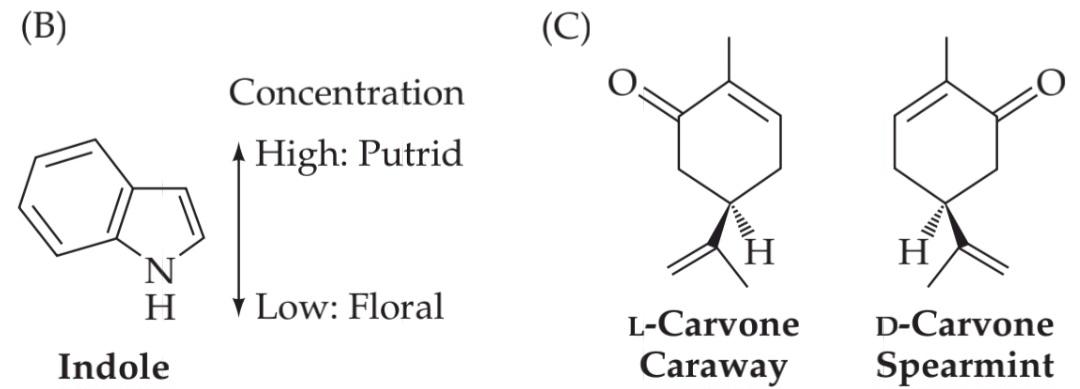

FIGURE 15.4 Human sensitivity to odors. (A) In a con- trolled setting where room air is presented in precise mixtures with single odors, the threshold for detection reflects the concentration at which a human correctly identifies the presence of the odor above chance (50%). Humans can detect ozone, a somewhat unpleasant odor, at approximately 10 parts per billion. The pleasant and nutritionally significant odor of D limonene can be identified at approximately 15 parts per billion. (B) Perception of the molecule indole is concentration dependent. At low concentrations, it is perceived as a pleasant floral smell. At high concentrations, the same molecule (which is produced by bacteria in decomposing organic material) is experienced as putrid. (C) The D and L enantiomers of carvone produce very different olfactory perceptions (spearmint versus caraway) when present at similar concentrations. (D) Functional MRI analysis in typical humans indicates that odorants perceived as “pleasant” versus “unpleasant” elicit maximum activity in distinct regions of the orbitofrontal (white oval) and cingulate (red ovals) cortex. (A, data from Cain et al., 2007; D from Rolls et al., 2003.)
شکل ۱۵.۴ حساسیت انسان به بوها. (الف) در یک محیط کنترلشده که هوای اتاق در مخلوطهای دقیقی با بوهای منفرد ارائه میشود، آستانه تشخیص، غلظتی را نشان میدهد که در آن انسان به درستی وجود بو را بالاتر از حد احتمال (۵۰٪) تشخیص میدهد. انسانها میتوانند ازن، که بویی تا حدودی ناخوشایند است، را تقریباً در ۱۰ قسمت در میلیارد تشخیص دهند. بوی دلپذیر و از نظر تغذیهای مهم D لیمونن را میتوان تقریباً در ۱۵ قسمت در میلیارد شناسایی کرد. (ب) درک مولکول ایندول وابسته به غلظت است. در غلظتهای پایین، آن را به عنوان بوی گل دلپذیر درک میکنند. در غلظتهای بالا، همان مولکول (که توسط باکتریها در تجزیه مواد آلی تولید میشود) به عنوان بوی متعفن تجربه میشود. (ج) انانتیومرهای D و L کاروون وقتی در غلظتهای مشابه وجود داشته باشند، ادراک بویایی بسیار متفاوتی (نعناع در مقابل زیره سیاه) ایجاد میکنند. (د) تجزیه و تحلیل MRI عملکردی در انسانهای معمولی نشان میدهد که بوهایی که به عنوان “خوشایند” در مقابل “ناخوشایند” درک میشوند، حداکثر فعالیت را در نواحی مشخصی از قشر اوربیتوفرونتال (بیضی سفید) و سینگولیت (بیضیهای قرمز) ایجاد میکنند. (الف، دادهها از کین و همکاران، ۲۰۰۷؛ د از رولز و همکاران، ۲۰۰۳.)
Assessing Olfactory Function in the Laboratory or Clinic
🚀 با ما همراه شوید!
تازهترین مطالب و آموزشهای مغز و اعصاب را از دست ندهید. با فالو کردن کانال تلگرام آیندهنگاران مغز، از ما حمایت کنید!