
عملکردهای سیستم عصبی رودهای؛ تفاوتهای بین سیستمهای سمپاتیک و پاراسمپاتیک


دعای مطالعه [ نمایش ]
بِسْمِ الله الرَّحْمنِ الرَّحیمِ
اَللّهُمَّ اَخْرِجْنى مِنْ ظُلُماتِ الْوَهْمِ
خدايا مرا بيرون آور از تاريكىهاى وهم،
وَ اَكْرِمْنى بِنُورِ الْفَهْمِ
و به نور فهم گرامى ام بدار،
اَللّهُمَّ افْتَحْ عَلَيْنا اَبْوابَ رَحْمَتِكَ
خدايا درهاى رحمتت را به روى ما بگشا،
وَانْشُرْ عَلَيْنا خَزائِنَ عُلُومِكَ بِرَحْمَتِكَ يا اَرْحَمَ الرّاحِمينَ
و خزانههاى علومت را بر ما باز كن به امید رحمتت اى مهربانترين مهربانان.
آیندهنگاران مغز: «ما مغز را میشناسیم، تا آینده را بسازیم.»
کتاب «نوروآناتومی بالینی اسنل» اثر دکتر ریچارد اس. اسنل، با ویرایش جدید دکتر رایان اسپلیتگربر، همچنان بهعنوان مرجع طلایی این حوزه شناخته میشود. این اثر با تلفیق تازهترین پژوهشها و کاربردهای بالینی، پلی استوار میان دانش پایه و عمل پزشکی بنا میکند.
تلاشهای علمی و سالها تدریس ارزشمند استاد گرانقدر آقای دکتر محمدتقی جغتایی الهامبخش ترجمه و گسترش این دانش در ایران بوده است.
ترجمه دقیق این کتاب توسط برند علمی آیندهنگاران مغز به مدیریت داریوش طاهری، امکان دسترسی فارسیزبانان به مرزهای نوین علوم اعصاب را فراهم کرده و رسالتی علمی در جهت شناخت عمیقتر مغز و ترسیم آیندهای روشنتر بر عهده گرفته است.
»» فصل ۱۴: سیستم عصبی خودکار؛ بخش مبانی و اصول
»» Chapter 14: Autonomic Nervous System
ENTERIC NERVOUS SYSTEM
Two important plexuses of nerve cells and fibers extend continuously along and around the length of the gastrointestinal tract from the esophagus to the anal canal. The submucous or Meissner plexus lies between the mucous membrane and the circular muscle layer, and the myenteric or Auerbach plexus lies between the circular and longitudinal muscle layers. The submucous plexus is mainly concerned with the control of the glands of the mucous membrane, whereas the myenteric plexus controls the muscle and movements of the gut wall.
سیستم عصبی رودهای
دو شبکه مهم از سلولها و فیبرهای عصبی به طور مداوم در امتداد و اطراف طول دستگاه گوارش از مری تا کانال مقعدی امتداد دارند. شبکه زیر مخاطی یا مایسنر بین غشای مخاطی و لایه عضله حلقوی قرار دارد و شبکه میانتریک یا آورباخ بین لایههای عضله حلقوی و طولی قرار دارد. شبکه زیر مخاطی عمدتاً با کنترل غدد غشای مخاطی سروکار دارد، در حالی که شبکه میانتریک عضلات و حرکات دیواره روده را کنترل میکند.
Different types of neurons have been recognized in the plexuses. Some neurons are bipolar or unipolar and are thought to be sensory and involved in local reflex activity; other neurons send axons to the celiac and mesenteric plexuses. Preganglionic parasympathetic fibers synapse on nerve cells that give rise to postganglionic fibers that innervate the smooth muscle and glands. Postganglionic sympathetic fibers have been seen to terminate on parasympathetic nerve cells and probably exert an inhibitory role in parasympathetic activity. Internuncial neurons are also present. Interestingly, the nerve cells and their processes are surrounded by neuroglialike cells that closely resemble astrocytes in the CNS. It has been suggested that while the enteric plexuses can coordinate the activities of the gut wall, the parasympathetic and sympathetic inputs modulate these activities.
انواع مختلفی از نورونها در این شبکهها شناسایی شدهاند. برخی از نورونها دو قطبی یا تک قطبی هستند و تصور میشود که حسی هستند و در فعالیت رفلکس موضعی نقش دارند. سایر نورونها آکسونها را به شبکههای سلیاک و مزانتریک میفرستند. فیبرهای پاراسمپاتیک پیش عقدهای روی سلولهای عصبی سیناپس میکنند که باعث ایجاد فیبرهای پس عقدهای میشوند که عضله صاف و غدد را عصبدهی میکنند. مشاهده شده است که فیبرهای سمپاتیک پسگانگلیونی به سلولهای عصبی پاراسمپاتیک ختم میشوند و احتمالاً نقش مهاری در فعالیت پاراسمپاتیک دارند. نورونهای بینحلقهای نیز وجود دارند. جالب توجه است که سلولهای عصبی و زوائد آنها توسط سلولهای نوروگلیا مانندی احاطه شدهاند که شباهت زیادی به آستروسیتها در سیستم عصبی مرکزی دارند. پیشنهاد شده است که در حالی که شبکههای رودهای میتوانند فعالیتهای دیواره روده را هماهنگ کنند، ورودیهای پاراسمپاتیک و سمپاتیک این فعالیتها را تعدیل میکنند.
FUNCTIONS
The ANS, along with the endocrine system, maintains body homeostasis. The endocrine control is slower and exerts its influence by means of blood-borne hormones.
عملکردها
سیستم عصبی خودکار (ANS) به همراه سیستم غدد درون ریز، هموستاز بدن را حفظ میکند. کنترل غدد درون ریز کندتر است و تأثیر خود را از طریق هورمونهای منتقل شده از خون اعمال میکند.
The ANS functions for the most part at the subconscious level. We are not aware, for example, that our pupils are dilating or that our arteries are constricting. The system should not be regarded as an isolated portion of the nervous system; it can play a role with somatic activity in expressing emotion and certain autonomic activities, such as micturition, can be brought under voluntary control. The various activities of the autonomic and endocrine systems are integrated within the hypothalamus.
سیستم عصبی خودکار (ANS) عمدتاً در سطح ناخودآگاه عمل میکند. به عنوان مثال، ما از گشاد شدن مردمک چشم یا انقباض شریانهایمان آگاه نیستیم. این سیستم نباید به عنوان بخشی جدا از سیستم عصبی در نظر گرفته شود؛ میتواند در فعالیتهای بدنی در ابراز احساسات نقش داشته باشد و برخی از فعالیتهای خودکار، مانند ادرار کردن، میتوانند تحت کنترل ارادی قرار گیرند. فعالیتهای مختلف سیستمهای خودکار و غدد درون ریز در هیپوتالاموس ادغام شدهاند.
The sympathetic and parasympathetic components of the ANS cooperate in maintaining the stability of the internal environment. The sympathetic part prepares and mobilizes the body in an emergency when sudden severe exercise, fear, or rage occurs. The parasympathetic part aims at conserving and storing energy, for example, in the promotion of digestion and the absorption of food by increasing the secretions of the glands of the gastrointestinal tract and stimulating peristalsis.
اجزای سمپاتیک و پاراسمپاتیک ANS در حفظ ثبات محیط داخلی بدن با هم همکاری میکنند. بخش سمپاتیک بدن را در مواقع اضطراری، هنگام ورزش شدید ناگهانی، ترس یا خشم، آماده و بسیج میکند. بخش پاراسمپاتیک با هدف حفظ و ذخیره انرژی، به عنوان مثال، در تقویت هضم و جذب غذا با افزایش ترشحات غدد دستگاه گوارش و تحریک حرکات دودی روده عمل میکند.
The sympathetic and parasympathetic parts of the ANS usually have antagonistic control over a viscus. For example, the sympathetic activity will increase the heart rate, whereas the parasympathetic activity will slow the heart rate. The sympathetic activity will make the bronchial smooth muscle relax, but the muscle is contracted by parasympathetic activity.
بخشهای سمپاتیک و پاراسمپاتیک ANS معمولاً کنترل متضادی بر روی احشاء دارند. به عنوان مثال، فعالیت سمپاتیک ضربان قلب را افزایش میدهد، در حالی که فعالیت پاراسمپاتیک ضربان قلب را کاهش میدهد. فعالیت سمپاتیک باعث شل شدن عضله صاف برونش میشود، اما عضله توسط فعالیت پاراسمپاتیک منقبض میشود.
However, many viscera do not possess this fine dual control from the ANS. For example, the smooth muscle of the hair follicles (the arrector pili muscle) is made to contract by the sympathetic activity without parasym- pathetic control.
با این حال، بسیاری از احشاء این کنترل دوگانه دقیق از ANS را ندارند. به عنوان مثال، عضله صاف فولیکولهای مو (عضله راست کننده مو) توسط فعالیت سمپاتیک و بدون کنترل پاراسمپاتیک منقبض میشود.
The activities of some viscera are kept under a constant state of inhibition by one or the other components of the ANS. The heart in a trained athlete is maintained at a slow rate by the activities of the parasympathetic system. This is of considerable importance because the heart is a more efficient pump when contracting slowly than when contracting very quickly, thus permitting adequate diastolic filling of the ventricles.
فعالیت برخی از احشاء توسط یکی از اجزای ANS در حالت مهار مداوم نگه داشته میشود. قلب در یک ورزشکار آموزش دیده توسط فعالیتهای سیستم پاراسمپاتیک با سرعت آهسته حفظ میشود. این امر از اهمیت قابل توجهی برخوردار است زیرا قلب هنگام انقباض آهسته، پمپ کارآمدتری نسبت به انقباض بسیار سریع است و در نتیجه امکان پر شدن دیاستولیک کافی بطنها را فراهم میکند.
DIFFERENCES BETWEEN SYMPATHETIC AND PARASYMPATHETIC SYSTEMS
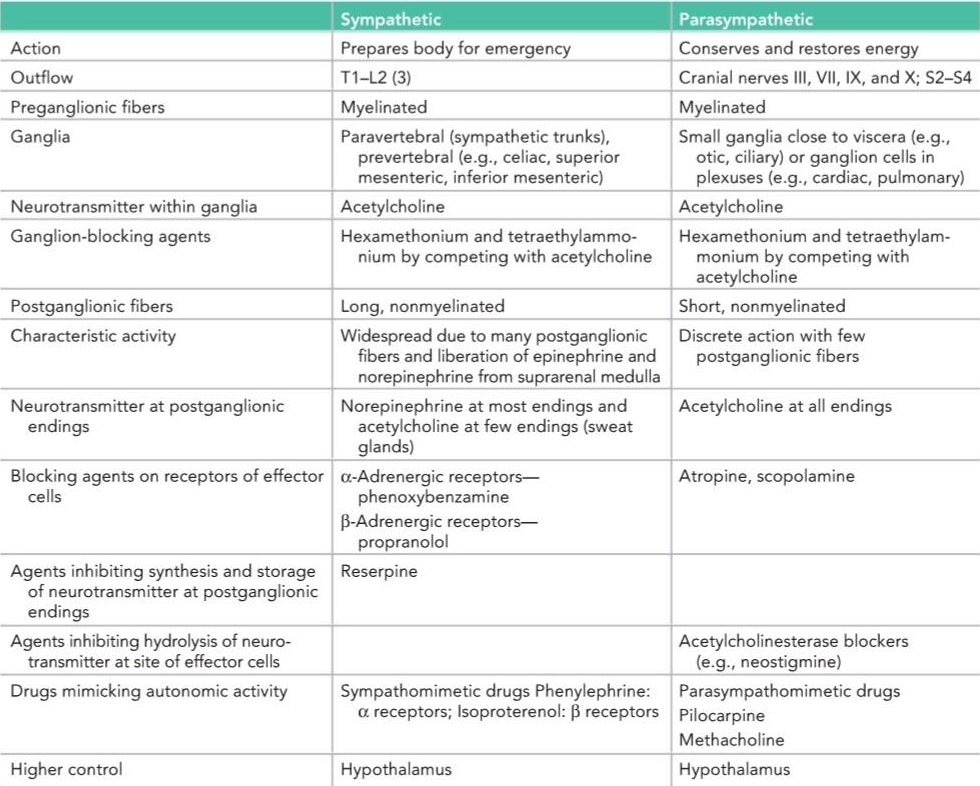
Important anatomic, physiologic, and pharmacologic differences between the sympathetic and parasympathetic parts of the ANS are shown in Table 14-1.
تفاوتهای بین سیستمهای سمپاتیک و پاراسمپاتیک
تفاوتهای مهم آناتومیکی، فیزیولوژیکی و دارویی بین بخشهای سمپاتیک و پاراسمپاتیک ANS در جدول 14-1 نشان داده شده است.
1. The sympathetic efferent nerve fibers originate (see Fig. 14-2) from nerve cells in the lateral gray column of the spinal cord between the first thoracic and second lumbar segments (the thoracic outflow). The para- sympathetic efferent nerve fibers originate from nerve cells in the 3rd, 7th, 9th, and 10th cranial nerves and in the gray matter of the 2nd, 3rd, and 4th sacral segments of the cord (the craniosacral outflow).
۱. رشتههای عصبی وابران سمپاتیک (شکل ۱۴-۲ را ببینید) از سلولهای عصبی در ستون خاکستری جانبی نخاع بین اولین بخش سینهای و دومین بخش کمری (خروجی سینهای) منشأ میگیرند. رشتههای عصبی وابران پاراسمپاتیک از سلولهای عصبی در اعصاب جمجمهای سوم، هفتم، نهم و دهم و در ماده خاکستری بخشهای خاجی دوم، سوم و چهارم نخاع (خروجی جمجمهای-خاجی) منشأ میگیرند.
2. The sympathetic ganglia are located either in the paravertebral sympathetic trunks or in the prevertebral ganglia, such as the celiac ganglion. The parasympathetic ganglion cells are located as small ganglia close to the viscera or within plexuses within the viscera.
۲. گانگلیونهای سمپاتیک یا در تنههای سمپاتیک پاراورتبرال یا در گانگلیونهای پیشمهرهای، مانند گانگلیون سلیاک، قرار دارند. سلولهای گانگلیون پاراسمپاتیک به صورت گانگلیونهای کوچک نزدیک به احشاء یا درون شبکههای عصبی درون احشاء قرار دارند.
3. The sympathetic part of the autonomic system has long postganglionic fibers, whereas the parasympathetic system has short fibers (see Fig. 14-5).
۳. بخش سمپاتیک سیستم اتونومیک دارای فیبرهای پسگانگلیونی بلند است، در حالی که سیستم پاراسمپاتیک دارای فیبرهای کوتاه است (شکل ۱۴-۵ را ببینید).
4. The sympathetic part of the system has a widespread action on the body as the result of the preganglionic fibers synapsing on many postganglionic neurons and the suprarenal medulla releasing the sympathetic transmitters epinephrine and norepinephrine, which are distributed throughout the body through the bloodstream. The parasympathetic part of the autonomic system has a more discrete control, since the preganglionic fibers synapse on only a few postganglionic neurons with no comparable organ to the suprarenal medulla.
۴. بخش سمپاتیک سیستم، در نتیجه سیناپس فیبرهای پیشگانگلیونی با بسیاری از نورونهای پسگانگلیونی و آزادسازی ترنسمیترهای سمپاتیک اپینفرین و نوراپی نفرین توسط مدولای فوق کلیوی، که از طریق جریان خون در سراسر بدن توزیع میشوند، عملکرد گستردهای در بدن دارد. بخش پاراسمپاتیک سیستم اتونومیک کنترل گسستهتری دارد، زیرا فیبرهای پیشگانگلیونی تنها با تعداد کمی از نورونهای پسگانگلیونی سیناپس میکنند و هیچ اندام قابل مقایسهای با مدولای فوق کلیوی ندارند.
5. The sympathetic postganglionic endings liberate norepinephrine at most endings and ACh at a few endings (e.g., sweat glands). The parasympathetic postganglionic endings liberate ACh.
۵. انتهای پسگانگلیونی سمپاتیک در اکثر پایانهها نوراپی نفرین و در تعداد کمی از پایانهها (مثلاً غدد عرق) استیلکولین آزاد میکند. انتهای پسگانگلیونی پاراسمپاتیک استیلکولین آزاد میکند.
6. The sympathetic part of the autonomic system prepares the body for emergencies and severe muscular activity, whereas the parasympathetic part conserves and stores energy.
۶. بخش سمپاتیک سیستم اتونوم بدن را برای موارد اضطراری و فعالیت شدید عضلانی آماده میکند، در حالی که بخش پاراسمپاتیک انرژی را ذخیره و نگهداری میکند.
To assist with the learning of the different actions of these two components of the autonomic system, imagine that sympathetic activity would be maximal in a man who finds himself suddenly alone in a field with a bull that is about to charge. His hair will stand on end with fear; his skin will be pale as the result of vasoconstriction, which causes a redistribution of blood away from the skin and viscera to the heart muscle and skeletal muscle. His upper eyelids will be raised and his pupils will be widely dilated so that he can see where to run. His heart rate will rise and the peripheral resistance of the arterioles will be increased, causing a rise in blood pressure. His bronchi will dilate to permit maximum respiratory flow of air. His peristaltic activity will be inhibited and his gut sphincters will be contracted. His vesical sphincter will also be contracted (this is certainly not the time to be thinking of defecation or micturition). Glycogen will be converted into glucose for energy and he will sweat to lose body heat.
برای کمک به یادگیری عملکردهای مختلف این دو جزء سیستم خودکار، تصور کنید که فعالیت سمپاتیک در مردی که ناگهان خود را در مزرعهای با گاو نری که در شرف حمله است، تنها مییابد، به حداکثر میرسد. موهای او از ترس سیخ میشود؛ پوستش در نتیجه انقباض عروق، که باعث توزیع مجدد خون از پوست و احشاء به عضله قلب و عضله اسکلتی میشود، رنگپریده میشود. پلکهای بالایی او بالا میرود و مردمکهایش به طور گسترده گشاد میشوند تا بتواند ببیند به کجا باید فرار کند. ضربان قلب او افزایش مییابد و مقاومت محیطی شریانها افزایش مییابد و باعث افزایش فشار خون میشود. برونشهای او گشاد میشوند تا حداکثر جریان تنفسی هوا را فراهم کنند. فعالیت پریستالتیک او مهار میشود و اسفنکترهای روده او منقبض میشوند. اسفنکتر مثانه او نیز منقبض میشود (مطمئناً این زمان مناسبی برای فکر کردن به دفع مدفوع یا ادرار نیست). گلیکوژن برای تولید انرژی به گلوکز تبدیل میشود و او برای از دست دادن گرمای بدن عرق میکند.
On the other hand, the parasympathetic activity will be great in a woman who has fallen asleep in an armchair after a satisfying meal. Her heart rate will be slow and her blood pressure will not be high. Her upper eyelids will droop or be closed and her pupils will be constricted. Her breathing will be noisy owing to bronchial constriction. Her abdomen may rumble owing to excessive peristaltic activity. She may feel the inclination to defecate or micturate.
از سوی دیگر، فعالیت پاراسمپاتیک در زنی که پس از یک وعده غذایی دلچسب روی صندلی راحتی به خواب رفته است، بسیار زیاد خواهد بود. ضربان قلب او کند و فشار خونش بالا نخواهد بود. پلکهای بالایی او افتاده یا بسته میشوند و مردمکهایش منقبض میشوند. تنفس او به دلیل انقباض برونشها پر سر و صدا خواهد بود. شکم او ممکن است به دلیل فعالیت بیش از حد پریستالتیک، قار و قور کند. او ممکن است تمایل به دفع مدفوع یا ادرار کردن داشته باشد.
Table 14-1 Anatomic, Physiologic, and Pharmacologic Characteristics of Sympathetic Versus Parasympathetic Systems
جدول ۱۴-۱ ویژگیهای آناتومیک، فیزیولوژیکی و فارماکولوژیک سیستمهای سمپاتیک در مقابل پاراسمپاتیک
» ادامه در قسمت پنجم مبانی فصل ۱۴
«فصل چهاردهم کتاب نورواناتومی بالینی اسنل»
🚀 با ما همراه شوید!
تازهترین مطالب و آموزشهای مغز و اعصاب را از دست ندهید. با فالو کردن کانال تلگرام آیندهنگاران مغز، از ما حمایت کنید!