
فیزیولوژی پزشکی گایتون و هال؛ متابولیسم کربوهیدراتها و تشکیل آدنوزین تری فسفات


دعای مطالعه [ نمایش ]
بِسْمِ الله الرَّحْمنِ الرَّحیمِ
اَللّهُمَّ اَخْرِجْنى مِنْ ظُلُماتِ الْوَهْمِ
خدايا مرا بيرون آور از تاريكىهاى وهم،
وَ اَكْرِمْنى بِنُورِ الْفَهْمِ
و به نور فهم گرامى ام بدار،
اَللّهُمَّ افْتَحْ عَلَيْنا اَبْوابَ رَحْمَتِكَ
خدايا درهاى رحمتت را به روى ما بگشا،
وَانْشُرْ عَلَيْنا خَزائِنَ عُلُومِكَ بِرَحْمَتِكَ يا اَرْحَمَ الرّاحِمينَ
و خزانههاى علومت را بر ما باز كن به امید رحمتت اى مهربانترين مهربانان.
کتاب «فیزیولوژی پزشکی گایتون وهال» بهعنوان یکی از جامعترین و معتبرترین منابع در حوزه علوم پزشکی، همچنان مرجع کلیدی برای درک عملکرد پیچیده بدن انسان است. این اثر با تکیه بر تازهترین پژوهشها و توضیحات دقیق از سازوکارهای فیزیولوژیک، پلی میان علوم پایه پزشکی و کاربردهای بالینی ایجاد میکند و نقشی بیبدیل در آموزش، پژوهش و ارتقای دانش سلامت ایفا مینماید.
ترجمه دقیق و علمیاین شاهکار توسط برند علمیآیندهنگاران مغز به مدیریت داریوش طاهری، دسترسی فارسیزبانان به مرزهای نوین دانش فیزیولوژی را ممکن ساخته و رسالتی علمیبرای ارتقای آموزش پزشکی، فهم عمیقتر سازوکارهای بدن و توسعه روشهای نوین در حوزه سلامت فراهم آورده است.
» کتاب فیزیولوژی پزشکی گایتون وهال
» » فصل ۶۸: متابولیسم کربوهیدراتها و تشکیل آدنوزین تری فسفات
در حال ویرایش
» Guyton and Hall Textbook of Medical Physiology
»» CHAPTER 68: Metabolism of Carbohydrates and Formation of Adenosine Triphosphate

Metabolism of Carbohydrates and Formation of Adenosine Triphosphate
The next few chapters deal with metabolism in the body-the chemical processes that make it possible for the cells to continue living. It is not the purpose of this text to present the chemical details of all the various cellular reactions, which lie in the discipline of biochemistry. Instead, these chapters are devoted to (1) a review of the principal chemical processes of the cell and (2) an analysis of their physiological implications, especially the manner in which they fit into overall body homeostasis.
چند فصل بعدی به متابولیسم در بدن میپردازد – فرآیندهای شیمیایی که ادامه زندگی را برای سلولها ممکن میکند. هدف این متن ارائه جزئیات شیمیایی تمام واکنشهای سلولی مختلف، که در رشته بیوشیمینهفته است، نیست. در عوض، این فصول به (1) بررسی فرآیندهای شیمیایی اصلی سلول و (2) تجزیه و تحلیل پیامدهای فیزیولوژیکی آنها، به ویژه نحوه تناسب آنها با هموستاز کلی بدن اختصاص دارد.
Release of Energy From Foods and “Free Energy”
Many of the chemical reactions in the cells are aimed at making the energy in foods available to the various physiological systems of the cell. For example, energy is required for muscle activity, secretion by the glands, maintenance of membrane potentials by the nerve and muscle fibers, synthesis of substances in the cells, absorption of foods from the gastrointestinal tract, and many other functions.
آزادسازی انرژی از غذاها و “انرژی رایگان”
بسیاری از واکنشهای شیمیایی در سلولها با هدف در دسترس قرار دادن انرژی موجود در غذاها در اختیار سیستمهای مختلف فیزیولوژیکی سلول است. به عنوان مثال، انرژی برای فعالیت ماهیچهها، ترشح غدد، حفظ پتانسیلهای غشایی توسط فیبرهای عصبی و ماهیچهای، سنتز مواد در سلولها، جذب غذا از دستگاه گوارش و بسیاری از عملکردهای دیگر مورد نیاز است.
Coupled Reactions. All the energy foods-carbohydrates, fats, and proteins-can be oxidized in the cells, and during this process, large amounts of energy are released. These same foods can also be burned with pure oxygen outside the body in an actual fire, releasing large amounts of energy, but the energy is released suddenly, all in the form of heat. The energy needed by the physiologic processes of the cells is not heat but energy to cause mechanical movement in the case of muscle function, to concentrate solutes in the case of glandular secretion, and to effect many other cell functions. To provide this energy, the chemical reactions must be “coupled” with the systems responsible for these physiologic functions. This coupling is accomplished by special cellular enzymes and energy transfer systems, some of which are explained in this and subsequent chapters.
واکنشهای جفت شده. تمام مواد غذایی انرژی زا – کربوهیدراتها، چربیها و پروتئینها – میتوانند در سلولها اکسید شوند و در طی این فرآیند، مقادیر زیادی انرژی آزاد میشود. همین غذاها را میتوان با اکسیژن خالص در خارج از بدن در آتش سوزی کرد و مقادیر زیادی انرژی آزاد کرد، اما انرژی به طور ناگهانی آزاد میشود، همه به شکل گرما. انرژی مورد نیاز فرآیندهای فیزیولوژیکی سلولها گرما نیست، بلکه انرژی برای ایجاد حرکت مکانیکی در مورد عملکرد ماهیچهها، برای متمرکز کردن املاح در صورت ترشح غدهای و تأثیرگذاری بسیاری از عملکردهای سلولی دیگر است. برای تأمین این انرژی، واکنشهای شیمیایی باید با سیستمهای مسئول این عملکردهای فیزیولوژیکی «همراه» شوند. این جفت شدن توسط آنزیمهای سلولی خاص و سیستمهای انتقال انرژی انجام میشود که برخی از آنها در این فصل و فصلهای بعدی توضیح داده شده است.
“Free Energy.” The amount of energy liberated by complete oxidation of a food is called the free energy of food oxidation and is generally represented by the symbol AG. Free energy is usually expressed in terms of calories per mole of substance. For example, the amount of free energy liberated by complete oxidation of 1 mole (180 grams) of glucose is 686,000 calories.
“انرژی رایگان.” مقدار انرژی آزاد شده از اکسیداسیون کامل یک ماده غذایی را انرژی آزاد اکسیداسیون غذا میگویند و به طور کلی با نماد AG نشان داده میشود. انرژی آزاد معمولاً بر حسب کالری در هر مول ماده بیان میشود. به عنوان مثال، مقدار انرژی آزاد آزاد شده توسط اکسیداسیون کامل 1 مول (180 گرم) گلوکز 686000 کالری است.
Adenosine Triphosphate Is the “Energy Currency” of the Body
Adenosine triphosphate (ATP) is an essential link between energy-utilizing and energy-producing functions of the body (Figure 68-1). For this reason, ATP has been called the “energy currency” of the body, and it can be gained and spent repeatedly.
آدنوزین تری فسفات “ارز انرژی” بدن است
آدنوزین تری فسفات (ATP) یک پیوند ضروری بین عملکردهای مصرف انرژی و تولید انرژی بدن است (شکل 68-1). به همین دلیل ATP را «ارز انرژی» بدن نامیده اند و میتوان آن را به طور مکرر به دست آورد و خرج کرد.
Energy derived from the oxidation of carbohydrates, proteins, and fats is used to convert adenosine diphosphate (ADP) to ATP, which is then consumed by the various reactions of the body that are necessary to maintain and propagate life.
انرژی حاصل از اکسیداسیون کربوهیدراتها، پروتئینها و چربیها برای تبدیل آدنوزین دی فسفات (ADP) به ATP استفاده میشود که سپس توسط واکنشهای مختلف بدن که برای حفظ و تکثیر حیات ضروری است مصرف میشود.
ATP is a labile chemical compound that is present in all cells. ATP is a combination of adenine, ribose, and three phosphate radicals, as shown in Figure 68-2. The last two phosphate radicals are connected with the remainder of the molecule by high-energy bonds, which are indicated by the symbol-.
ATP یک ترکیب شیمیایی حساس است که در تمام سلولها وجود دارد. همانطور که در شکل 68-2 نشان داده شده است ATP ترکیبی از آدنین، ریبوز و سه رادیکال فسفات است. دو رادیکال فسفات آخر با باندهای پرانرژی به بقیه مولکول متصل میشوند که با نماد- نشان داده میشوند.
The amount of free energy in each of these high- energy bonds per mole of ATP is about 7300 calories under standard conditions and about 12,000 calories under the usual conditions of temperature and concentrations of the reactants in the body. Therefore, in the body, removal of each of the last two phosphate radicals liberates about 12,000 calories of energy. After loss of one phosphate radical from ATP, the compound becomes ADP, and after loss of the second phosphate radical, it becomes adenosine monophosphate (AMP). The interconversions among ATP, ADP, and AMP are the following:
مقدار انرژی آزاد در هر یک از این پیوندهای پرانرژی در هر مول ATP در شرایط استاندارد حدود 7300 کالری و در شرایط معمول دما و غلظت واکنش دهندهها در بدن حدود 12000 کالری است. بنابراین، در بدن، حذف هر یک از دو رادیکال فسفات آخر، حدود 12000 کالری انرژی آزاد میکند. پس از از دست دادن یک رادیکال فسفات از ATP، این ترکیب به ADP تبدیل میشود و پس از از دست دادن رادیکال فسفات دوم، به آدنوزین مونوفسفات (AMP) تبدیل میشود. تبدیلهای متقابل بین ATP، ADP و AMP به شرح زیر است:

ATP is present everywhere in the cytoplasm and nucleoplasm of all cells, and essentially all the physiological mechanisms that require energy for operation obtain it directly from ATP (or another similar high-energy compound, guanosine triphosphate). In turn, the food in the cells is gradually oxidized, and the released energy is used to form new ATP, thus always maintaining a supply of this substance. All these energy transfers take place via coupled reactions.
ATP در همه جای سیتوپلاسم و نوکلئوپلاسم همه سلولها وجود دارد و اساساً تمام مکانیسمهای فیزیولوژیکی که برای عملیات به انرژی نیاز دارند، آن را مستقیماً از ATP (یا یک ترکیب پرانرژی مشابه دیگر، گوانوزین تری فسفات) به دست میآورند. به نوبه خود، غذا در سلولها به تدریج اکسید میشود و انرژی آزاد شده برای تشکیل ATP جدید استفاده میشود، بنابراین همیشه ذخیره این ماده حفظ میشود. تمام این انتقال انرژی از طریق واکنشهای جفت شده انجام میشود.
The principal purpose of this chapter is to explain how the energy from carbohydrates can be used to form ATP in the cells. Normally, 90% or more of all the carbohydrates utilized by the body are for this purpose.
هدف اصلی این فصل توضیح چگونگی استفاده از انرژی کربوهیدراتها برای تشکیل ATP در سلولها است. به طور معمول، 90٪ یا بیشتر از تمام کربوهیدراتهای مورد استفاده بدن برای این منظور است.
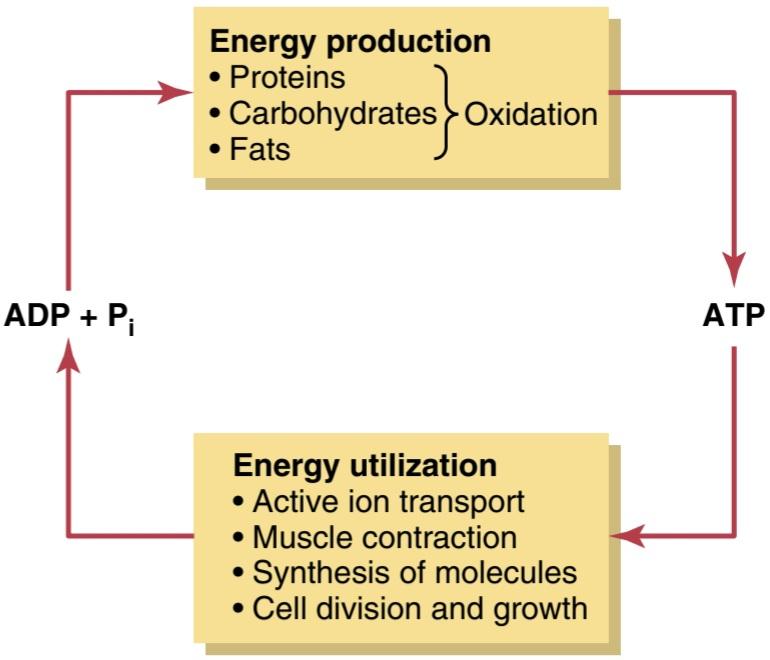
Figure 68-1. Adenosine triphosphate as the central link between energy-producing and energy-utilizing systems of the body. ADP, Adenosine diphosphate; P1, inorganic phosphate.
شکل 68-1. آدنوزین تری فسفات به عنوان پیوند مرکزی بین سیستمهای تولید کننده انرژی و استفاده از انرژی بدن. ADP، آدنوزین دی فسفات؛ P1، فسفات معدنی.

Figure 68-2. Chemical structure of adenosine triphosphate.
شکل 68-2. ساختار شیمیایی آدنوزین تری فسفات
Central Role of Glucose in Carbohydrate Metabolism
As explained in Chapter 66, the final products of carbohydrate digestion in the alimentary tract are almost entirely glucose, fructose, and galactose-with glucose representing, on average, about 80% of these products. After absorption from the intestinal tract, much of the fructose and almost all the galactose are rapidly converted into glucose in the liver. Therefore, little fructose and galactose are present in the circulating blood. Glucose thus becomes the final common pathway for transport of almost all carbohydrates to the tissue cells.
نقش مرکزی گلوکز در متابولیسم کربوهیدرات
همانطور که در فصل 66 توضیح داده شد، محصولات نهایی هضم کربوهیدرات در دستگاه گوارش تقریباً به طور کامل گلوکز، فروکتوز و گالاکتوز است که گلوکز به طور متوسط حدود 80٪ از این محصولات را تشکیل میدهد. پس از جذب از مجرای روده، بیشتر فروکتوز و تقریباً تمام گالاکتوز به سرعت در کبد به گلوکز تبدیل میشوند. بنابراین، فروکتوز و گالاکتوز کمیدر خون در گردش وجود دارد. بنابراین گلوکز به آخرین مسیر مشترک برای انتقال تقریباً تمام کربوهیدراتها به سلولهای بافت تبدیل میشود.
In liver cells, appropriate enzymes are available to promote interconversions among the monosaccharides-glucose, fructose, and galactose-as shown in Figure 68-3. Furthermore, the dynamics of the reactions are such that when the liver releases monosaccharides back into the blood, the final product is almost entirely glucose. The reason for this is that liver cells contain large amounts of glucose phosphatase. Therefore, glucose-6-phosphate can be degraded to glucose and phosphate, and the glucose can then be transported through the liver cell membrane back into the blood.
در سلولهای کبدی، آنزیمهای مناسب برای تقویت تبدیلهای متقابل بین مونوساکاریدها – گلوکز، فروکتوز و گالاکتوز – همانطور که در شکل 68-3 نشان داده شده است، در دسترس هستند. علاوه بر این، پویایی واکنشها به گونه ای است که وقتی کبد مونوساکاریدها را دوباره به خون آزاد میکند، محصول نهایی تقریباً به طور کامل گلوکز است. دلیل این امر این است که سلولهای کبد حاوی مقادیر زیادی گلوکز فسفاتاز هستند. بنابراین، گلوکز-6-فسفات را میتوان به گلوکز و فسفات تجزیه کرد و سپس گلوکز را میتوان از طریق غشای سلولی کبد به داخل خون منتقل کرد.
Once again, it should be emphasized that more than 95% of all the monosaccharides that circulate in the blood are normally the final conversion product, glucose.
یک بار دیگر باید تاکید کرد که بیش از 95 درصد از تمام مونوساکاریدهایی که در خون در گردش هستند به طور معمول محصول تبدیل نهایی یعنی گلوکز هستند.
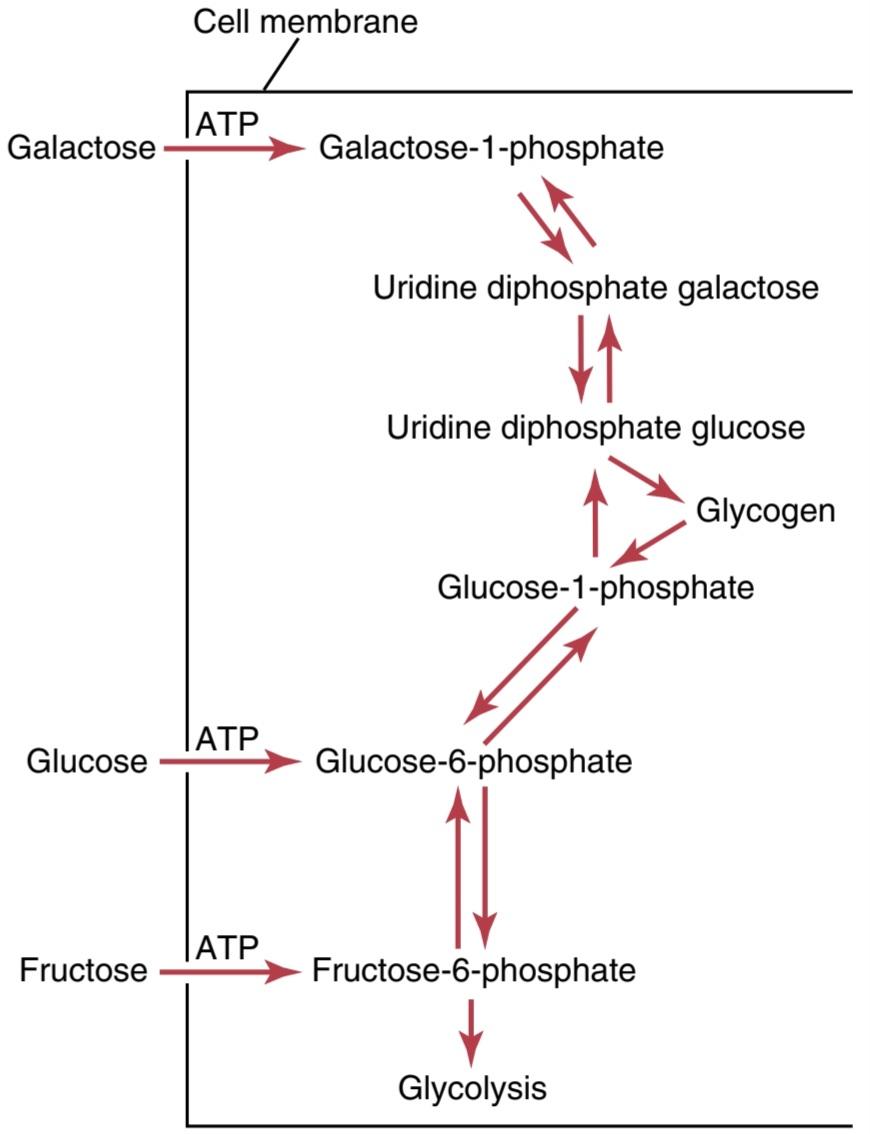
Figure 68-3. Interconversions of the three major monosaccharides-glucose, fructose, and galactose-in liver cells. ATP, Adenosine triphosphate.
شکل 68-3. تبدیل سه مونوساکارید اصلی گلوکز، فروکتوز و گالاکتوز در سلولهای کبدی. ATP، آدنوزین تری فسفات.
Glucose Transport Through Cell Membranes
Before glucose can be used by the body’s tissue cells, it must be transported through the cell membrane into the cellular cytoplasm. However, glucose cannot easily diffuse through the pores of the cell membrane because the maximum molecular weight of particles that can diffuse readily is about 100, and glucose has a molecular weight of 180. Yet glucose does pass to the interior of the cells with a reasonable degree of freedom by facilitated diffusion. The principles of this type of transport are discussed in Chapter 4. Penetrating through the lipid matrix of the cell membrane are large numbers of protein carrier molecules that can bind with glucose. In this bound form, the glucose can be transported by the carrier from one side of the membrane to the other side and then released. Therefore, if the concentration of glucose is greater on one side of the membrane than on the other side, more glucose will be transported from the high-concentration area to the low-concentration area than in the opposite direction.
انتقال گلوکز از طریق غشای سلولی
قبل از اینکه گلوکز توسط سلولهای بافت بدن استفاده شود، باید از طریق غشای سلولی به سیتوپلاسم سلولی منتقل شود. با این حال، گلوکز نمیتواند به راحتی از طریق منافذ غشای سلولی پخش شود زیرا حداکثر وزن مولکولی ذرات که میتوانند به راحتی منتشر شوند حدود 100 است و گلوکز دارای وزن مولکولی 180 است. اصول این نوع انتقال در فصل 4 مورد بحث قرار گرفته است. تعداد زیادی مولکول حامل پروتئین که میتوانند با گلوکز متصل شوند، از طریق ماتریکس لیپیدی غشای سلولی نفوذ میکنند. در این شکل متصل، گلوکز میتواند توسط حامل از یک طرف غشا به طرف دیگر منتقل شود و سپس آزاد شود. بنابراین، اگر غلظت گلوکز در یک طرف غشا بیشتر از طرف دیگر باشد، گلوکز بیشتری از ناحیه با غلظت بالا به ناحیه کم غلظت منتقل میشود تا در جهت مخالف.
Transport of glucose through the membranes of most tissue cells is quite different from that which occurs through the gastrointestinal membrane or through the epithelium of the renal tubules. In both cases, the glucose is transported by the mechanism of active sodium-glucose co-transport, in which active transport of sodium provides energy for absorbing glucose against a concentration difference. This sodiumglucose co-transport mechanism functions only in certain special cells, especially those epithelial cells that are specifically adapted for active absorption of glucose. At other cell membranes, glucose is transported only from higher concentration toward lower concentration by facilitated diffusion, made possible by the special binding properties of membrane glucose carrier protein. The details of facilitated diffusion for cell membrane transport are presented in Chapter 4.
انتقال گلوکز از طریق غشای اکثر سلولهای بافتی کاملاً متفاوت از انتقال گلوکز از طریق غشای گوارشی یا از طریق اپیتلیوم لولههای کلیوی است. در هر دو مورد، گلوکز توسط مکانیسم انتقال فعال سدیم-گلوکز انجام میشود که در آن انتقال فعال سدیم انرژی را برای جذب گلوکز در برابر اختلاف غلظت فراهم میکند. این مکانیسم انتقال همزمان سدیم و گلوکز فقط در سلولهای خاص خاصی عمل میکند، بهویژه آن دسته از سلولهای اپیتلیال که به طور خاص برای جذب فعال گلوکز سازگار شدهاند. در غشاهای سلولی دیگر، گلوکز تنها از غلظت بالاتر به غلظت کمتر توسط انتشار تسهیل شده منتقل میشود، که توسط خواص اتصال ویژه پروتئین حامل گلوکز غشایی امکان پذیر شده است. جزئیات انتشار تسهیل شده برای انتقال غشای سلولی در فصل 4 ارائه شده است.
Insulin Increases Facilitated Diffusion of Glucose
The rate of glucose transport, as well as transport of some other monosaccharides, is greatly increased in most cells by insulin. When large amounts of insulin are secreted by the pancreas, the rate of glucose transport into most cells increases to 10 or more times the rate of transport when no insulin is secreted. Conversely, the amounts of glucose that can diffuse to the insides of most cells of the body in the absence of insulin, with the exception of liver and brain cells, are far too little to supply the amount of glucose normally required for energy metabolism.
انسولین انتشار آسان گلوکز را افزایش میدهد
سرعت انتقال گلوکز و همچنین انتقال برخی مونوساکاریدهای دیگر در اکثر سلولها توسط انسولین بسیار افزایش مییابد. هنگامیکه مقادیر زیادی انسولین توسط لوزالمعده ترشح میشود، سرعت انتقال گلوکز به اکثر سلولها به 10 برابر یا بیشتر از سرعت انتقال در زمانی که انسولین ترشح نمیشود افزایش مییابد. برعکس، مقادیر گلوکزی که در غیاب انسولین، به استثنای سلولهای کبد و مغز، میتواند به داخل اکثر سلولهای بدن منتشر شود، برای تامین مقدار گلوکز که معمولاً برای متابولیسم انرژی لازم است، بسیار کم است.
In effect, the rate of carbohydrate utilization by most cells is controlled by the rate of insulin secretion from the pancreas and the sensitivity of the various tissues to insulin’s effects on glucose transport. The functions of insulin and its control of carbohydrate metabolism are discussed in detail in Chapter 79.
در واقع، سرعت استفاده از کربوهیدرات توسط اکثر سلولها توسط میزان ترشح انسولین از پانکراس و حساسیت بافتهای مختلف به اثرات انسولین بر انتقال گلوکز کنترل میشود. عملکرد انسولین و کنترل آن بر متابولیسم کربوهیدرات به تفصیل در فصل 79 مورد بحث قرار گرفته است.
Phosphorylation of Glucose
Immediately upon entry into the cells, glucose combines with a phosphate radical in accordance with the following reaction:
فسفوریلاسیون گلوکز
گلوکز بلافاصله پس از ورود به سلولها با یک رادیکال فسفات مطابق با واکنش زیر ترکیب میشود:

This phosphorylation is promoted mainly by the enzyme glucokinase in the liver and by hexokinase in most other cells. The phosphorylation of glucose is almost completely irreversible except in liver cells, renal tubular epithelial cells, and intestinal epithelial cells; in these cells, another enzyme, glucose phosphatase, is also available, and when activated, it can reverse the reaction. In most tissues of the body, phosphorylation serves to capture the glucose in the cell. That is, because of its almost instantaneous binding with phosphate, the glucose will not diffuse back out, except from those special cells, especially liver cells, that have phosphatase.
این فسفوریلاسیون عمدتاً توسط آنزیم گلوکوکیناز در کبد و توسط هگزوکیناز در اکثر سلولهای دیگر ترویج میشود. فسفوریلاسیون گلوکز تقریباً به طور کامل غیرقابل برگشت است به جز در سلولهای کبد، سلولهای اپیتلیال لولههای کلیوی و سلولهای اپیتلیال روده. در این سلولها، آنزیم دیگری به نام گلوکز فسفاتاز نیز موجود است و هنگامیکه فعال شود، میتواند واکنش را معکوس کند. در بیشتر بافتهای بدن، فسفوریلاسیون برای جذب گلوکز در سلول عمل میکند. یعنی به دلیل اتصال تقریباً آنی آن با فسفات، گلوکز به بیرون منتشر نمیشود، مگر از سلولهای خاص، بهویژه سلولهای کبدی که فسفاتاز دارند.
Glycogen Is Stored in the Liver and Muscle
After absorption into a cell, glucose can be used immediately for release of energy to the cell, or it can be stored in the form of glycogen, which is a large polymer of glucose.
گلیکوژن در کبد و ماهیچه ذخیره میشود
پس از جذب در سلول، گلوکز را میتوان فوراً برای آزادسازی انرژی به سلول مورد استفاده قرار داد، یا میتوان آن را به شکل گلیکوژن، که پلیمر بزرگی از گلوکز است، ذخیره کرد.
Almost all cells of the body are capable of storing at least some glycogen, but certain cells can store large amounts, especially liver cells, which can store up to 5% to 8% of their weight as glycogen, and muscle cells, which can store up to 1% to 3% glycogen. The glycogen molecules can be polymerized to almost any molecular weight, with the average molecular weight being 5 million or greater; most of the glycogen precipitates in the form of solid granules.
تقریباً تمام سلولهای بدن قادر به ذخیره حداقل مقداری گلیکوژن هستند، اما سلولهای خاصی میتوانند مقادیر زیادی را ذخیره کنند، به ویژه سلولهای کبدی که میتوانند ۵ تا ۸ درصد وزن خود را به عنوان گلیکوژن و سلولهای ماهیچهای که میتوانند تا ۱ تا ۳ درصد گلیکوژن را ذخیره کنند. مولکولهای گلیکوژن را میتوان تقریباً به هر وزن مولکولی، با وزن مولکولی متوسط 5 میلیون یا بیشتر، پلیمریزه کرد. بیشتر گلیکوژن به شکل دانههای جامد رسوب میکند.
This conversion of monosaccharides into a high- molecular-weight precipitated compound (glycogen) makes it possible to store large quantities of carbohydrates without significantly altering the osmotic pressure of the intracellular fluids. High concentrations of low-molecular-weight soluble monosaccharides would play havoc with the osmotic relations between intracellular and extracellular fluids.
این تبدیل مونوساکاریدها به یک ترکیب رسوب شده با وزن مولکولی بالا (گلیکوژن) ذخیره مقادیر زیادی کربوهیدرات را بدون تغییر قابل توجهی در فشار اسمزی مایعات داخل سلولی ممکن میسازد. غلظت بالای مونوساکاریدهای محلول با وزن مولکولی کم، روابط اسمزی بین مایعات درون سلولی و خارج سلولی را مختل میکند.
Glycogenesis-Formation of Glycogen
The chemical reactions for glycogenesis are illustrated in Figure 68-4 which shows that glucose-6-phosphate can become glucose-1-phosphate; this substance is converted to uridine diphosphate glucose, which is finally converted into glycogen. Several specific enzymes are required to cause these conversions, and any monosaccharide that can be converted into glucose can enter into the reactions. Certain smaller compounds, including lactic acid, glycerol, pyruvic acid, and some deaminated amino acids, can also be converted into glucose or closely allied compounds and then converted into glycogen.
گلیکوژنز-تشکیل گلیکوژن
واکنشهای شیمیایی برای گلیکوژنز در شکل 68-4 نشان داده شده است که نشان میدهد گلوکز-6-فسفات میتواند به گلوکز-1-فسفات تبدیل شود. این ماده به گلوکز یوریدین دی فسفات تبدیل میشود که در نهایت به گلیکوژن تبدیل میشود. چندین آنزیم خاص برای ایجاد این تبدیلها مورد نیاز است و هر مونوساکاریدی که میتواند به گلوکز تبدیل شود میتواند وارد واکنشها شود. برخی از ترکیبات کوچکتر از جمله اسید لاکتیک، گلیسرول، اسید پیروویک و برخی اسیدهای آمینه دآمینه شده نیز میتوانند به گلوکز یا ترکیبات نزدیک به هم تبدیل شوند و سپس به گلیکوژن تبدیل شوند.
Glycogenolysis-Breakdown of Stored Glycogen
Glycogenolysis means the breakdown of the cell’s stored glycogen to re-form glucose in the cells. The glucose can then be used to provide energy. Glycogenolysis does not occur by reversal of the same chemical reactions that form glycogen; instead, each succeeding glucose Blood glucose molecule on each branch of the glycogen polymer is split away by phosphorylation, catalyzed by the enzyme phosphorylase.
گلیکوژنولیز-تجزیه گلیکوژن ذخیره شده
گلیکوژنولیز به معنای تجزیه گلیکوژن ذخیره شده سلول برای تشکیل مجدد گلوکز در سلول است. سپس از گلوکز میتوان برای تامین انرژی استفاده کرد. گلیکوژنولیز با معکوس کردن همان واکنشهای شیمیایی که گلیکوژن را تشکیل میدهند، رخ نمیدهد. در عوض، هر مولکول گلوکز بعدی گلوکز خون در هر شاخه از پلیمر گلیکوژن توسط فسفوریلاسیون جدا میشود و توسط آنزیم فسفوریلاز کاتالیز میشود.
Under resting conditions, the phosphorylase is in an inactive form, and thus glycogen remains stored. When it is necessary to re-form glucose from glycogen, the phosphorylase must first be activated. This activation can be accomplished in several ways, including activation by epinephrine or by glucagon, as described in the next section.
در شرایط استراحت، فسفوریلاز به صورت غیر فعال است و در نتیجه گلیکوژن ذخیره میشود. هنگامیکه نیاز به تشکیل مجدد گلوکز از گلیکوژن است، ابتدا فسفوریلاز باید فعال شود. این فعال سازی میتواند به روشهای مختلفی انجام شود، از جمله فعال سازی توسط اپی نفرین یا گلوکاگون، همانطور که در بخش بعدی توضیح داده شد.
Activation of Phosphorylase by Epinephrine or by Glucagon. Two hormones, epinephrine and glucagon, can activate phosphorylase and thereby cause rapid glycogenolysis. The initial effect of each of these hormones is to promote formation of cyclic AMP in the cells, which then initiates a cascade of chemical reactions that activates the phosphorylase. This process is discussed in detail in Chapter 79.
فعال سازی فسفوریلاز توسط اپی نفرین یا گلوکاگون. دو هورمون، اپی نفرین و گلوکاگون، میتوانند فسفوریلاز را فعال کرده و در نتیجه باعث گلیکوژنولیز سریع شوند. اثر اولیه هر یک از این هورمونها ترویج تشکیل AMP حلقوی در سلولها است که سپس آبشاری از واکنشهای شیمیایی را آغاز میکند که فسفوریلاز را فعال میکند. این فرآیند به تفصیل در فصل 79 مورد بحث قرار گرفته است.
Epinephrine is released by the adrenal medullae when the sympathetic nervous system is stimulated. Therefore, one of the functions of the sympathetic nervous system is to increase the availability of glucose for rapid energy metabolism. This function of epinephrine occurs markedly in liver cells and muscle, thereby contributing (along with other effects of sympathetic stimulation) to preparation of the body for action, as discussed in Chapter 61.
هنگامیکه سیستم عصبی سمپاتیک تحریک میشود، اپی نفرین توسط بصل الکلیه آدرنال آزاد میشود. بنابراین، یکی از وظایف سیستم عصبی سمپاتیک افزایش دسترسی به گلوکز برای متابولیسم سریع انرژی است. این عملکرد اپی نفرین به طور قابل توجهی در سلولهای کبد و ماهیچهها رخ میدهد، بنابراین (همراه با سایر اثرات تحریک سمپاتیک) به آماده سازی بدن برای عمل، همانطور که در فصل 61 بحث شد، کمک میکند.
Glucagon is a hormone secreted by the alpha cells of the pancreas when the blood glucose concentration falls too low. It stimulates formation of cyclic AMP mainly in the liver cells, promoting conversion of liver glycogen into glucose and its release into the blood, thereby elevating the blood glucose concentration. The function of glucagon in blood glucose regulation is discussed in Chapter 79.
گلوکاگون هورمونی است که زمانی که غلظت گلوکز خون بسیار پایین میآید توسط سلولهای آلفا پانکراس ترشح میشود. تشکیل AMP حلقوی را عمدتاً در سلولهای کبد تحریک میکند، تبدیل گلیکوژن کبد را به گلوکز و آزاد شدن آن در خون را افزایش میدهد و در نتیجه غلظت گلوکز خون را افزایش میدهد. عملکرد گلوکاگون در تنظیم گلوکز خون در فصل 79 مورد بحث قرار گرفته است.

Figure 68-4. Chemical reactions of glycogenesis and glycogenolysis, also showing interconversions between blood glucose and liver glycogen. (The phosphatase required for the release of glucose from the cell is present in liver cells but not in most other cells.)
شکل 68-4. واکنشهای شیمیایی گلیکوژنز و گلیکوژنولیز، همچنین نشان دهنده تبدیلهای متقابل بین گلوکز خون و گلیکوژن کبد است. (فسفاتاز مورد نیاز برای آزادسازی گلوکز از سلول در سلولهای کبدی وجود دارد اما در اکثر سلولهای دیگر وجود ندارد.)
Release of Energy From Glucose by the Glycolytic Pathway
Because complete oxidation of 1 gram-mole of glucose re- leases 686,000 calories of energy and only 12,000 calories of energy are required to form 1 gram-mole of ATP, energy would be wasted if glucose were decomposed all at once into water and carbon dioxide while forming only a single ATP molecule. Fortunately, cells of the body contain special enzymes that cause the glucose molecule to split a little at a time in many successive steps, so that its energy is released in small packets to form one molecule of ATP at a time, thus forming a total of 38 moles of ATP for each mole of glucose metabolized by the cells.
آزاد شدن انرژی از گلوکز توسط مسیر گلیکولیتیک
از آنجایی که اکسیداسیون کامل 1 گرم مول گلوکز 686000 کالری انرژی آزاد میکند و تنها 12000 کالری انرژی برای تشکیل 1 گرم مول ATP لازم است، اگر گلوکز به یکباره به آب و دی اکسید کربن تجزیه شود و تنها یک مولکول ATP تشکیل شود، انرژی هدر میرود. خوشبختانه سلولهای بدن حاوی آنزیمهای خاصی هستند که باعث میشوند مولکول گلوکز در چندین مرحله متوالی به طور تدریجی شکافته شود، به طوری که انرژی آن در بستههای کوچک آزاد میشود و در یک زمان یک مولکول ATP تشکیل میدهد، بنابراین در مجموع ۳۸ مول ATP برای هر مول گلوکز متابولیزه شده توسط سلولها تشکیل میشود.
In the next sections we describe the basic principles of the processes by which the glucose molecule is progressively dissected and its energy released to form ATP.
در بخشهای بعدی، اصول اساسی فرآیندهایی را توضیح میدهیم که توسط آن مولکول گلوکز به تدریج تشریح میشود و انرژی آن برای تشکیل ATP آزاد میشود.
Glycolysis-Splitting Glucose to Form Pyruvic Acid
By far the most important means of releasing energy from glucose is initiated by glycolysis. The end products of glycolysis are then oxidized to provide energy. Glycolysis means splitting of the glucose molecule to form two molecules of pyruvic acid.
گلیکولیز – تجزیه گلوکز برای تشکیل اسید پیروویک
تا کنون مهمترین وسیله برای آزادسازی انرژی از گلوکز توسط گلیکولیز آغاز میشود. سپس محصولات نهایی گلیکولیز برای تامین انرژی اکسید میشوند. گلیکولیز به معنای شکافتن مولکول گلوکز برای تشکیل دو مولکول پیروویک اسید است.
Glycolysis occurs by 10 successive chemical reactions, shown in Figure 68-5. Each step is catalyzed by at least one specific protein enzyme. Note that glucose is first converted into fructose-1,6-diphosphate and then split into two three-carbon-atom molecules, glyceraldehyde-3- phosphate, each of which is then converted through five additional steps into pyruvic acid.
گلیکولیز توسط 10 واکنش شیمیایی متوالی رخ میدهد که در شکل 68-5 نشان داده شده است. هر مرحله توسط حداقل یک آنزیم پروتئینی خاص کاتالیز میشود. توجه داشته باشید که گلوکز ابتدا به فروکتوز-1،6-دی فسفات تبدیل میشود و سپس به دو مولکول سه اتمیکربن، گلیسرآلدئید-3- فسفات تقسیم میشود، که هر کدام از آنها طی پنج مرحله اضافی به اسید پیروویک تبدیل میشود.

Figure 68-5. Sequence of chemical reactions responsible for glycolysis.
شکل 68-5. دنباله ای از واکنشهای شیمیایی مسئول گلیکولیز.
Formation of ATP During Glycolysis. Despite the many chemical reactions in the glycolytic series, only a small portion of the free energy in the glucose molecule is released at most steps. However, between the 1,3-diphosphoglyceric acid and the 3-phosphoglyceric acid stages, and again between the phosphor enolpyruvic acid and the pyruvic acid stages, the packets of energy released are greater than 12,000 calories per mole, the amount required to form ATP, and the reactions are coupled in such a way that ATP is formed. Thus, a total of 4 moles of ATP are formed for each mole of fructose-1,6-diphosphate that is split into pyruvic acid.
تشکیل ATP در طی گلیکولیز. با وجود واکنشهای شیمیایی فراوان در سری گلیکولیتیک، تنها بخش کوچکی از انرژی آزاد در مولکول گلوکز در اکثر مراحل آزاد میشود. با این حال، بین مراحل 1،3-دی فسفوگلیسریک اسید و 3-فسفوگلیسریک اسید، و مجدداً بین مراحل فسفر انولپیروویک اسید و اسید پیروویک، بستههای انرژی آزاد شده بیش از 12000 کالری در هر مول هستند، مقدار مورد نیاز برای تشکیل ATP که در چنین واکنشهایی جفت میشود. بنابراین، در مجموع 4 مول ATP برای هر مول فروکتوز-1،6-دی فسفات که به اسید پیروویک تقسیم میشود، تشکیل میشود.
Yet, 2 moles of ATP are required to phosphorylate the original glucose to form fructose-1,6-diphosphate before glycolysis can begin. Therefore, the net gain in ATP molecules by the entire glycolytic process is only 2 moles for each mole of glucose utilized. This amounts to 24,000 calories of energy that becomes transferred to ATP, but during glycolysis, a total of 56,000 calories of energy were lost from the original glucose, giving an overall efficiency for ATP formation of only 43%. The remaining 57% of the energy is lost in the form of heat.
با این حال، 2 مول ATP برای فسفریله کردن گلوکز اصلی برای تشکیل فروکتوز-1،6-دی فسفات قبل از شروع گلیکولیز مورد نیاز است. بنابراین، سود خالص در مولکولهای ATP توسط کل فرآیند گلیکولیتیک تنها 2 مول برای هر مول گلوکز استفاده شده است. این مقدار معادل 24000 کالری انرژی است که به ATP منتقل میشود، اما در طی گلیکولیز، در مجموع 56000 کالری انرژی از گلوکز اصلی از دست رفت که بازده کلی تشکیل ATP را تنها 43٪ میدهد. 57 درصد باقیمانده انرژی به صورت گرما از بین میرود.
Conversion of Pyruvic Acid to Acetyl Coenzyme A
The next stage in the degradation of glucose is a two- step conversion of the two pyruvic acid molecules (shown in Figure 68-5) into two molecules of acetyl coenzyme A (acetyl-CoA), in accordance with the following reaction:
تبدیل پیروویک اسید به استیل کوآنزیم A
مرحله بعدی در تجزیه گلوکز، تبدیل دو مرحله ای دو مولکول اسید پیروویک (نشان داده شده در شکل 68-5) به دو مولکول استیل کوآنزیم A (استیل-CoA)، مطابق با واکنش زیر است:

Two carbon dioxide molecules and four hydrogen atoms are released from this reaction, while the remaining portions of the two pyruvic acid molecules combine with coenzyme A, a derivative of the vitamin pantothenic acid, to form two molecules of acetyl-CoA. In this conversion, no ATP is formed, but up to six molecules of ATP are formed when the four re- leased hydrogen atoms are later oxidized, as discussed later.
دو مولکول دی اکسید کربن و چهار اتم هیدروژن از این واکنش آزاد میشوند، در حالی که بخشهای باقی مانده از دو مولکول اسید پیروویک با کوآنزیم A، مشتق شده از ویتامین پانتوتنیک اسید ترکیب میشوند و دو مولکول استیل-CoA را تشکیل میدهند. در این تبدیل، هیچ ATP تشکیل نمیشود، اما تا شش مولکول ATP زمانی که چهار اتم هیدروژن آزاد شده بعداً اکسید میشوند، همانطور که بعداً بحث شد، تشکیل میشود.
Citric Acid Cycle (Krebs Cycle)
The next stage in the degradation of the glucose molecule is called the citric acid cycle (also called the tricarboxylic acid cycle or the Krebs cycle in honor of Hans Krebs for his discovery of this cycle). The citric acid cycle is a sequence of chemical reactions in which the acetyl portion of acetyl- CoA is degraded to carbon dioxide and hydrogen atoms. These reactions all occur in the matrix of mitochondria. The released hydrogen atoms add to the number of these atoms that will subsequently be oxidized (as discussed later), releasing tremendous amounts of energy to form ATP.
چرخه اسید سیتریک (چرخه کربس)
مرحله بعدی در تجزیه مولکول گلوکز، چرخه اسید سیتریک نامیده میشود (به افتخارهانس کربس برای کشف این چرخه، چرخه اسید تری کربوکسیلیک یا چرخه کربس نیز نامیده میشود). چرخه اسید سیتریک دنباله ای از واکنشهای شیمیایی است که در آن بخش استیل استیل CoA به اتمهای دی اکسید کربن و هیدروژن تجزیه میشود. این واکنشها همه در ماتریکس میتوکندری رخ میدهد. اتمهای هیدروژن آزاد شده به تعداد این اتمها اضافه میشوند که متعاقباً اکسید میشوند (همانطور که بعداً بحث شد) و مقادیر زیادی انرژی برای تشکیل ATP آزاد میکنند.
Figure 68-6 shows the different stages of the chemical reactions in the citric acid cycle. The substances to the left are added during the chemical reactions, and the products of the chemical reactions are shown to the right. Note at the top of the column that the cycle begins with oxaloacetic acid, and at the bottom of the chain of reactions, oxaloacetic acid is formed again. Thus, the cycle can continue repeatedly.
شکل 68-6 مراحل مختلف واکنشهای شیمیایی در چرخه اسید سیتریک را نشان میدهد. مواد سمت چپ در طی واکنشهای شیمیایی اضافه میشوند و محصولات واکنشهای شیمیایی در سمت راست نشان داده میشوند. در بالای ستون توجه داشته باشید که چرخه با اسید اگزالواستیک شروع میشود و در پایین زنجیره واکنشها، اسید اگزالو استیک دوباره تشکیل میشود. بنابراین، چرخه میتواند بارها و بارها ادامه یابد.
In the initial stage of the citric acid cycle, acetyl-CoA combines with oxaloacetic acid to form citric acid. The co- enzyme A portion of the acetyl-CoA is released and can be used repeatedly to form additional quantities of acetyl-CoA from pyruvic acid. The acetyl portion, however, becomes an integral part of the citric acid molecule. During the successive stages of the citric acid cycle, several molecules of water are added, as shown on the left in Figure 68-6, and carbon dioxide and hydrogen atoms are released at other stages in the cycle, as shown on the right in the figure.
در مرحله اولیه چرخه اسید سیتریک، استیل کوآ با اسید اگزالواستیک ترکیب میشود و اسید سیتریک را تشکیل میدهد. کوآنزیم A بخشی از استیل کوآ آزاد میشود و میتواند به طور مکرر برای تشکیل مقادیر اضافی استیل کوآ از پیروویک اسید استفاده شود. با این حال، بخش استیل به بخشی جدایی ناپذیر از مولکول اسید سیتریک تبدیل میشود. در طول مراحل متوالی چرخه اسید سیتریک، چندین مولکول آب اضافه میشود، همانطور که در شکل 68-6 در سمت چپ نشان داده شده است، و اتمهای دی اکسید کربن و هیدروژن در مراحل دیگر چرخه، همانطور که در سمت راست در شکل نشان داده شده است، آزاد میشوند.
The net results of the entire citric acid cycle are provided in the explanation at the bottom of Figure 68-6, demonstrating that for each molecule of glucose originally metabolized, 2 acetyl-CoA molecules enter into the citric acid cycle, along with 6 molecules of water. These molecules are then degraded into 4 carbon dioxide molecules, 16 hydrogen atoms, and 2 molecules of coenzyme A. Two molecules of ATP are formed, as follows.
نتایج خالص کل چرخه اسید سیتریک در توضیح پایین شکل 68-6 ارائه شده است که نشان میدهد برای هر مولکول گلوکز که در ابتدا متابولیزه شده است، 2 مولکول استیل کوآ به همراه 6 مولکول آب وارد چرخه اسید سیتریک میشوند. سپس این مولکولها به 4 مولکول دی اکسید کربن، 16 اتم هیدروژن و 2 مولکول کوآنزیم A تجزیه میشوند. دو مولکول ATP به شرح زیر تشکیل میشود.
Formation of ATP in the Citric Acid Cycle. The citric acid cycle itself does not cause a great amount of energy to be released; a molecule of ATP is formed in only one of the chemical reactions-during the change from a- ketoglutaric acid to succinic acid. Thus, for each molecule of glucose metabolized, two acetyl-CoA molecules pass through the citric acid cycle, each forming a molecule of ATP, or a total of two molecules of ATP formed.
تشکیل ATP در چرخه اسید سیتریک. چرخه اسید سیتریک به خودی خود باعث آزاد شدن مقدار زیادی انرژی نمیشود. یک مولکول ATP تنها در یکی از واکنشهای شیمیایی در طی تغییر از اسید آکتوگلوتاریک به اسید سوکسینیک تشکیل میشود. بنابراین، برای هر مولکول گلوکز متابولیزه شده، دو مولکول استیل کوآ از چرخه اسید سیتریک عبور میکنند، که هر یک مولکول ATP یا در مجموع دو مولکول ATP تشکیل میشود.

Figure 68-6. Chemical reactions of the citric acid cycle, showing the release of carbon dioxide and a number of hydrogen atoms during the cycle. ADP, Adenosine diphosphate; ATP, adenosine triphosphate.
شکل 68-6. واکنشهای شیمیایی چرخه اسید سیتریک، نشان دهنده آزاد شدن دی اکسید کربن و تعدادی اتم هیدروژن در طول چرخه. ADP، آدنوزین دی فسفات؛ ATP، آدنوزین تری فسفات.
Function of Dehydrogenases and Nicotinamide Adenine Dinucleotide in Causing Release of Hydrogen Atoms in the Citric Acid Cycle. As already noted at several points in this discussion, hydrogen atoms are released during different chemical reactions of the citric acid cycle-4 hydrogen atoms during glycolysis, 4 during formation of acetyl-CoA from pyruvic acid, and 16 in the citric acid cycle; thus a total of 24 hydrogen atoms are released for each original molecule of glucose. However, the hydrogen atoms are not simply turned loose in the intracellular fluid. In- stead, they are released in packets of two, and in each case, the release is catalyzed by a specific protein enzyme called a dehydrogenase. Twenty of the 24 hydrogen atoms immediately combine with nicotinamide adenine dinucleotide (NAD+), a derivative of the vitamin niacin, in accordance with the following reaction:
عملکرد دهیدروژنازها و نیکوتین آمید آدنین دی نوکلئوتید در ایجاد آزادسازی اتمهای هیدروژن در چرخه اسید سیتریک. همانطور که قبلاً در چندین نقطه در این بحث اشاره شد، اتمهای هیدروژن در طول واکنشهای شیمیایی مختلف چرخه اسید سیتریک آزاد میشوند – 4 اتم هیدروژن در طول گلیکولیز، 4 اتم در طول تشکیل استیل-CoA از اسید پیروویک، و 16 اتم در چرخه اسید سیتریک. بنابراین در مجموع 24 اتم هیدروژن برای هر مولکول اصلی گلوکز آزاد میشود. با این حال، اتمهای هیدروژن به سادگی در مایع درون سلولی شل نمیشوند. در عوض، آنها در بستههای دوتایی آزاد میشوند و در هر مورد، آزادسازی توسط آنزیم پروتئینی خاصی به نام دهیدروژناز کاتالیز میشود. 20 اتم از 24 اتم هیدروژن بلافاصله با نیکوتین آمید آدنین دی نوکلئوتید (+NAD)، مشتق ویتامین نیاسین، مطابق با واکنش زیر ترکیب میشوند:

This reaction will not occur without intermediation of the specific dehydrogenase or without the availability of NAD+ to act as a hydrogen carrier. Both the free hydrogen ion and the hydrogen bound with NAD+ subsequently enter into multiple oxidative chemical reactions that form large quantities of ATP, as discussed later.
این واکنش بدون واسطه دهیدروژناز خاص یا بدون در دسترس بودن +NAD برای عمل به عنوان یک حامل هیدروژن رخ نخواهد داد. هم یون هیدروژن آزاد و هم هیدروژن متصل به +NAD متعاقباً وارد واکنشهای شیمیایی اکسیداتیو متعددی میشوند که مقادیر زیادی ATP را تشکیل میدهند، همانطور که بعداً بحث شد.
The remaining 4 hydrogen atoms released during the breakdown of glucose-the 4 released during the citric acid cycle between the succinic and fumaric acid stages- combine with a specific dehydrogenase but are not subsequently released to NAD+. Instead, they pass directly from the dehydrogenase into the oxidative process.
4 اتم هیدروژن باقیمانده که در طی تجزیه گلوکز آزاد میشوند – 4 اتم آزاد شده در طول چرخه اسید سیتریک بین مراحل اسید سوکسینیک و فوماریک – با یک دهیدروژناز خاص ترکیب میشوند اما متعاقباً به +NAD آزاد نمیشوند. در عوض، آنها مستقیماً از دهیدروژناز وارد فرآیند اکسیداتیو میشوند.
Function of Decarboxylases in Causing Release of Carbon Dioxide. Referring again to the chemical reactions of the citric acid cycle, as well as to those for the formation of acetyl-CoA from pyruvic acid, we find that there are three stages in which carbon dioxide is released. To cause the release of carbon dioxide, other specific protein enzymes, called decarboxylases, split the carbon dioxide away from the substrate. The carbon dioxide is then dissolved in the body fluids and transported to the lungs, where it is expired from the body (see Chapter 41).
نقش دکربوکسیلازها در آزادسازی دی اکسید کربن. با اشاره مجدد به واکنشهای شیمیایی چرخه اسید سیتریک و همچنین واکنشهای تشکیل استیل-CoA از پیروویک اسید، متوجه میشویم که سه مرحله وجود دارد که در آن دی اکسید کربن آزاد میشود. برای ایجاد دی اکسید کربن، دیگر آنزیمهای پروتئینی خاص، به نام دکربوکسیلازها، دی اکسید کربن را از بستر جدا میکنند. سپس دی اکسید کربن در مایعات بدن حل میشود و به ریهها منتقل میشود و در آنجا از بدن خارج میشود (به فصل 41 مراجعه کنید).
Formation of Large Quantities of ATP by Oxidation of Hydrogen-The Process of Oxidative Phosphorylation
Despite all the complexities of (1) glycolysis, (2) the citric acid cycle, (3) dehydrogenation, and (4) decarboxylation, pitifully small amounts of ATP are formed during all these processes only 2 ATP molecules in the glycolysis scheme and another 2 in the citric acid cycle for each molecule of glucose metabolized. Instead, almost 90% of the total ATP created through glucose metabolism is formed during subsequent oxidation of the hydrogen atoms that were released at early stages of glucose degradation. Indeed, the principal function of all these earlier stages is to make the hydrogen of the glucose molecule available in forms that can be oxidized.
تشکیل مقادیر زیادی ATP با اکسیداسیون هیدروژن – فرآیند فسفوریلاسیون اکسیداتیو
علیرغم تمام پیچیدگیهای (1) گلیکولیز، (2) چرخه اسید سیتریک، (3) هیدروژن زدایی، و (4) دکربوکسیلاسیون، مقادیر اندکی از ATP طی تمام این فرآیندها تنها 2 مولکول ATP در طرح گلیکولیز و 2 مولکول دیگر در چرخه اسید سیتریک برای هر مولکول متابولیزه شده تشکیل میشود. در عوض، تقریباً 90 درصد از کل ATP ایجاد شده از طریق متابولیسم گلوکز در طی اکسیداسیون بعدی اتمهای هیدروژن که در مراحل اولیه تجزیه گلوکز آزاد شدند، تشکیل میشود. در واقع، عملکرد اصلی تمام این مراحل اولیه این است که هیدروژن مولکول گلوکز را به اشکال قابل اکسید شدن در دسترس قرار دهد.
Oxidation of hydrogen is accomplished, as illustrated in Figure 68-7, by a series of enzymatically catalyzed reactions in the mitochondria. These reactions (1) split each hydrogen atom into a hydrogen ion and an electron and (2) use the electrons eventually to combine dissolved oxygen of the fluids with water molecules to form hydroxyl ions. Then the hydrogen and hydroxyl ions combine with each other to form water. During this sequence of oxidative reactions, tremendous quantities of energy are released to form ATP. Formation of ATP in this manner is called oxidative phosphorylation, which occurs entirely in the mitochondria by a highly specialized process called the chemiosmotic mechanism.
اکسیداسیون هیدروژن، همانطور که در شکل 68-7 نشان داده شده است، توسط مجموعه ای از واکنشهای کاتالیز شده آنزیمیدر میتوکندری انجام میشود. این واکنشها (1) هر اتم هیدروژن را به یک یون هیدروژن و یک الکترون تقسیم میکند و (2) در نهایت از الکترونها برای ترکیب اکسیژن محلول مایعات با مولکولهای آب برای تشکیل یونهای هیدروکسیل استفاده میکند. سپس یونهای هیدروژن و هیدروکسیل با یکدیگر ترکیب میشوند و آب را تشکیل میدهند. در طول این توالی از واکنشهای اکسیداتیو، مقادیر زیادی انرژی آزاد میشود تا ATP را تشکیل دهد. تشکیل ATP به این روش، فسفوریلاسیون اکسیداتیو نامیده میشود، که به طور کامل در میتوکندری توسط یک فرآیند بسیار تخصصی به نام مکانیسم کیمیوسموتیک اتفاق میافتد.
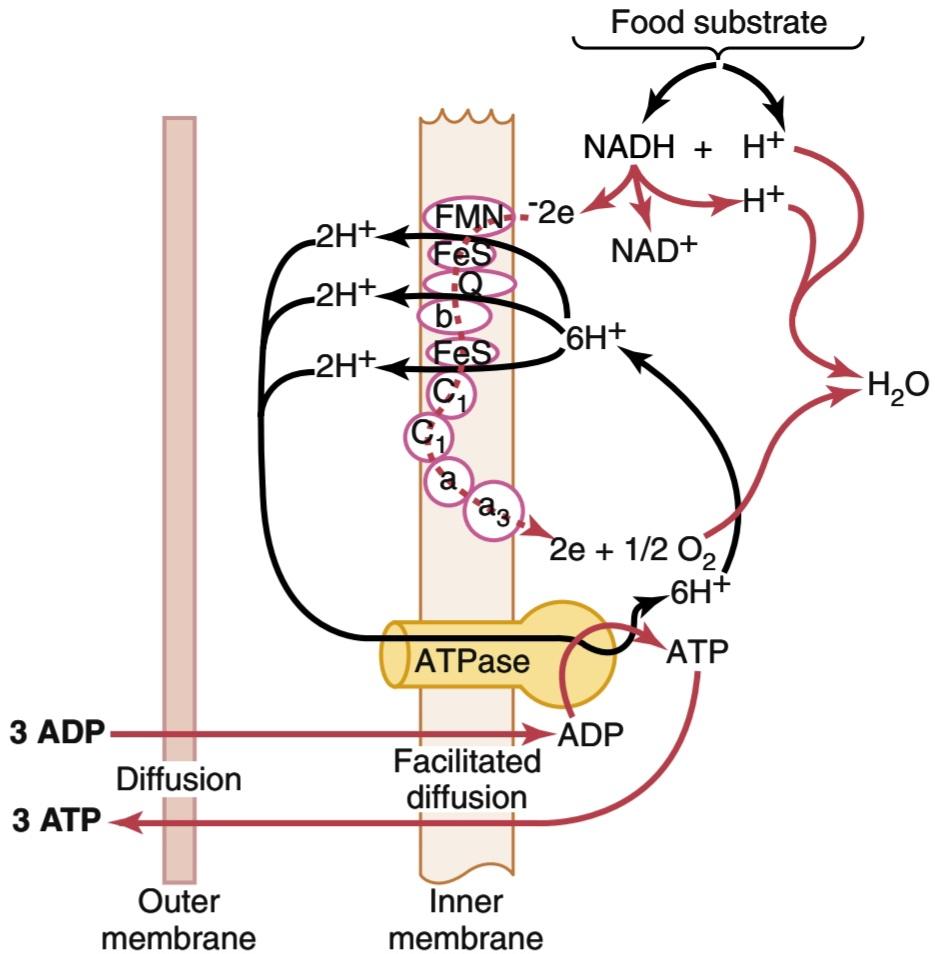
Figure 68-7. Mitochondrial chemiosmotic mechanism of oxidative phosphorylation for forming large quantities of adenosine triphosphate (ATP). This figure shows the relationship of the oxidative and phosphorylation steps at the outer and inner membranes of the mitochondrion. ADP, Adenosine diphosphate; FeS, iron sulfide protein; FMN, flavin mononucleotide; NAD+, nicotinamide adenine dinucleotide; NADH, reduced nicotinamide adenine dinucleotide; Q, ubiquinone.
شکل 68-7. مکانیسم شیمیایی میتوکندریایی فسفوریلاسیون اکسیداتیو برای تشکیل مقادیر زیادی آدنوزین تری فسفات (ATP). این شکل رابطه مراحل اکسیداتیو و فسفوریلاسیون را در غشای خارجی و داخلی میتوکندری نشان میدهد. ADP، آدنوزین دی فسفات؛ FeS، پروتئین سولفید آهن؛ FMN، مونونوکلئوتید فلاوین؛ +NAD، نیکوتین آمید آدنین دی نوکلئوتید. NADH، نیکوتین آمید آدنین دی نوکلئوتید کاهش مییابد. س، یوبی کینون.
Chemiosmotic Mechanism of the Mitochondria to Form ATP
lonization of Hydrogen, the Electron Transport Chain, and Water Formation. The first step in oxidative phosphorylation in the mitochondria is to ionize the hydrogen atoms that have been removed from the food substrates. As described earlier, these hydrogen atoms are removed in pairs: one immediately becomes a hydrogen ion, H+, the other combines with NAD+ to form reduced nicotinamide adenine dinucleotide (NADH). The upper portion of Figure 68-7 shows the subsequent fate of the NADH and H+. The initial effect is to release the other hydrogen atom from the NADH to form another hydrogen ion, H+; this process also reconstitutes NAD+ that will be reused repeatedly.
مکانیسم شیمیایی میتوکندری برای تشکیل ATP
لونیزاسیون هیدروژن، زنجیره انتقال الکترون و تشکیل آب. اولین مرحله در فسفوریلاسیون اکسیداتیو در میتوکندری، یونیزه کردن اتمهای هیدروژن است که از بسترهای غذایی حذف شده اند. همانطور که قبلاً توضیح داده شد، این اتمهای هیدروژن به صورت جفت حذف میشوند: یکی بلافاصله به یون هیدروژن تبدیل میشود، +H، دیگری با +NAD ترکیب میشود تا نیکوتین آمید آدنین دی نوکلئوتید احیا شده (NADH) را تشکیل دهد. قسمت بالایی شکل 68-7 سرنوشت بعدی NADH و +H را نشان میدهد. اثر اولیه آزاد کردن اتم هیدروژن دیگر از NADH برای تشکیل یون هیدروژن دیگر، +H است. این فرآیند همچنین +NAD را بازسازی میکند که به طور مکرر مورد استفاده قرار میگیرد.
The electrons that are removed from the hydrogen atoms to cause the hydrogen ionization immediately enter an electron transport chain of electron acceptors that are an integral part of the inner membrane (the shelf membrane) of the mitochondrion. The electron acceptors can be reversibly reduced or oxidized by accepting or giving up electrons. The important members of this electron transport chain include flavoprotein (flavin mononucleotide), several iron sulfide proteins, ubiquinone, and cytochromes B, CI, C, A, and A3. Each electron is shuttled from one of these acceptors to the next until it finally reaches cytochrome A3, which is called cytochrome oxidase because it is capable of giving up 2 electrons and thus reducing elemental oxygen to form ionic oxygen, which then combines with hydrogen ions to form water.
الکترونهایی که از اتمهای هیدروژن حذف میشوند تا باعث یونیزاسیون هیدروژن شوند، بلافاصله وارد یک زنجیره انتقال الکترون از گیرندههای الکترون میشوند که بخشی جدایی ناپذیر از غشای داخلی (غشاء قفسه) میتوکندری هستند. گیرندههای الکترون را میتوان با پذیرش یا رها کردن الکترونها به طور برگشت پذیر کاهش یا اکسید کرد. اعضای مهم این زنجیره انتقال الکترون شامل فلاوپروتئین (مونونوکلئوتید فلاوین)، چندین پروتئین سولفید آهن، یوبی کینون و سیتوکرومهای B، CI، C، A و A3 میباشد. هر الکترون از یکی از این گیرندهها به دیگری منتقل میشود تا در نهایت به سیتوکروم A3 میرسد که سیتوکروم اکسیداز نامیده میشود زیرا قادر است 2 الکترون بدهد و در نتیجه اکسیژن عنصری را کاهش دهد و اکسیژن یونی تشکیل دهد که سپس با یونهای هیدروژن ترکیب میشود و آب را تشکیل میدهد.
Thus, Figure 68-7 shows the transport of electrons through the electron chain and then their ultimate use by cytochrome oxidase to cause the formation of water molecules. During the transport of these electrons through the electron transport chain, energy is released that is used to cause the synthesis of ATP, as follows.
بنابراین، شکل 68-7 انتقال الکترونها از طریق زنجیره الکترونی و سپس استفاده نهایی آنها توسط سیتوکروم اکسیداز برای ایجاد مولکولهای آب را نشان میدهد. در حین انتقال این الکترونها از طریق زنجیره انتقال الکترون، انرژی آزاد میشود که برای سنتز ATP به شرح زیر استفاده میشود.
Electron Transport Chain Releases Energy Used to Pump Hydrogen lons Into the Outer Chamber of the Mitochondrion. As the electrons pass through the electron transport chain, large amounts of energy are released. This energy is used to pump hydrogen ions from the inner matrix of the mitochondrion (to the right in Figure 68-7) into the outer chamber between the inner and outer mitochondrial membranes (to the left). This process creates a high concentration of positively charged hydrogen ions in this chamber; it also creates a strong negative electrical potential in the inner matrix.
زنجیره انتقال الکترون انرژی مورد استفاده برای پمپاژ هیدروژن به داخل محفظه بیرونی میتوکندری را آزاد میکند. با عبور الکترونها از زنجیره انتقال الکترون، مقدار زیادی انرژی آزاد میشود. این انرژی برای پمپ کردن یونهای هیدروژن از ماتریکس داخلی میتوکندری (به سمت راست در شکل 7-68) به اتاق بیرونی بین غشای داخلی و خارجی میتوکندری (به سمت چپ) استفاده میشود. این فرآیند باعث ایجاد غلظت بالایی از یونهای هیدروژن با بار مثبت در این محفظه میشود. همچنین یک پتانسیل الکتریکی منفی قوی در ماتریس داخلی ایجاد میکند.
Formation of ATP. The next step in oxidative phosphorylation is to convert ADP into ATP. This conversion occurs in conjunction with a large protein molecule that protrudes all the way through the inner mitochondrial membrane and projects with a knoblike head into the inner mitochondrial matrix. This molecule is an ATPase, the physical nature of which is shown in Figure 68-7. It is called ATP synthetase.
تشکیل ATP. مرحله بعدی در فسفوریلاسیون اکسیداتیو تبدیل ADP به ATP است. این تبدیل همراه با یک مولکول پروتئینی بزرگ اتفاق میافتد که در تمام طول غشای میتوکندری داخلی بیرون زده و با سر دستگیرهای به ماتریکس داخلی میتوکندری میرود. این مولکول یک ATPase است که ماهیت فیزیکی آن در شکل 68-7 نشان داده شده است. ATP سنتتاز نامیده میشود.
The high concentration of positively charged hydrogen ions in the outer chamber and the large electrical potential difference across the inner membrane cause the hydrogen ions to flow into the inner mitochondrial matrix through the substance of the ATPase molecule. In doing so, energy derived from this hydrogen ion flow is used by ATPase to convert ADP into ATP by combining ADP with a free ionic phosphate radical (P), thus adding another high-energy phosphate bond to the molecule.
غلظت بالای یونهای هیدروژن با بار مثبت در محفظه بیرونی و اختلاف پتانسیل الکتریکی زیاد در سراسر غشای داخلی باعث میشود یونهای هیدروژن از طریق ماده مولکول ATPase به درون ماتریکس میتوکندری داخلی جریان پیدا کنند. در انجام این کار، انرژی حاصل از این جریان یون هیدروژن توسط ATPase برای تبدیل ADP به ATP با ترکیب ADP با یک رادیکال فسفات یونی آزاد (P) استفاده میشود، بنابراین پیوند فسفات پرانرژی دیگری به مولکول اضافه میشود.
The final step in the process is transfer of ATP from the inside of the mitochondrion back to the cell cytoplasm. This step occurs by facilitated diffusion outward through the inner membrane and then by simple diffusion through the permeable outer mitochondrial membrane. In turn, ADP is continually transferred in the other direction for continual conversion into ATP. For each two electrons that pass through the entire electron transport chain (representing the ionization of two hydrogen atoms), up to three ATP molecules are synthesized.
مرحله نهایی در فرآیند انتقال ATP از داخل میتوکندری به سیتوپلاسم سلولی است. این مرحله با انتشار تسهیل شده به بیرون از طریق غشای داخلی و سپس با انتشار ساده از طریق غشای خارجی نفوذپذیر میتوکندری انجام میشود. به نوبه خود، ADP به طور مداوم در جهت دیگر برای تبدیل مداوم به ATP منتقل میشود. برای هر دو الکترونی که از کل زنجیره انتقال الکترون عبور میکنند (که نشان دهنده یونیزاسیون دو اتم هیدروژن است)، حداکثر سه مولکول ATP سنتز میشود.
Summary of ATP Formation During the Breakdown of Glucose
We can now determine the total number of ATP molecules that, under optimal conditions, can be formed by the energy from one molecule of glucose.
خلاصه ای از تشکیل ATP در طی تجزیه گلوکز
اکنون میتوانیم تعداد کل مولکولهای ATP را که در شرایط بهینه میتوانند توسط انرژی یک مولکول گلوکز تشکیل شوند، تعیین کنیم.
1. During glycolysis, 4 molecules of ATP are formed and 2 are expended to cause the initial phosphorylation of glucose to get the process going, giving a net gain of 2 molecules of ATP.
1. در طی گلیکولیز، 4 مولکول ATP تشکیل میشود و 2 مولکول صرف میشود تا باعث فسفوریلاسیون اولیه گلوکز شود تا فرآیند ادامه یابد و سود خالص 2 مولکول ATP ایجاد شود.
2. During each revolution of the citric acid cycle, 1 molecule of ATP is formed. However, because each glucose molecule splits into 2 pyruvic acid molecules, there are 2 revolutions of the cycle for each molecule of glucose metabolized, giving a net production of 2 more molecules of ATP.
2. در طول هر چرخش چرخه اسید سیتریک، 1 مولکول ATP تشکیل میشود. با این حال، از آنجا که هر مولکول گلوکز به 2 مولکول پیروویک اسید تقسیم میشود، چرخه 2 چرخش برای هر مولکول گلوکز متابولیزه شده وجود دارد که باعث تولید خالص 2 مولکول دیگر ATP میشود.
3. During the entire schema of glucose breakdown, a total of 24 hydrogen atoms are released during glycolysis and during the citric acid cycle. Twenty of these atoms are oxidized in conjunction with the chemiosmotic mechanism shown in Figure 68-7, with the release of 3 ATP molecules per 2 atoms of hydrogen metabolized. This process gives an additional 30 ATP molecules.
3. در طول کل طرح تجزیه گلوکز، در کل 24 اتم هیدروژن در طی گلیکولیز و در طول چرخه اسید سیتریک آزاد میشود. 20 اتم از این اتمها در ارتباط با مکانیسم شیمیایی که در شکل 68-7 نشان داده شده است، با آزاد شدن 3 مولکول ATP به ازای هر 2 اتم هیدروژن متابولیزه شده، اکسید میشوند. این فرآیند 30 مولکول ATP اضافی میدهد.
4. The remaining 4 hydrogen atoms are released by their dehydrogenase into the chemiosmotic oxidative schema in the mitochondrion beyond the first stage of Figure 68-7. Two ATP molecules are usually released for every 2 hydrogen atoms oxidized, thus giving a total of 4 more ATP molecules.
4. 4 اتم هیدروژن باقیمانده توسط دهیدروژناز آنها در طرحواره اکسیداتیو شیمیایی شیمیایی در میتوکندری فراتر از مرحله اول شکل 68-7 آزاد میشوند. معمولاً به ازای هر 2 اتم هیدروژن اکسید شده، دو مولکول ATP آزاد میشود، بنابراین در مجموع 4 مولکول ATP بیشتر میشود.
Now, adding all the ATP molecules formed, we find a maximum of 38 ATP molecules formed for each molecule of glucose degraded to carbon dioxide and water. Thus, 456,000 calories of energy can be stored in the form of ATP, whereas 686,000 calories are released during the complete oxidation of each gram-molecule of glucose. This outcome represents an overall maximum efficiency of energy transfer of 66%. The remaining 34% of the energy becomes heat and, therefore, cannot be used by the cells to perform specific functions.
اکنون، با اضافه کردن تمام مولکولهای ATP تشکیل شده، حداکثر 38 مولکول ATP را برای هر مولکول گلوکز که به دی اکسید کربن و آب تجزیه میشود، مییابیم. بنابراین، 456000 کالری انرژی را میتوان به شکل ATP ذخیره کرد، در حالی که 686000 کالری در طی اکسیداسیون کامل هر گرم مولکول گلوکز آزاد میشود. این نتیجه نشان دهنده حداکثر بازده کلی انتقال انرژی 66٪ است. 34 درصد باقیمانده انرژی تبدیل به گرما میشود و بنابراین سلولها نمیتوانند از آن برای انجام وظایف خاص استفاده کنند.
Effect of ATP and ADP Cell Concentrations in Controlling Glycolysis and Glucose Oxidation
Continual release of energy from glucose when the cells do not need energy would be an extremely wasteful process. Instead, glycolysis and the subsequent oxidation of hydrogen atoms are continually controlled in accordance with the need of the cells for ATP. This control is accomplished by multiple feedback control mechanisms within the chemical schemata. Among the more important of these mechanisms are the effects of cell concentrations of both ADP and ATP in controlling the rates of chemical reactions in the energy metabolism sequence.
تأثیر غلظت سلولی ATP و ADP در کنترل گلیکولیز و اکسیداسیون گلوکز
آزاد شدن مداوم انرژی از گلوکز در زمانی که سلولها به انرژی نیاز ندارند، فرآیندی بسیار بیهوده خواهد بود. در عوض، گلیکولیز و اکسیداسیون متعاقب آن اتمهای هیدروژن به طور مداوم مطابق با نیاز سلولها به ATP کنترل میشود. این کنترل توسط مکانیسمهای کنترل بازخورد متعدد در طرحوارههای شیمیایی انجام میشود. از جمله مهمترین این مکانیسمها، اثرات غلظت سلولی ADP و ATP در کنترل سرعت واکنشهای شیمیایی در توالی متابولیسم انرژی است.
One important way in which ATP helps control energy metabolism is to inhibit the enzyme phosphofructokinase. Because this enzyme promotes the formation of fructose- 1,6-diphosphate, one of the initial steps in the glycolytic series of reactions, the net effect of excess cellular ATP is to slow or even stop glycolysis, which in turn stops most carbohydrate metabolism. Conversely, ADP (and AMP as well) causes the opposite change in this enzyme, greatly increasing its activity. Whenever ATP is used by the tissues for energizing a major fraction of almost all intracellular chemical reactions, this action reduces the ATP inhibition of the enzyme phosphofructokinase and at the same time increases its activity as a result of the excess ADP formed. Thus, the glycolytic process is set in motion, and the total cellular store of ATP is replenished.
یکی از راههای مهمیکه در آن ATP به کنترل متابولیسم انرژی کمک میکند، مهار آنزیم فسفوفروکتوکیناز است. از آنجایی که این آنزیم تشکیل فروکتوز-1،6-دی فسفات را ترویج میکند، یکی از مراحل اولیه در سری واکنشهای گلیکولیتیک، اثر خالص ATP سلولی اضافی، کند کردن یا حتی توقف گلیکولیز است که به نوبه خود متابولیسم کربوهیدراتها را متوقف میکند. برعکس، ADP (و همچنین AMP) باعث تغییر معکوس در این آنزیم میشود و فعالیت آن را تا حد زیادی افزایش میدهد. هر گاه ATP توسط بافتها برای انرژی بخشیدن به بخش عمده ای از تقریباً تمام واکنشهای شیمیایی درون سلولی استفاده شود، این عمل مهار ATP آنزیم فسفوفروکتوکیناز را کاهش میدهد و در عین حال فعالیت آن را در نتیجه ADP اضافی تشکیل شده افزایش میدهد. بنابراین، فرآیند گلیکولیتیک به حرکت در میآید و کل ذخیره سلولی ATP دوباره پر میشود.
Another control linkage is the citrate ion formed in the citric acid cycle. An excess of this ion also strongly inhibits phosphofructokinase, thus preventing the glycolytic process from getting ahead of the citric acid cycle’s ability to use the pyruvic acid formed during glycolysis.
پیوند کنترلی دیگر یون سیترات است که در چرخه اسید سیتریک تشکیل میشود. بیش از حد این یون همچنین فسفوفروکتوکیناز را به شدت مهار میکند، بنابراین مانع از پیشی گرفتن فرآیند گلیکولیتیک از توانایی چرخه اسید سیتریک برای استفاده از اسید پیروویک تشکیل شده در طی گلیکولیز میشود.
A third way by which the ATP-ADP-AMP system controls carbohydrate metabolism, as well as controlling energy release from fats and proteins, is the following: Referring to the various chemical reactions for energy release, we see that if all the ADP in the cell has already been converted into ATP, additional ATP simply cannot be formed. As a result, the entire sequence involved in the use of foodstuffs- glucose, fats, and proteins-to form ATP is stopped. Then, when ATP is used by the cell to energize the different physiological functions in the cell, the newly formed ADP and AMP turn on the energy processes again, and ADP and AMP are almost instantly returned to the ATP state. In this way, essentially a full store of ATP is automatically maintained, except during extreme cellular activity, such as very strenuous exercise.
روش سومیکه سیستم ATP-ADP-AMP متابولیسم کربوهیدرات را کنترل میکند و همچنین آزادسازی انرژی از چربیها و پروتئینها را کنترل میکند، به شرح زیر است: با اشاره به واکنشهای شیمیایی مختلف برای آزادسازی انرژی، میبینیم که اگر تمام ADP موجود در سلول قبلاً به ATP تبدیل شده باشد، ATP اضافی به سادگی نمیتواند تشکیل شود. در نتیجه، تمام توالی درگیر در استفاده از مواد غذایی – گلوکز، چربیها و پروتئینها – برای تشکیل ATP متوقف میشود. سپس، هنگامیکه ATP توسط سلول برای انرژی بخشیدن به عملکردهای مختلف فیزیولوژیکی در سلول استفاده میشود، ADP و AMP تازه تشکیل شده دوباره فرآیندهای انرژی را روشن میکنند و ADP و AMP تقریباً بلافاصله به حالت ATP باز میگردند. به این ترتیب، اساسا یک ذخیره کامل از ATP به طور خودکار حفظ میشود، مگر در هنگام فعالیت سلولی شدید، مانند ورزش بسیار شدید.
Anaerobic Release of Energy-Anaerobic Glycolysis
Occasionally, oxygen becomes either unavailable or insufficient, so oxidative phosphorylation cannot take place. Yet even under these conditions, a small amount of energy can still be released to the cells by the glycolysis stage of carbohydrate degradation, because the chemical reactions for the breakdown of glucose to pyruvic acid do not require oxygen.
انتشار بی هوازی انرژی – گلیکولیز بی هوازی
گاهی اوقات، اکسیژن در دسترس یا ناکافی میشود، بنابراین فسفوریلاسیون اکسیداتیو نمیتواند انجام شود. با این حال، حتی در این شرایط، مقدار کمیانرژی هنوز میتواند توسط مرحله گلیکولیز تجزیه کربوهیدرات به سلولها آزاد شود، زیرا واکنشهای شیمیایی برای تجزیه گلوکز به اسید پیروویک نیازی به اکسیژن ندارد.
This process is extremely wasteful of glucose because only 24,000 calories of energy are used to form ATP for each molecule of glucose metabolized, which represents only a little over 3% of the total energy in the glucose molecule. Nevertheless, this release of glycolytic energy to the cells, which is called anaerobic energy, can be a lifesaving measure for up to a few minutes when oxygen becomes unavailable.
این فرآیند به شدت گلوکز را هدر میدهد زیرا برای هر مولکول گلوکز متابولیزه شده تنها 24000 کالری انرژی برای تشکیل ATP مصرف میشود که فقط کمیبیش از 3٪ از کل انرژی موجود در مولکول گلوکز را نشان میدهد. با این وجود، این آزاد شدن انرژی گلیکولیتیک به سلولها، که انرژی بیهوازی نامیده میشود، میتواند تا چند دقیقه زمانی که اکسیژن در دسترس نیست، یک اقدام نجات بخش باشد.
Formation of Lactic Acid During Anaerobic Glycolysis Allows Release of Extra Anaerobic Energy. The law of mass action states that as the end products of a chemical reaction build up in a reacting medium, the rate of the reaction decreases, approaching zero. The two end products of the glycolytic reactions (see Figure 68-5) are (1) pyruvic acid and (2) hydrogen atoms combined with NAD+ to form NADH and H+. The buildup of either or both of these substances would stop the glycolytic process and prevent further formation of ATP. When their quantities begin to be excessive, these two end products react with each other to form lactic acid, in accordance with the following equation:
تشکیل اسید لاکتیک در طی گلیکولیز بی هوازی اجازه آزاد شدن انرژی بی هوازی اضافی را میدهد. قانون عمل جرم بیان میکند که با جمع شدن محصولات نهایی یک واکنش شیمیایی در یک محیط واکنش، سرعت واکنش کاهش مییابد و به صفر نزدیک میشود. دو محصول نهایی واکنشهای گلیکولیتیک (نگاه کنید به شکل 68-5) عبارتند از (1) اسید پیروویک و (2) اتمهای هیدروژن که با +NAD ترکیب شده و NADH و +H را تشکیل میدهند. انباشته شدن هر یک از این مواد یا هر دوی این مواد فرآیند گلیکولیتیک را متوقف میکند و از تشکیل بیشتر ATP جلوگیری میکند. هنگامیکه مقادیر آنها بیش از حد شروع میشود، این دو محصول نهایی با یکدیگر واکنش میدهند و اسید لاکتیک را مطابق با معادله زیر تشکیل میدهند:

Thus, under anaerobic conditions, the major portion of the pyruvic acid is converted into lactic acid, which diffuses readily out of the cells into the extracellular fluids and even into the intracellular fluids of other less active cells. Therefore, lactic acid represents a type of “sinkhole” into which the glycolytic end products can disappear, thus allowing glycolysis to proceed far longer than would otherwise be possible. Indeed, glycolysis could proceed for only a few seconds without this conversion. Instead, it can proceed for several minutes, supplying the body with considerable extra quantities of ATP, even in the absence of respiratory oxygen.
بنابراین، در شرایط بی هوازی، بخش عمده اسید پیروویک به اسید لاکتیک تبدیل میشود که به آسانی از سلولها به مایعات خارج سلولی و حتی در مایعات درون سلولی سایر سلولهای کمتر فعال منتشر میشود. بنابراین، اسید لاکتیک نشان دهنده نوعی “فروغ” است که محصولات نهایی گلیکولیتیک میتوانند در آن ناپدید شوند، بنابراین به گلیکولیز اجازه میدهد بسیار طولانی تر از آنچه در غیر این صورت ممکن بود ادامه یابد. در واقع، گلیکولیز میتواند تنها برای چند ثانیه بدون این تبدیل ادامه یابد. درعوض، میتواند برای چند دقیقه ادامه یابد و بدن را با مقادیر قابل توجهی ATP تامین کند، حتی در غیاب اکسیژن تنفسی.
Reconversion of Lactic Acid to Pyruvic Acid When Oxygen Becomes Available Again. When a person begins to breathe oxygen again after a period of anaerobic metabolism, the lactic acid is rapidly reconverted to pyruvic acid and NADH plus H+. Large portions of these substances are immediately oxidized to form large quantities of ATP. This excess ATP then causes as much as 75% of the remaining excess pyruvic acid to be converted back into glucose.
تبدیل مجدد اسید لاکتیک به اسید پیروویک هنگامیکه اکسیژن دوباره در دسترس میشود. هنگامیکه فرد پس از یک دوره متابولیسم بی هوازی دوباره شروع به تنفس اکسیژن میکند، اسید لاکتیک به سرعت به اسید پیروویک و NADH به اضافه H+ تبدیل میشود. بخش زیادی از این مواد بلافاصله اکسید میشوند تا مقادیر زیادی ATP را تشکیل دهند. این ATP اضافی باعث میشود تا 75٪ از اسید پیروویک اضافی باقی مانده دوباره به گلوکز تبدیل شود.
Thus, the large amount of lactic acid that forms during anaerobic glycolysis is not lost from the body because, when oxygen is available again, the lactic acid can be either reconverted to glucose or used directly for energy. By far the greatest portion of this reconversion occurs in the liver, but a small amount can also occur in other tissues.
بنابراین، مقدار زیادی از اسید لاکتیک که در طی گلیکولیز بی هوازی تشکیل میشود از بدن از بین نمیرود، زیرا وقتی اکسیژن دوباره در دسترس است، اسید لاکتیک میتواند مجدداً به گلوکز تبدیل شود یا مستقیماً برای انرژی استفاده شود. بیشترین بخش از این تبدیل مجدد در کبد اتفاق میافتد، اما مقدار کمینیز میتواند در بافتهای دیگر رخ دهد.
Use of Lactic Acid by the Heart for Energy. Heart muscle is especially capable of converting lactic acid to pyruvic acid and then using the pyruvic acid for energy. This process occurs to a great extent during heavy exercise, when large amounts of lactic acid are released into the blood from the skeletal muscles and consumed as an extra energy source by the heart.
استفاده از اسید لاکتیک توسط قلب برای انرژی. عضله قلب به ویژه قادر است اسید لاکتیک را به اسید پیروویک تبدیل کند و سپس از اسید پیروویک برای انرژی استفاده کند. این فرآیند تا حد زیادی در طول ورزش سنگین رخ میدهد، زمانی که مقادیر زیادی اسید لاکتیک از ماهیچههای اسکلتی وارد خون میشود و به عنوان منبع انرژی اضافی توسط قلب مصرف میشود.
Release of Energy From Glucose by the Pentose Phosphate Pathway
In almost all the body’s muscles, essentially all the carbohydrates utilized for energy are degraded to pyruvic acid by glycolysis and then oxidized. However, this glycolytic scheme is not the only means by which glucose can be degraded and used to provide energy. A second important mechanism for breakdown and oxidation of glucose is called the pentose phosphate pathway (or phosphor gluconate pathway), which is responsible for as much as 30% of the glucose breakdown in the liver and even more than this in fat cells.
آزاد شدن انرژی از گلوکز توسط مسیر پنتوز فسفات
تقریباً در تمام ماهیچههای بدن، اساساً تمام کربوهیدراتهایی که برای انرژی استفاده میشوند، با گلیکولیز به اسید پیروویک تجزیه میشوند و سپس اکسید میشوند. با این حال، این طرح گلیکولیتیک تنها وسیله ای نیست که میتوان از طریق آن گلوکز را تجزیه کرد و از آن برای تامین انرژی استفاده کرد. دومین مکانیسم مهم برای تجزیه و اکسیداسیون گلوکز، مسیر پنتوز فسفات (یا مسیر گلوکونات فسفر) نام دارد که مسئول 30 درصد تجزیه گلوکز در کبد و حتی بیشتر از این در سلولهای چربی است.
This pathway is especially important because it can provide energy independently of all the enzymes of the citric acid cycle and therefore is an alternative pathway for energy metabolism when certain enzymatic abnormalities occur in cells. It has a special capacity for providing energy to multiple cellular synthetic processes.
این مسیر به ویژه مهم است زیرا میتواند انرژی را مستقل از تمام آنزیمهای چرخه اسید سیتریک تامین کند و بنابراین یک مسیر جایگزین برای متابولیسم انرژی در هنگام بروز ناهنجاریهای آنزیمیخاص در سلولها است. ظرفیت ویژه ای برای تامین انرژی برای چندین فرآیند مصنوعی سلولی دارد.
Release of Carbon Dioxide and Hydrogen by the Pentose Phosphate Pathway. Figure 68-8 shows most of the basic chemical reactions in the pentose phosphate pathway. It demonstrates that glucose, during several stages of conversion, can release one molecule of carbon dioxide and four atoms of hydrogen, with the resultant formation of a five-carbon sugar, D-ribulose. This substance can change progressively into several other five-, four-, seven-, and three-carbon sugars. Finally, various combinations of these sugars can resynthesize glucose. However, only five molecules of glucose are resynthesized for every six molecules of glucose that initially enter into the reactions. That is, the pentose phosphate pathway is a cyclical process in which one molecule of glucose is metabolized for each revolution of the cycle. Thus, by repeating the cycle again and again, all the glucose can eventually be converted into carbon dioxide and hydrogen, and the hydrogen can enter the oxidative phosphorylation pathway to form ATP; more often, how- ever, it is used for the synthesis of fat or other substances, as follows.
آزادسازی دی اکسید کربن و هیدروژن توسط مسیر پنتوز فسفات. شکل 68-8 بیشتر واکنشهای شیمیایی پایه در مسیر پنتوز فسفات را نشان میدهد. این نشان میدهد که گلوکز، در طی چندین مرحله تبدیل، میتواند یک مولکول دی اکسید کربن و چهار اتم هیدروژن را آزاد کند و در نتیجه یک قند پنج کربنه به نام D-ribulose تشکیل شود. این ماده میتواند به تدریج به چندین قند دیگر پنج، چهار، هفت و سه کربنه تبدیل شود. در نهایت، ترکیبات مختلف این قندها میتوانند گلوکز را دوباره سنتز کنند. با این حال، تنها پنج مولکول گلوکز به ازای هر شش مولکول گلوکز که در ابتدا وارد واکنشها میشوند، دوباره سنتز میشوند. یعنی مسیر پنتوز فسفات یک فرآیند چرخه ای است که در آن یک مولکول گلوکز برای هر چرخش چرخه متابولیزه میشود. بنابراین، با تکرار چرخه بارها و بارها، تمام گلوکز میتواند در نهایت به دی اکسید کربن و هیدروژن تبدیل شود و هیدروژن میتواند وارد مسیر فسفوریلاسیون اکسیداتیو شود تا ATP را تشکیل دهد. با این حال، اغلب برای سنتز چربی یا سایر مواد به شرح زیر استفاده میشود.
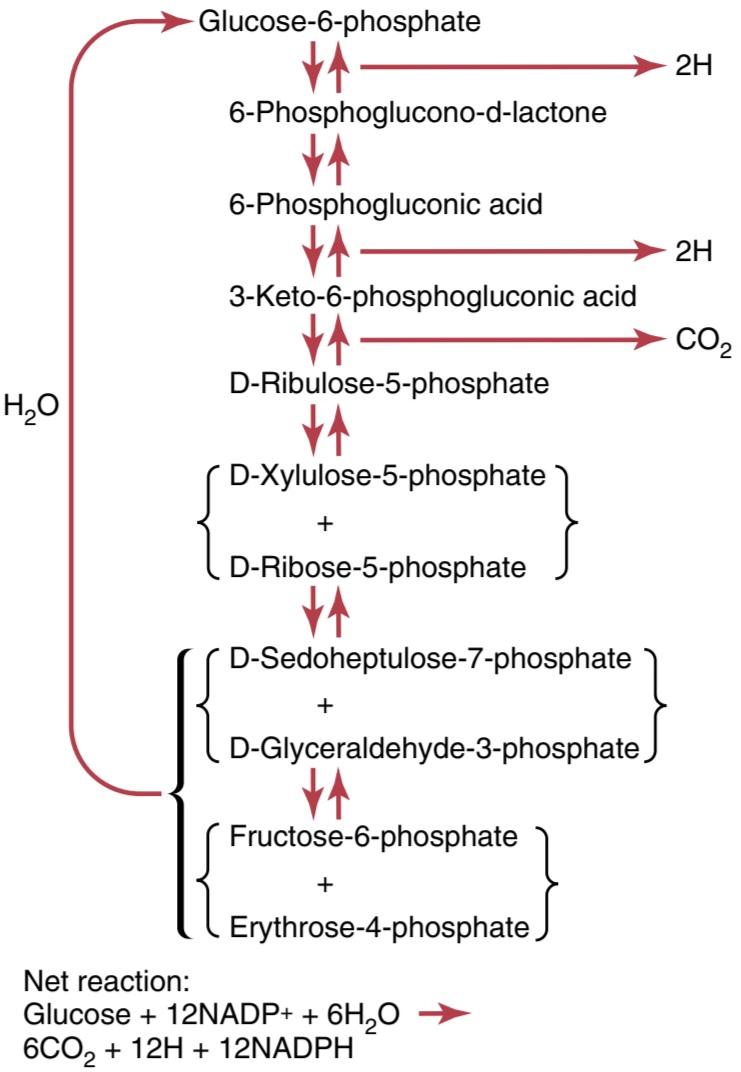
Figure 68-8. Pentose phosphate pathway for glucose metabolism. See text for details.
شکل 68-8. مسیر پنتوز فسفات برای متابولیسم گلوکز برای جزئیات به متن مراجعه کنید
Use of Hydrogen to Synthesize Fat; the Function of Nicotinamide Adenine Dinucleotide Phosphate. The hydrogen released during the pentose phosphate cycle does not combine with NAD+ as in the glycolytic pathway but combines with nicotinamide adenine dinucleotide phosphate (NADP+), which is almost identical to NAD+ except for an extra phosphate radical, P. This difference is extremely significant because only hydrogen bound with NADP+ in the form of NADPH can be used for the synthesis of fats from carbohydrates (as discussed in Chapter 69) and for the synthesis of some other substances.
استفاده از هیدروژن برای سنتز چربی عملکرد نیکوتین آمید آدنین دی نوکلئوتید فسفات. هیدروژن آزاد شده در طول چرخه پنتوز فسفات مانند مسیر گلیکولیتیک با +NAD ترکیب نمیشود، اما با نیکوتین آمید آدنین دی نوکلئوتید فسفات (+NADP)، که تقریباً مشابه +NAD است، به جز یک رادیکال فسفات اضافی، P. ترکیب میشود. چربیهای کربوهیدراتها (همانطور که در فصل 69 مورد بحث قرار گرفت) و برای سنتز برخی مواد دیگر.
When the glycolytic pathway for using glucose becomes slowed because of cellular inactivity, the pentose phosphate pathway remains operative (mainly in the liver) to break down any excess glucose that continues to be transport- ed into the cells, and NADPH becomes abundant to help convert acetyl-CoA, also derived from glucose, into long fatty acid chains. This is another way in which energy in the glucose molecule is used other than for the formation of ATP-in this case, for the formation and storage of fat in the body.
هنگامیکه مسیر گلیکولیتیک برای استفاده از گلوکز به دلیل عدم فعالیت سلولی کند میشود، مسیر پنتوز فسفات (عمدتاً در کبد) برای شکستن گلوکز اضافی که به انتقال به سلولها ادامه میدهد، فعال میماند و NADPH فراوان میشود تا به تبدیل استیل-CoA اسیدهای مشتق شده از چاگلوکوزهای طولانی نیز کمک کند. این روش دیگری است که در آن انرژی موجود در مولکول گلوکز به جز برای تشکیل ATP – در این مورد برای تشکیل و ذخیره چربی در بدن استفاده میشود.
Glucose Conversion to Glycogen or Fat
When glucose is not immediately required for energy, the extra glucose that continually enters the cells is either stored as glycogen or converted into fat. Glucose is preferentially stored as glycogen until the cells have stored as much glycogen as they can-an amount sufficient to supply the energy needs of the body for only 12 to 24 hours.
تبدیل گلوکز به گلیکوژن یا چربی
هنگامیکه گلوکز بلافاصله برای انرژی مورد نیاز نباشد، گلوکز اضافی که به طور مداوم وارد سلولها میشود یا به عنوان گلیکوژن ذخیره میشود یا به چربی تبدیل میشود. گلوکز ترجیحاً به عنوان گلیکوژن ذخیره میشود تا زمانی که سلولها به اندازه ای که میتوانند گلیکوژن را ذخیره کنند – مقداری که برای تامین انرژی مورد نیاز بدن فقط برای 12 تا 24 ساعت کافی است.
When the glycogen-storing cells (primarily liver and muscle cells) approach saturation with glycogen, the additional glucose is converted into fat in liver and fat cells and is stored as fat in the fat cells. Other steps in the chemistry of this conversion are discussed in Chapter 69.
هنگامیکه سلولهای ذخیرهکننده گلیکوژن (عمدتا سلولهای کبدی و ماهیچهای) به اشباع با گلیکوژن نزدیک میشوند، گلوکز اضافی در کبد و سلولهای چربی به چربی تبدیل میشود و به عنوان چربی در سلولهای چربی ذخیره میشود. سایر مراحل در شیمیاین تبدیل در فصل 69 مورد بحث قرار گرفته است.
Gluconeogenesis-Formation of Carbohydrates From Proteins and Fats
When the body’s stores of carbohydrates decrease below normal, moderate quantities of glucose can be formed from amino acids and the glycerol portion of fat. This process is called gluconeogenesis.
گلوکونئوژنز – تشکیل کربوهیدراتها از پروتئینها و چربیها
هنگامیکه ذخایر کربوهیدراتهای بدن کمتر از حد طبیعی میشود، مقادیر متوسطی از گلوکز میتواند از اسیدهای آمینه و بخش گلیسرول چربی تشکیل شود. این فرآیند گلوکونئوژنز نامیده میشود.
Gluconeogenesis is especially important in preventing excessive reductions in blood glucose concentration during fasting. Glucose is the primary substrate for energy in tissues such as the brain and the red blood cells, and ad- equate amounts of glucose must be present in the blood for several hours between meals. The liver plays a key role in maintaining blood glucose levels during fasting by converting its stored glycogen to glucose (glycogenolysis) and by synthesizing glucose, mainly from lactate and amino acids (gluconeogenesis). Approximately 25% of the liver’s glucose production during fasting is from gluconeogenesis, helping to provide a steady supply of glucose to the brain. During prolonged fasting, the kidneys also synthesize considerable amounts of glucose from amino acids and other precursors.
گلوکونئوژنز به ویژه در جلوگیری از کاهش بیش از حد غلظت گلوکز خون در طول روزه داری مهم است. گلوکز بستر اولیه برای انرژی در بافتهایی مانند مغز و گلبولهای قرمز است و مقدار کافی گلوکز باید برای چند ساعت بین وعدههای غذایی در خون وجود داشته باشد. کبد با تبدیل گلیکوژن ذخیره شده خود به گلوکز (گلیکوژنولیز) و با سنتز گلوکز، عمدتاً از لاکتات و اسیدهای آمینه (گلوکونئوژنز) نقش کلیدی در حفظ سطح گلوکز خون در طول روزه داری ایفا میکند. تقریباً 25 درصد از تولید گلوکز کبد در طول روزه داری از گلوکونئوژنز است که به تأمین یکنواخت گلوکز به مغز کمک میکند. در طول روزه داری طولانی، کلیهها همچنین مقادیر قابل توجهی گلوکز را از اسیدهای آمینه و سایر پیش سازها سنتز میکنند.
About 60% of the amino acids in the body proteins can be converted easily into carbohydrates; the remaining 40% have chemical configurations that make this conversion difficult or impossible. Each amino acid is converted into glucose by a slightly different chemical process. For example, alanine can be converted directly into pyruvic acid sim- ply by deamination; the pyruvic acid is then converted into glucose or stored glycogen. Several of the more complicated amino acids can be converted into different sugars that contain three-, four-, five-, or seven-carbon atoms. They can then enter the phosphor gluconate pathway and eventually form glucose. Thus, by means of deamination plus several simple interconversions, many of the amino acids can become glucose. Similar interconversions can change glycerol into glucose or glycogen.
حدود 60 درصد از اسیدهای آمینه موجود در پروتئینهای بدن را میتوان به راحتی به کربوهیدرات تبدیل کرد. 40 درصد باقیمانده دارای تنظیمات شیمیایی هستند که این تبدیل را دشوار یا غیرممکن میکند. هر اسید آمینه با یک فرآیند شیمیایی کمیمتفاوت به گلوکز تبدیل میشود. به عنوان مثال، آلانین را میتوان به سادگی با دآمیناسیون مستقیماً به اسید پیروویک تبدیل کرد. سپس اسید پیروویک به گلوکز یا گلیکوژن ذخیره شده تبدیل میشود. تعدادی از اسیدهای آمینه پیچیده تر را میتوان به قندهای مختلفی تبدیل کرد که حاوی اتمهای سه، چهار، پنج یا هفت کربن هستند. سپس میتوانند وارد مسیر گلوکونات فسفر شده و در نهایت گلوکز تشکیل دهند. بنابراین، با استفاده از دآمیناسیون به علاوه چندین تبدیل ساده، بسیاری از اسیدهای آمینه میتوانند به گلوکز تبدیل شوند. تبدیلهای متقابل مشابه میتواند گلیسرول را به گلوکز یا گلیکوژن تبدیل کند.
Regulation of Gluconeogenesis
Diminished carbohydrates in the cells and decreased blood sugar are the basic stimuli that increase the rate of gluconeogenesis. Diminished carbohydrates can directly reverse many of the glycolytic and phosphor gluconate reactions, thus allowing conversion of deaminated amino acids and glycerol into carbohydrates. In addition, the hormone cortisol is especially important in this regulation, as described in the following section.
تنظیم گلوکونئوژنز
کاهش کربوهیدرات در سلولها و کاهش قند خون محرکهای اساسی هستند که سرعت گلوکونئوژنز را افزایش میدهند. کربوهیدراتهای کاهشیافته میتوانند مستقیماً بسیاری از واکنشهای گلیکولیتیک و گلوکونات فسفر را معکوس کنند، بنابراین امکان تبدیل اسیدهای آمینه و گلیسرول دآمینهشده به کربوهیدراتها را فراهم میکنند. علاوه بر این، همانطور که در بخش زیر توضیح داده شده است، هورمون کورتیزول در این تنظیم اهمیت ویژه ای دارد.
Effect of Adrenocorticotropic Hormone and Glucocorticoids on Gluconeogenesis. When normal quantities of carbohydrates are not available to the cells, the adenohypophysis, for reasons not completely understood, secretes increased quantities of the hormone adrenocorticotropic hormone (ACTH), also called corticotropin or adrenocorticotropin. This secretion stimulates the adrenal cortex to produce large quantities of glucocorticoid hormones, especially cortisol. In turn, cortisol mobilizes proteins from essentially all cells of the body, making these proteins avail- able in the form of amino acids in the body fluids. A high proportion of these amino acids immediately becomes deaminated in the liver and provides ideal substrates for conversion into glucose. Thus, one of the most important means by which gluconeogenesis is promoted is through the release of glucocorticoids from the adrenal cortex.
تأثیر هورمون آدرنوکورتیکوتروپیک و گلوکوکورتیکوئیدها بر گلوکونئوژنز. هنگامیکه مقادیر طبیعی کربوهیدرات در دسترس سلولها نباشد، آدنوهیپوفیز، به دلایلی که کاملاً مشخص نیست، مقادیر بیشتری از هورمون هورمون آدرنوکورتیکوتروپیک (ACTH) ترشح میکند که کورتیکوتروپین یا آدرنوکورتیکوتروپین نیز نامیده میشود. این ترشح قشر آدرنال را تحریک میکند تا مقادیر زیادی هورمون گلوکوکورتیکوئید، به ویژه کورتیزول تولید کند. به نوبه خود، کورتیزول پروتئینها را از تمام سلولهای بدن بسیج میکند و این پروتئینها را به شکل اسیدهای آمینه در مایعات بدن در دسترس قرار میدهد. نسبت بالایی از این اسیدهای آمینه بلافاصله در کبد دآمینه میشود و بسترهای ایده آلی را برای تبدیل به گلوکز فراهم میکند. بنابراین، یکی از مهمترین روشهایی که توسط آن گلوکونئوژنز ترویج میشود، از طریق آزادسازی گلوکوکورتیکوئیدها از قشر آدرنال است.
Blood Glucose
The normal blood glucose concentration in a person who has not eaten a meal within the past 3 to 4 hours is about 90 mg/dl. After a meal containing large amounts of carbohydrates, this level seldom rises above 140 mg/dl unless the person has diabetes mellitus, which is discussed in Chapter 79.
گلوکز خون
غلظت طبیعی گلوکز خون در فردی که در 3 تا 4 ساعت گذشته یک وعده غذایی نخورده است حدود 90 میلی گرم در دسی لیتر است. پس از یک وعده غذایی حاوی مقادیر زیادی کربوهیدرات، این سطح به ندرت از 140 میلی گرم در دسی لیتر بالاتر میرود مگر اینکه فرد مبتلا به دیابت باشد که در فصل 79 مورد بحث قرار گرفته است.
The regulation of blood glucose concentration is intimately related to the pancreatic hormones insulin and glucagon; this subject is discussed in detail in Chapter 79 in relation to the functions of these hormones.
تنظیم غلظت گلوکز خون ارتباط نزدیکی با هورمونهای پانکراس انسولین و گلوکاگون دارد. این موضوع در فصل 79 در رابطه با عملکرد این هورمونها به تفصیل مورد بحث قرار گرفته است.
کلیک کنید «Bibliography: فهرست کتب مربوطه»
Dienel GA: Brain glucose metabolism: integration of energetics with function. Physiol Rev 99:949, 2019.
Gancheva S, Jelenik T, Álvarez-Hernández E, Roden M: Interorgan metabolic crosstalk in human insulin resistance. Physiol Rev 98:1371, 2018.
Giorgi C, Marchi S, Pinton P: The machineries, regulation and cellular functions of mitochondrial calcium. Nat Rev Mol Cell Biol 19:713, 2018.
Hengist A, Koumanov F, Gonzalez JT: Fructose and metabolic health: governed by hepatic glycogen status? J Physiol 597:3573, 2019.
Herzig S, Shaw RJ: AMPK: Guardian of metabolism and mitochondrial homeostasis. Nat Rev Mol Cell Biol 19:121, 2018.
Koliaki C, Roden M: Hepatic energy metabolism in human diabetes mellitus, obesity and non-alcoholic fatty liver disease. Mol Cell En- docrinol 379:35, 2013.
Krebs HA: The tricarboxylic acid cycle. Harvey Lect 44:165, 1948. Kuo T, Harris CA, Wang JC: Metabolic functions of glucocorticoid receptor in skeletal muscle. Mol Cell Endocrinol 380:79, 2013.
Letts JA, Sazanov LA: Clarifying the supercomplex: the higher-order organization of the mitochondrial electron transport chain. Nat Struct Mol Biol 24:800, 2017.
Petersen MC, Shulman Gl: Mechanisms of insulin action and insulin resistance. Physiol Rev 98:2133, 2018.
Petersen MC, Vatner DF, Shulman Gl: Regulation of hepatic glucose metabolism in health and disease. Nat Rev Endocrinol 13:572, 2017.
Pfanner N, Warscheid B, Wiedemann N: Mitochondrial proteins: from biogenesis to functional networks. Nat Rev Mol Cell Biol 20:267, 2019.
Prats C, Graham TE, Shearer J: The dynamic life of the glycogen granule. J Biol Chem 293:7089, 2018.
Szabo I, Zoratti M: Mitochondrial channels: ion fluxes and more. Physiol Rev 94:519, 2014.
Taylor EB: Functional properties of the mitochondrial carrier system. Trends Cell Biol 27:633, 2017.
Wright EM, Loo DD, Hirayama BA: Biology of human sodium glucose transporters. Physiol Rev 91:733, 2011.
🚀 با ما همراه شوید!
تازهترین مطالب و آموزشهای مغز و اعصاب را از دست ندهید. با فالو کردن کانال تلگرام آیندهنگاران مغز، از ما حمایت کنید!